
Social media could help researchers identify public health risks
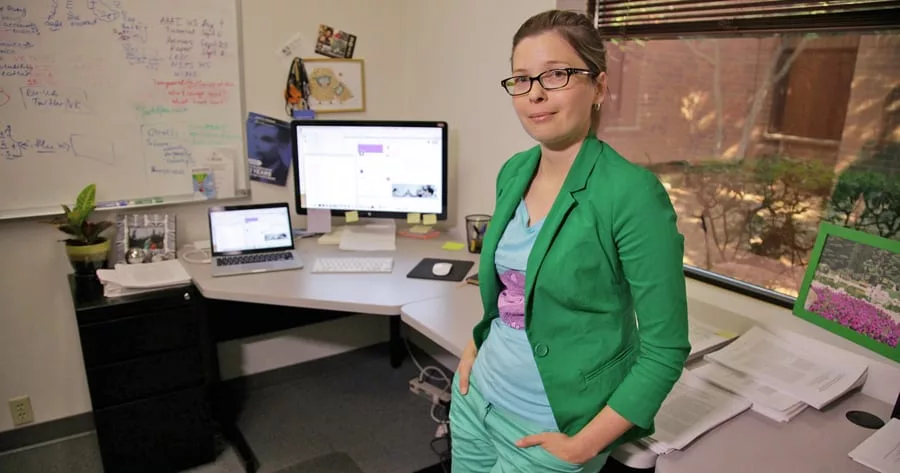
PNNL study finds opinion, emotion in tweets change when you get sick
In the future, public health workers could monitor trends on social media to quickly identify a rise of influenza, depression or other health issues in a specific area, thanks to research at the Department of Energy’s Pacific Northwest National Laboratory in Richland.
Public health trends on social media are more nuanced than looking for spikes of “I feel sick” or “flu.”
To truly tap this source of public data, researchers at PNNL sought to understand patterns of how people behave differently on social media when they are sick. The researchers uncovered the expression of opinion and emotion as a potential signal on Twitter, as reported in the journal EPJ Data Science.
“Opinions and emotions are present in every tweet, regardless of whether the user is talking about their health,” said Svitlana Volkova, a data scientist at PNNL and lead author of the study. “Like a digital heartbeat, we’re finding how changes in this behavior relate to health trends in a community.”
At a time when corporations mine information from social media accounts for targeted advertising and financial gain, researchers at PNNL asked how they could use this data to benefit the public. One of those areas is public health. It takes health workers weeks to discover influenza trends the traditional way: by monitoring how many sick people visit clinics. By discovering trends in real time, social media could be the game-changing solution public health workers have been looking for.
But can tweets replace a health exam for detecting a rise in the flu or other health threats? Volkova’s research suggests so.
The research team studied 171 million tweets from users associated with the U.S. military to determine if the opinions and emotions they express reflect visits to the doctor for influenza-like illnesses. They compared military and civilian users from 25 U.S. and six international locations to see if this pattern varied based on location or military affiliation.
For privacy, the tweets used in this study were anonymized. The goal of the research is to discover generalized public health trends, not diagnose the health status of individual users.
Overall, they found how people behave significantly varies by location and group. For example, tweets from military populations tend to contain more negative and less positive opinions, as well as increased emotions of sadness, fear, disgust and anger. This trend is true regardless of health.
The baseline is fuzzy, and that should be no surprise. People behave differently based on the world immediately around them. To that end, the researchers identified location-dependent patterns of opinion and emotion that correlate with medical visits for influenza-like illnesses. And a general trend did appear: Neutral opinions and sadness were expressed most during high influenza-like illness periods. During low illness periods, positive opinion, anger and surprise were expressed more.
Next, the research team will study whether these behaviors can be used to predict a change in health trends before they happen. If this method works in real time, public health workers could look into the future by asking, “How are your tweets feeling?”
This research was funded by the Defense Threat Reduction Agency.