
Turbulent trade: State’s exports remain steady
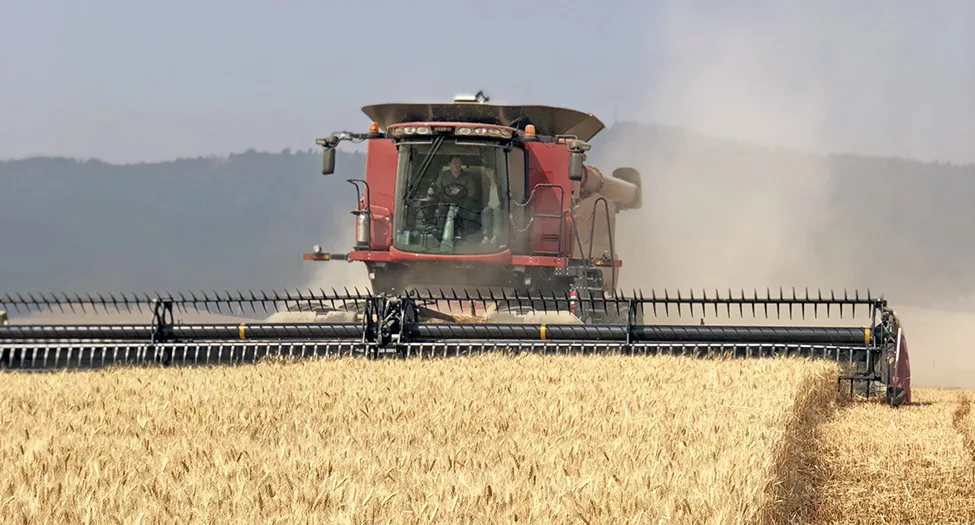
Washington’s agricultural exports held
steady in 2018, demonstrating both strength and missed opportunity, as some
industries suffered under new trade policies while others made gains during the
year.
Exports of Washington-produced agricultural goods totaled $6.7
billion in 2018, the same amount exported in 2017. The flat growth followed a
roughly 10 percent increase in exports of Washington-produced agricultural
goods from 2016-17.
“The overall message of the year was lost opportunity because
typically we are expanding exports and exports are growing,” said Rianne Perry,
international marketing program manager for the Washington State Department of
Agriculture.
But 2018 was different due to retaliatory tariffs imposed by China
in the ongoing trade war, the United States’ lack of trade agreements with
countries that formed the Comprehensive and Progressive Trans-Pacific
Partnership, or CPTPP, and ongoing negotiations for a new trade deal in North
America, each of which took their tolls on various industries.
China remained the third largest export market for Washington-produced
agricultural goods in 2018, but the dairy, wheat, apple and cherry industries
were among those that took significant hits in the Chinese market.
Dairy exports to China dropped by 72 percent from the prior
calendar year, while wheat exports to China dropped by 81 percent, according to
the state Department of Agriculture. No wheat has been exported to China since
May 2018.
“(China) was a growing market so we were excited about that, and
it was going to be something we could look forward to,” said Scott Yates,
director of communications and producer relations for the Washington Grain
Commission. “At the same time, I do believe there will be an agreement, but the
timing is crucial because it can’t go on forever.”
About $66 million in soft white wheat was exported to China from
Washington in the year since China stopped buying U.S. wheat.
For the cherry industry, which reported a 32 percent decline in
exports to China in calendar year 2018, the drop followed significant growth in
the prior year. China was the top export market for Washington cherries in
2017, purchasing $99.7 million during that calendar year, as the buying power
of its middle class continued to expand. Cherry exports were up by 75 percent
in 2017 over 2016.
“Overall, the sectors that were on the tariff list did decrease
their exports to China, some of them pretty substantially,” Perry said.
However, there were exceptions. Washington seafood, hops and
frozen french fries all increased their exports to China in 2018, despite being
targets of Chinese tariffs, Perry said. One possible explanation is that such
niche products aren’t available in the same quantity and quality from other
markets, she said.
Chris Voigt, executive director of the Washington State Potato
Commission, said the growth of U.S.-based quick-serve restaurants such as
McDonald’s and KFC helped keep market demand for frozen french fries strong
both domestically and in China during 2018, despite tariffs being imposed
during the year.
Washington exported $798 million of frozen french fries to China
in 2018, up from $756 million in 2017.
But like many of the other industries that rely on the export
market for their agricultural goods, the retaliatory tariffs being imposed by
China are merely one among a number of trade concerns, Voigt said.
For potato growers, the bigger concern is that the United States
gets a trade agreement in place with Japan, which always has been a top market,
not just for potatoes but for Washington’s agricultural products as a whole.
Japan is now part of the CPTPP, a trade agreement that will gradually lessen
tariffs for the 11 countries that signed the deal, which the United States did
not sign. Washington exported $1.1 billion of agricultural goods to Japan in
2018 but is likely to see its market share erode in some sectors as the tariff
reductions included in the CPTPP move forward.
Japan also is a top market for Washington wheat, and that industry
is hopeful that a bilateral agreement with the country will be in place soon,
Yates said. The wheat industry was able to maintain exports of soft white wheat
to Japan in 2018 because of the specialty nature of the crop, but another year
without an agreement would likely hurt, he said.
“U.S. negotiations for a bilateral trade agreement with Japan have
begun to take place, and seeing an agreement there is of the utmost
importance,” Perry said.
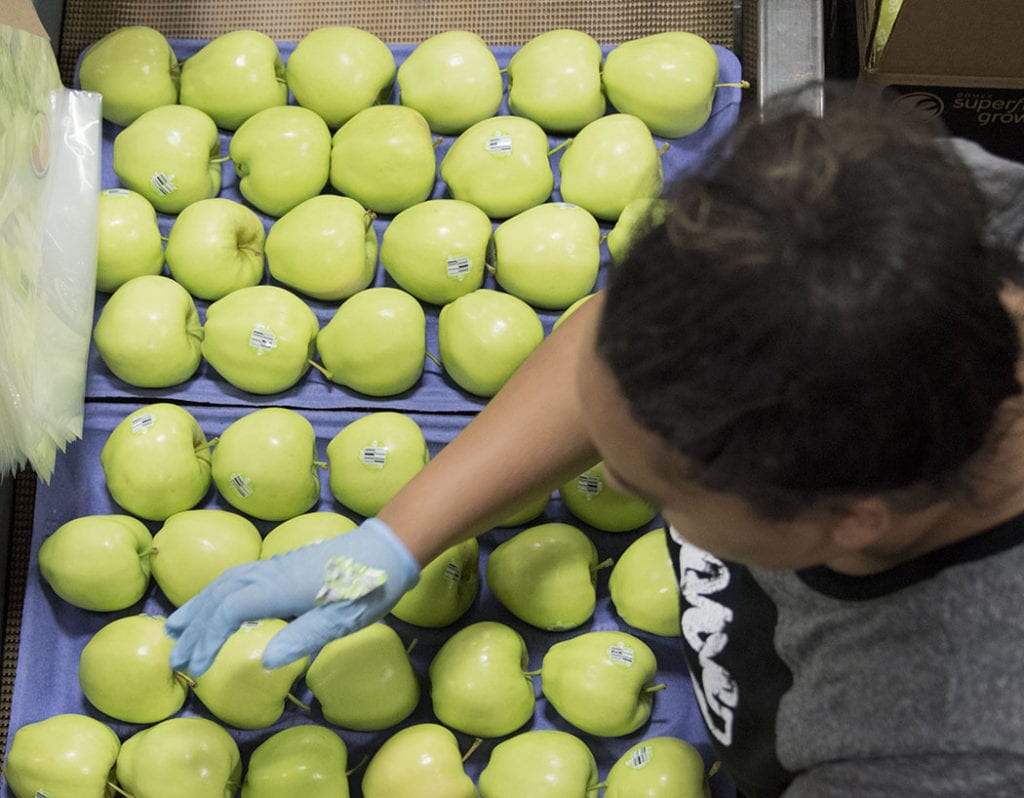
For the Washington apple industry, which exports a third of its
fresh apple crop, ongoing trade negotiations in North America have been the
primary concern in the past year, said Todd Fryhover, president of the
Washington Apple Commission.
U.S. apple exports to its top market Mexico were hit with a 20
percent tariff in June 2018 after the United States imposed tariffs on imports
of Mexican steel and aluminum. The U.S. and Mexico reached an agreement in
mid-May to eliminate them, but threats of more retaliatory tariffs loom. Apple
exports still face a 50 percent tariff in China, and India is threatening to
implement new tariffs, as well.
The Washington Apple Commission has responded by focusing on trade
promotions and by diverting some volume to new markets such as Indonesia,
Thailand and Vietnam.
“As an industry, we’re
always looking at these different alternatives to maximize revenue for growers
and trying to stay away from those markets that have the least return, whether
they are impacted with a tariff or not,” Fryhover said.
Despite the current challenges, Washington continues to build on
its strengths and invest in its export market.
The Northwest Seaport Alliance, which manages the marine cargo
business and facilities for the ports of Seattle and Tacoma, is preparing to
begin a $500 million modernization project that will allow Terminal 5 at the
port of Seattle to more quickly and efficiently handle the largest marine cargo
vessels being deployed on the Asia-Pacific trade route.
Eight of the top 10 markets for Washington’s agricultural exports
in 2018 were in Asia.
“The exporter community in Washington state relies on The
Northwest Seaport Alliance to get our goods to foreign markets,” said Mark
Anderson, CEO and president of Ellensburg-based Anderson Hay & Grain Co.
Inc., in a statement. “Without a robust import trade, our export trade becomes
much more difficult. Investments like the Terminal 5 modernization end up
supporting well-paying jobs all across the state.”
Construction on Terminal 5 will begin this summer and will be
carried out in two phases, with the first phase expected to be complete in the
spring of 2021 and the second in 2023, said Katie Whittier, spokeswoman for
Port of Tacoma and The Northwest Seaport Alliance.
The U.S. Small Business Administration’s Seattle District Office
also continues to support and invest in Washington’s export market across all
industries. The agency is the coordinating member of the 12-agency Washington
Export Outreach Team, or WEOT, an active consortium of organizations working to
assist Washington businesses with expanding into international markets or
further growing their presence in them.
WEOT, which hosted a half-day, “Grow Your
Business Internationally” export workshop at the Tri-City Development Council
in May, provides resources including technical assistance and potential funding
for small businesses to enter or further expand into foreign markets, said Kerrie
Hurd, district director for the U.S. Small Business Administration, Seattle
district, which covers most of Washington and a part of Idaho.
More information about WEOT is available by contacting the U.S.
Small Business Administration’s Seattle district offices or any other agencies
involved with WEOT.
“I do feel like this is an environment where there is opportunity. It’s
just that people have to know the resources to go to and be able to take
advantage of those opportunities,” Hurd said.