The business of baseball
25 years strong, Dust Devils help fuel Tri-Cities sports tourism
Owners promote expanded stadium use beyond baseball season
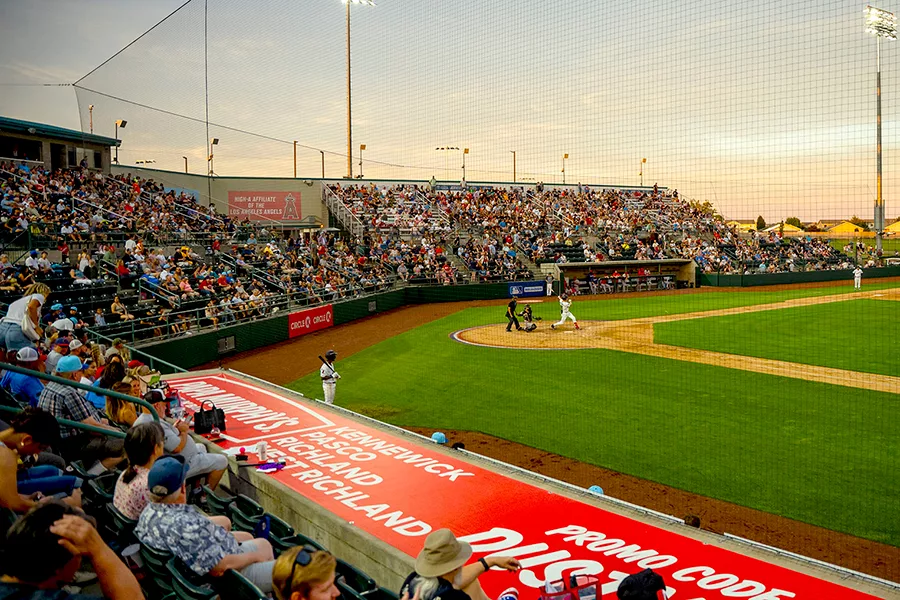
Erik Mertens didn’t know what to expect when one of the largest ownership groups in minor league baseball bought the team he’s stuck by for 25 years.
Known as The Peanut Guy for hawking the popular snack at games, Mertens is as ubiquitous at Tri-City Dust Devil games as the crack of a bat. He’s been involved with the team in some capacity since it started playing in 2001.
He said prior team owners Brett Sports of Spokane “had a family feel” he valued. So when Diamond Baseball Holdings, or DBH, a private equity-controlled company that now owns roughly a third of all minor league teams in the country, bought the Dust Devils in late 2024, Mertens said he wondered how that would transform the team he’s loved since day one.
“I was interested to see how going to such a major owner would change things,” Mertens said.
Now, more than a year later and with the team entering its 25th season this spring, Mertens said any doubts he once had have vanished. He and the rest of the Dust Devils organization are focused on making 2026 the best year possible for fans.
“This year the focus is on ‘thank you,’” Mertens said. “What can we do to fill the ballpark but also how can we thank the fans for 25 years.”
As the Tri-City Dust Devils mark their 25th year, its new ownership group is looking beyond baseball to position its stadiums as a year-round event venues – a strategy aimed at boosting tourism and drawing more visitors. That shift is appears to already be underway at Gesa Stadium, with the Pasco ballpark set to host multiple World Cup fan zones this summer.
“I love that strategy. Let’s utilize those facilities for everything,” Kevin Lewis, president and CEO of Visit Tri-Cities, told the Tri-Cities Area Journal of Business.
Upcoming promotions
The Dust Devils have a lot of promotions lined up as part of the team’s efforts to thank fans:
- Twice as many game giveaways, including two bobbleheads and a jersey.
- The return of lighted drone shows, with two confirmed dates.
- A special 25th anniversary pinstripe jersey, with game-worn ones auctioned off at the end of the season.
That’s on top of new merch using the special 25th season logo and the continuation of promotions such as the ‘family feast’ discounted concessions nights, post-game fireworks and entertainment at select games and the return of special community jerseys for the team’s alter identities, Rooster Tails and Los Viñeros.
Facility-wise, fans will notice some changes at the ballpark, including improvements at the concession stands, as well as bathrooms with new lighting, flooring and stall dividers. The new indoor, climate-controlled batting facility on the back corner of the east side of the grandstand is only for players, but Mertens said there are efforts to turn the former outdoor batting facility into one for fans.
And DBH has been supportive of it all.
“They are 100% committed to hyperlocal,” Mertens said. “They really rely on us to know the Tri-Cities but provide the resources we need.”
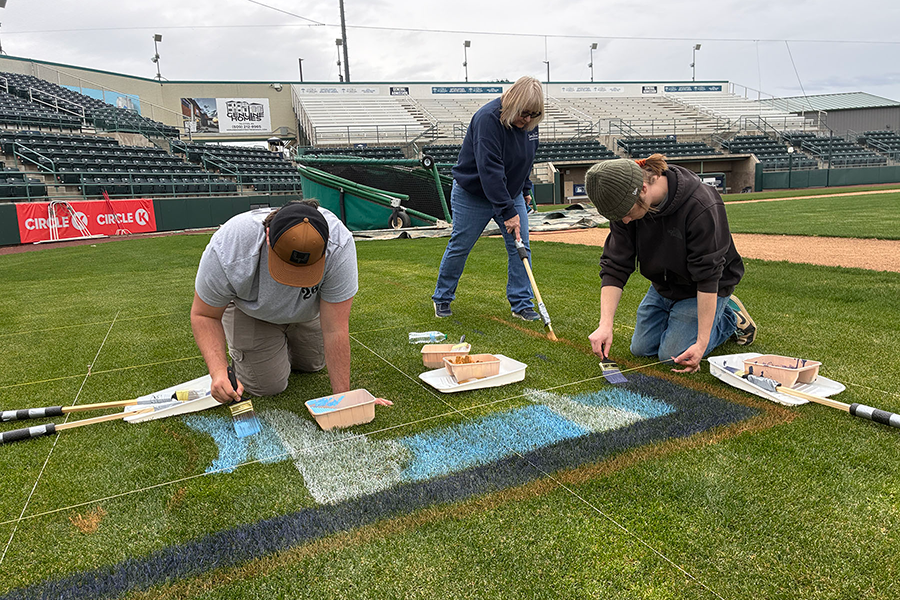
Candis Angel works with groundskeepers Sawyer Hickam and Gage Fifer to paint the special 25th anniversary logo for the Tri-Cities Dust Devils on the field at Gesa Stadium ahead of opening day on April 3.
| Photo by Ty BeaverSports tourism
The team fell a couple thousand fans short last year of beating the previous season attendance record of about 122,000 fans, Mertens said, and average game attendance is still slightly below the average of 2,200 fans per game set before the Covid-19 pandemic. But overall, DBH has communicated it is pleased with the club’s performance.
Lewis said he’s glad to hear that, as the Dust Devils are a critical asset for the region.
Visit Tri-Cities estimates the team generates between $2 million and $3 million per year in outside visitor spending, ranging from people booking hotel rooms to meals at restaurants and shopping trips.
Sports tourism is a focus for Visit Tri-Cities, as evidenced by the growing success of the Ironman triathlon entering its third year this fall and the ongoing legacy of the Tri-Cities Americans junior league hockey team.
But the financial returns aren’t necessarily where all the Dust Devils’ value lies.
“Equally as good is that we have a stadium like that in our area and a baseball team that is getting publicity,” Lewis said. “When we sell the area, those are the kinds of things people say, ‘Oh, that’s a great area.’ It creates this kind of vibrant looking community, and it’s not just a facade, it’s real.”
Year-round stadium use
But the baseball season only lasts for so long and there can only be so many home games in a season for the Dust Devils, as for any other minor league team. And DBH has made it clear it wants its stadiums hosting visitors year-round.
“The stadiums in which the teams play serve as the centers of energy in these communities and represent an important and vibrant gathering spot for local citizens,” Pat Battle, DBH’s executive chairman, said during a 2025 congressional hearing on minor league baseball. “At DBH it is our desire for these stadiums, in addition to hosting roughly 70 baseball games a year, to host many events such as concerts, high school state championships, graduations, weddings, corporate outings, and the list goes on and on.”
In 2024, DBH launched its Music on the Diamond initiative, which brought country music artists such as Miranda Lambert and Thomas Rhett to nine of its ballparks for performances. The company hasn’t announced a slate for the 2026 season but is still working with its clubs to secure entertainers that will draw crowds, according to media reports.
Gesa Stadium has played host to events outside Dust Devil games over the years, notably high school and college-level baseball games and tournaments. There have also been events such as concerts and motocross competitions, though they have often been one-offs that didn’t continue in future years.
Mertens said he couldn’t provide specific details about what the Dust Devils are working on but in general the team is looking for other events to host at Gesa Stadium. That includes pre-game entertainment as well as standalone performances and gatherings.
World Cup fans
Three of the four fan zones offered in Pasco for those who can’t attend the popular FIFA soccer tournament being held in Seattle this summer will be at Gesa Stadium. They’ll be June 15 and July 1 and 6 and free to attend, offering a large screen to watch matches but also live music, family-friendly activities and plenty of opportunities for attendees to buy food and merchandise from vendors.
Pasco officials are promoting the events not just for Tri-City residents but a larger audience, noting that the city, and the area around the ballpark, have lots of lodging and dining options available.
“Pasco is perfectly positioned for day trips around the region – but once you’re here, you may not want to leave,” the city said in a release.
Lewis said he’s glad that there appear to be efforts to make more use of the stadium. His organization has worked with those who plan baseball tournaments there and they have gushed about how great a venue it is. That could be the same for so many other events, Lewis said.
“It’s a great gathering spot,” he said.
While it’s still up in the air what kind of acts or performances may be booked at Gesa Stadium in the future, Mertens said he can commit to the Dust Devils being a part of the Tri-Cities for the foreseeable future.
Just before DBH bought the team, the club and city of Pasco had reached an agreement to extend its lease for another 10 years, with a 10-year option. DBH didn’t hesitate to affirm that deal when it arrived in the Tri-Cities.
“I was told that DBH only wants strong teams,” Mertens said. “The Dust Devils have been a consistently strong business.”


Stay Informed. It’s Free.
Subscribe to our newsletters and get the latest news and insights delivered to your inbox.
We respect your privacy.
Unsubscribe anytime.
Thank you!
You’re subscribed. Keep an eye on your inbox for the latest updates.