Tapteal Native Plants offers drought-tolerant landscaping alternatives
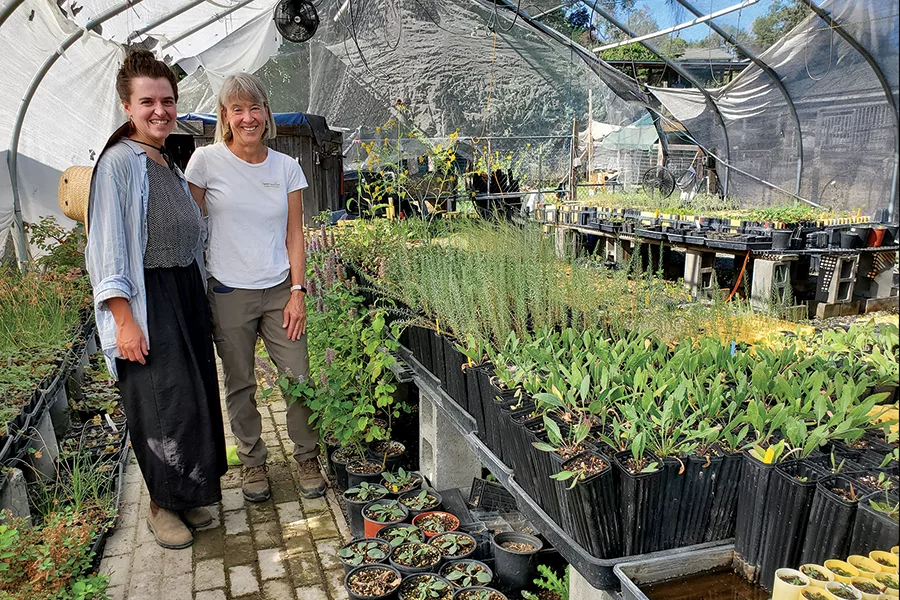
Tucked into a pocket of West Richland is a native plant haven.
It’s a nursery in Ann Autrey’s backyard called Tapteal Native Plants.
Her business is a grassroots effort to raise awareness about the value of native species, as well as to supply the Columbia Basin with region-specific varieties from its unique shrub-steppe habitat.
Demand for native plants is on the rise.
“Every year, the business has tripled in growth for plant sales,” Autrey said. “Last year, we hit our highest yet, and (this year) we’re at least going to match.”
She’s seeing the growth in Tapteal’s customer base.
“We’re definitely reaching more and more people. When we had our sale in spring, it was all new faces,” she said.
Autrey and her assistant, Kelsey Kelmel, said there are several reasons people are attracted to native plants, ranging from a desire to honor the landscape, reduce maintenance, add diversity to edible landscaping, lower water bills or guard against future environmental conditions that may make conventional plantings less practical or even impossible.
“Having done this for a few years, I can tell you that when it comes to native plant people, there’s no one type of person,” Autrey said. “Our customers span the whole political spectrum … and every other category.”
“Plants don’t discriminate,” Kelmel added.
“Our customer base comes from as far as Yakima, Moses Lake, a strong contingent in Walla Walla, Pendleton, Umatilla,” Autrey said.
Shrub-steppe diversity
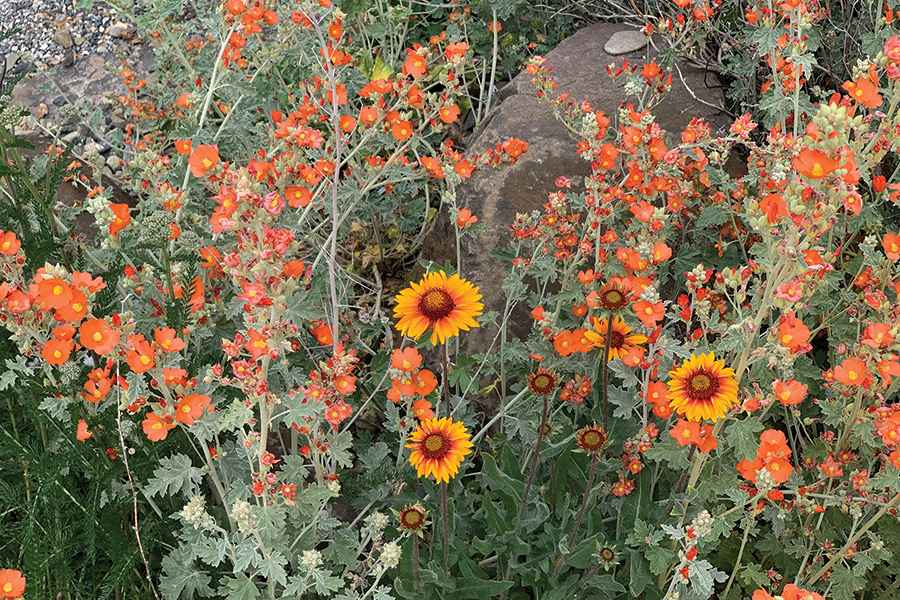
The area’s shrub-steppe landscape boasts an astonishing array of native wildflowers and other less showy plants.
“Our ecosystem is one of the most diverse in the world,” Kelmel said.
Yet, as Tri-Cities and other neighboring communities grow and diversify, many property owners don’t embrace the natural character of the existing environment, instead favoring green lawns and conventional landscape plantings – both which require lots of water.
To Autrey and Kelmel, native plants and other arid climate-tolerant species provide a simple yet elegant solution to the challenges presented by the shrub-steppe environment.
After all, they’ve naturally adapted to these conditions. The bonus? They require nearly no water, soil amendment, or pesticides and herbicides.
“Water conservation, sustainability and resilience for what’s coming for the future and pollinator health – that’s especially important here in Eastern Washington because we’re in ag country and we need to support all the pollinators we can to ensure our ag industry continues in good health,” Autrey said.
It’s part of what led her to start Tapteal Native Plants five years ago after wanting to incorporate native plantings on her own property. She found herself driving between two native plant nurseries in Spokane and Peshastin to find what she was looking for.
“It dawned on me that not everyone can take a day to go get plants and then again to replenish anything that didn’t make it,” she said, adding that the Columbia Basin has a slightly different climate than those two areas.
Adding to the challenge is transplants from the wild often don’t take well due to the long roots that shrub-steppe species put down to access water reserves.
“So, I focused on collecting and germinating local seed that has the genetics to make it here,” she said.
She said members of the Heritage Garden Program helped her out, particularly with seed donations. She also learned about different areas around the region to harvest seeds sustainably.
Though Autrey believes it doesn’t have to be all or nothing when it comes to incorporating native plantings, saying “there is value in the plants themselves because all around us we’re losing the valuable shrub-steppe habitat.
“For example, on the Hanford reservation, there used to be sagebrush everywhere, but due to fires, it’s really decimated the population. Slow-growing sagebrush doesn’t come back after a fire … it’s a keystone species. When we lose those plants, it disrupts the whole ecosystem.”
In “Singing Grass, Burning Sage” by Jack Nisbet, he wrote that of “the 10.5 million acres of shrub-steppe habitat present in Eastern Washington in the early 1800s, almost two-thirds have disappeared entirely and the rest has been irrevocably changed.”
As Autrey explained, that change is due to human influence.
“Planting natives shows an appreciation for where we’re at,” Kelmel said. “I think that celebrating that should be a part of our daily lives and our community. Why not celebrate our sense of place? There are a lot of lessons that can be learned from the shrub-steppe.”
Plant sale, classes
Tapteal Native Plants is gearing up for its annual fall plant sale, which runs from 10 a.m. to 2 p.m. Oct. 28-29 and Nov. 4-5.
Sales are also held in spring with a different selection of plants.
“Our sales are focused around the life cycle of the plant,” Autrey said. “People are used to planting what they want right now, but really, most native plant starts are best planted in fall. We want people to be successful. Their traditional way of gardening may not be what’s going to be successful for the plant.”
Plants and seeds can be acquired throughout the year by contacting the nursery or visiting its limited Etsy shop, which is devoted to seed sales.
Autrey offers her expertise through consultation as well. Homeowners and businesses can have their property evaluated. Then, she can create a plan, complete with plant species recommendations.
She has designed over 200 native gardens to date.
For those looking to learn more, Tapteal Native Plants’ website offers guides, articles and resources to help people get started.
This fall, Autrey also will be hosting her first seed germination class and hopes to offer it again in the spring, as well as garden tours.
Tapteal Native Plants: 509-578-6446, taptealnativeplants.com. Open by appointment only. Follow on Facebook and Instagram for fall and spring plant sale information.