Lessons learned from demise of Northwest aluminum industry
By Don C. Brunell
Driving east along Highway 14 these days, you see water pouring out of Columbia River dams. It is already a high water year with much of the run-off from our heavy mountain snowpack yet to come.

It is part of our “feast or famine” weather cycle.
As you pop over the hilltop near the historic Maryhill Museum, you look down to see John Day Dam with its floodgates open, spilling massive amounts of water.
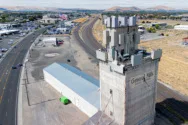
Then you see remains of the razed Goldendale Aluminum Co. smelter next to the dam. That plant once accounted for 1,300 jobs, $40 million in personal income and $2 million in Klickitat County taxes. Now, you just see concrete pads, a water tower and a small office.
Twenty years ago, it was a vibrant plant. It was one of 10 “reduction works” melting imported ore into aluminum in Washington, Oregon and Montana. Those plants were not only critical to our region’s economy, but they were vital to our nation’s World War II effort. The first plants at Vancouver and Longview supplied the light-weight sturdy metal to Boeing for Army Air Corps bombers.
Today, the smelters, except for Intalco, Ferndale are gone. So are the jobs, taxes and economic impact.
In 1998, Washington’s aluminum industry employed more than 7,500 people. Workers earned $50,000 a year with good benefits, health insurance and retirement. In addition, the industry spent $1.83 billion annually in purchased goods and services creating additional revenue and employment.
Just as important, those plants were locate in Vancouver, Longview, Tacoma, Wenatchee, Ferndale, Spokane and Goldendale.
Seattle economist Dick Conway noted those jobs were mostly in the “other Washington” referring to rural areas where unemployment is often higher than the national average.
The region’s aluminum producers grew with the abundant power generated by Bonneville and Grand Coulee dams. The industry’s electric furnaces consumed triple the amount of power required to light and heat Seattle.
Ironically, it was the lack of adequate run-off, which severely curtailed hydropower that became the tipping point for the industry. Remember, three-fourths of our electricity is supplied by our dams.
Starting in 2000, for the next two years snowpack in the Cascade and Rocky Mountains was a fraction of normal. As a consequence, electric rates soared and aluminum plants curtailed operations, furloughed workers and sent their earmarked power to residential customers.
Costs, particularly of electricity, were climbing and newer more efficient plants were built elsewhere.
Along with the drought came foreign competition most notably from China and Russia, which now produce nearly six out of every 10 tons of aluminum worldwide.
There are lessons to be learned from the demise of our region’s aluminum industry. Today, we have other energy- intensive industries which need the same reasonably priced and consistent supply of electricity.
In the last 25 years, we have added large electrical loads for internet server farms, carbon fiber and solar plants in Central Washington. Along the Interstate 5 corridor there are semiconductor manufacturers with electricity demands as large as aluminum smelters. Then there are traditional high-load customers: Boeing, papermakers and food processors.
Costs matter more than ever today. Elected officials at all levels of government need to include the impacts of their decisions on jobs, our economy and the tax base. Government regulators must carefully weigh the costs and benefits of our regulations.
Washington is already a “high price of business” state. The demise of the aluminum industry illustrates with companies and jobs, there is a tipping point.
[panel title="About Don C. Brunell:" style="info"]
Don C. Brunell is a business analyst, writer and columnist. He retired as president of the Association of Washington Business, the state’s oldest and largest business organization, and now lives in Vancouver, Washington. He can be contacted at [email protected].