Brown eyes utility costs, tort liability as 2027 legislative priorities
Washington's Attorney General Nick Brown says he wants the Legislature to confront rising utility costs and the state's escalating liability expenses.
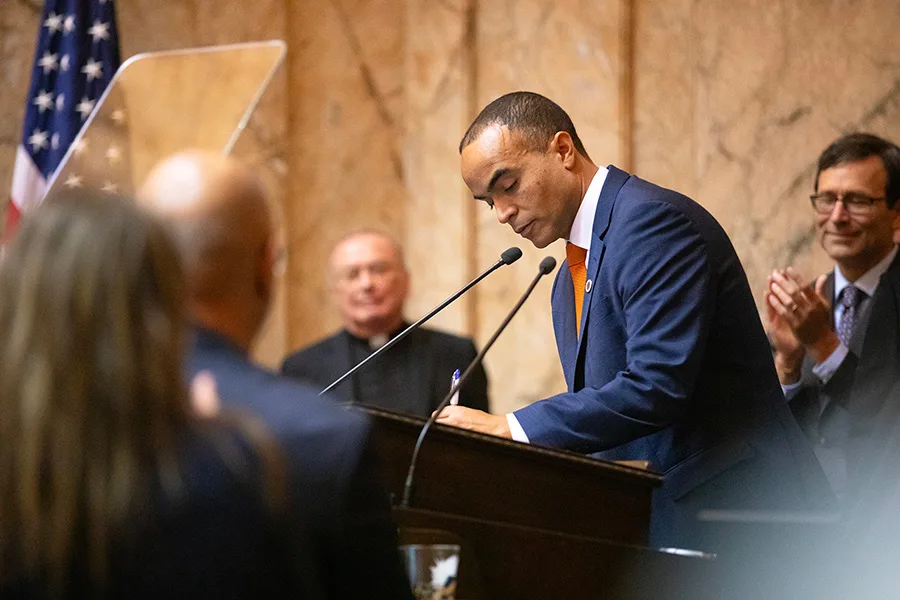
Photo by Ryan Berry/Washington State StandardWashington Attorney General Nick Brown says rising utility costs and the state’s escalating liability expenses are emerging as priorities as his office develops its agenda for the 2027 Legislature, while other high-profile issues may not produce attorney general-request legislation.
Brown told TVW’s Inside Olympia that utility affordability is an area where his office can directly affect household costs through its Public Counsel Unit, which represents customers of regulated, investor-owned utilities. The office is already challenging proposed Puget Sound Energy rate increases, arguing they are excessive.
Brown said utility rates are “the area where we can have the best direct influence.”
He said that influence would not only be through his office’s advocacy and hearings, but through legislative efforts as well.
Brown said the AGO is “looking at potential proposals to put into law some of the work that we do in our hearings.”
State liability is another potential legislative battleground. Brown called Washington’s current trajectory “unsustainable” as the state confronts billions of dollars in outstanding liability, much of it involving historical abuse claims.
“We cannot continue to go up at this increase of paying billions of dollars that the state cannot afford,” Brown said. Washington, he noted, has few of the liability limits used by other states. He expects lawmakers to revisit tort reform in 2027, although the AGO is not recommending a specific solution.
Other prominent AGO issues appear less likely to generate agency-request bills.
Brown’s office recently issued Washington’s first attorney general’s data privacy report, recommending stronger baseline protections and enforcement. Brown told Inside Olympia host Austin Jenkins he would like lawmakers to enact a comprehensive privacy law but does not see significant momentum for one. He also said he does not currently anticipate an AGO-request bill addressing artificial intelligence, despite the state’s AI Task Force completing its work. He added that there are “many, many legislative proposals” being developed outside of the AGO and that Washington needs to do more because it is behind some other states.
Brown similarly does not expect to revive his previous social-media legislation. After two unsuccessful legislative attempts, a multistate settlement with Meta secured child protections similar to, and in some respects stronger than, those Brown sought through legislation, he said. Washington is guaranteed $237 million and could receive nearly $339 million over 10 years if other social-media companies agree to similar protections.
“I don’t think our bill is necessary anymore,” Brown said, because of the relief in the Meta case “goes further than we were contemplating.”
Brown also defended the recent settlement allowing Paramount’s acquisition of Warner Bros. Discovery to proceed. The agreement includes increased domestic film production and worker protections.
“It’s not the perfect settlement in my mind,” Brown said, but continuing what he described as a difficult and expensive antitrust case was not in the public’s best interest.
That assessment is not universally shared within the 12-state coalition. The Los Angeles Times reported that New York Attorney General Letitia James and Connecticut Attorney General William Tong had sought additional concessions. Tong said afterward that the final agreement was not what he had wanted, while other coalition members also said they would have preferred stronger protections. All 12 attorneys general ultimately signed the settlement.
This article was first published by TVW, a media nonprofit that provides comprehensive coverage of state government. TVW broadcasts unedited gavel-to-gavel coverage on statewide cable and at tvw.org, and produces original current affairs and education shows, including “Inside Olympia” and “The Impact”. TVW’s mission is to give Washingtonians access to their state government, increase civic access and engagement, and foster an informed citizenry.