Grinding it out: WA lawmakers debate income tax bill through the night
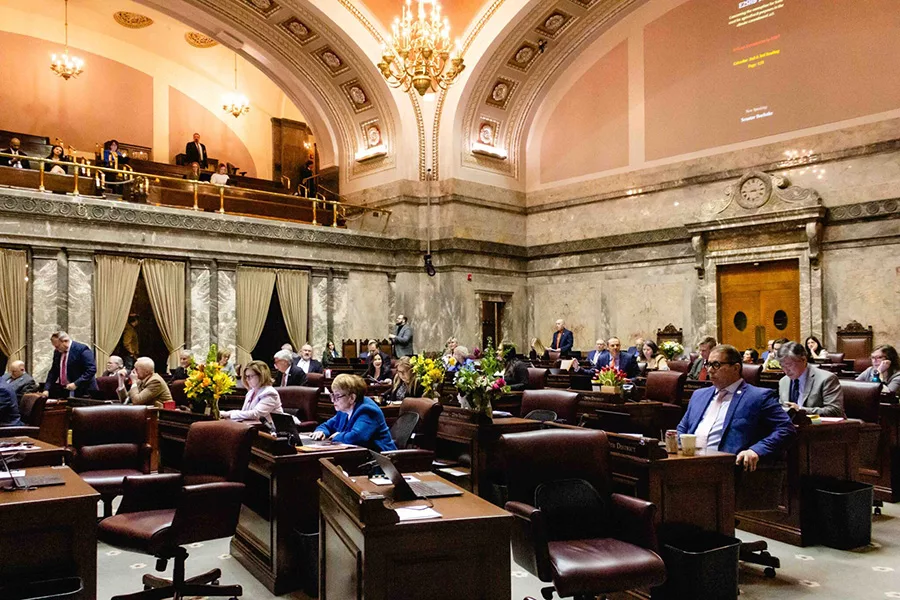
Lawmakers on the Senate floor on Wednesday, April 16, 2025.
Photo by Jacquelyn Jimenez Romero/Washington State StandardDebate on one of the most consequential tax policies Washington lawmakers have considered in years began around 5:40 p.m. March 9, dragged overnight, and was still going as of 8:50 a.m. March 10.
Democrats have the votes to push through their proposed 9.9% income tax on household earnings over $1 million a year. For Republicans at this point, the main way to oppose the policy, which they despise, is to saddle the bill with many amendments.
This bogs things down as lawmakers must work through discussion and votes for each one. It’s what they did, floating around 60 proposed changes – a doomed exercise in procedure versus power.
Republicans argued during the floor debate that an income tax is unconstitutional. They warned it would hurt families and businesses. They slammed Democrats for overstating what the bill would deliver, such as funding programs like free school meals (something in the non-binding “intent” section).
There were warnings of the potential for “bracket creep,” the idea that the tax could one day be expanded to cover households that earn under $1 million a year. Top Democrats contend that support isn’t there in their party currently to tax income below $1 million.
On the Democratic side, the bill is a huge breakthrough.
Democratic lawmakers believe higher earners should pay more to support the state’s stretched budget, and the services people have come to expect and demand in areas like education and child care. This tax bill provides that framework, they say. But even if passed, it will likely face challenges at the ballot box and in court. And payments wouldn't begin until 2029.
Amendments included proposals to lock in a large swath of funding for subsidized child care and half of the future tax proceeds for basic education. There were also proposals to commit 51% of tax receipts for the operating budget and 49% for tax relief for low-income families and tax breaks for businesses.
Some of the more obscure late-night discussions focused on issues like “loss carryforwards,” or exempting small forestland owners from paying the tax when they log their property.
There were still more than 20 amendments to go as of 9 a.m. March 10. Just one Republican amendment had been approved.
This story is republished from the Washington State Standard, a nonprofit, nonpartisan news outlet that provides original reporting, analysis and commentary on Washington state government and politics.