
Lawmakers make limited progress on housing policy
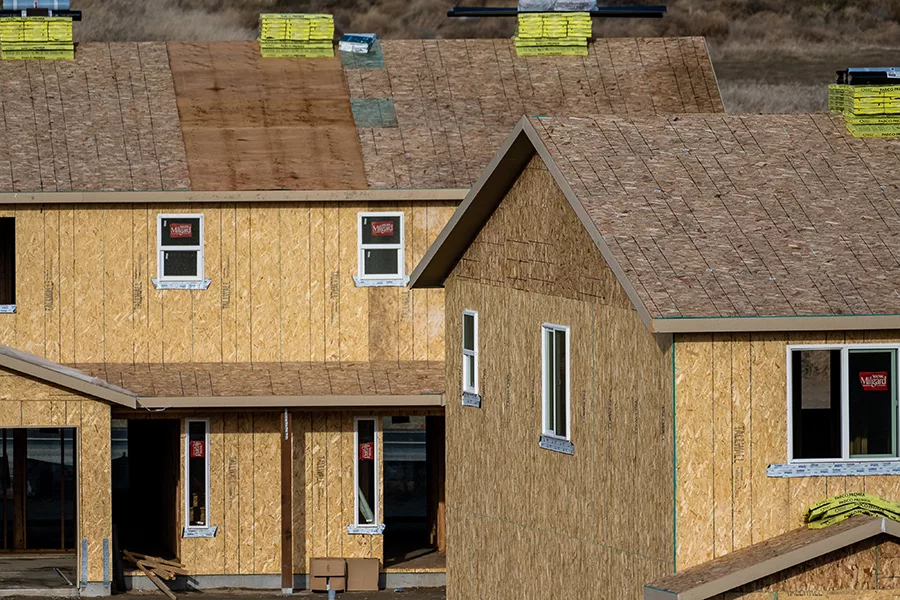
With 60 days of legislative action come and gone, significant proposals that could have stabilized rent increases, required denser housing near transit stops and increased housing options in rural areas have all lapsed.
“Modest at best,” is how Lt. Gov. Denny Heck characterized the Legislature’s progress on housing policy this year.
It’s a far cry from 2023, which lawmakers dubbed the “Year of Housing” as they cleared the way for more “middle housing” – duplexes and triplexes – throughout the state and put a record $400 million into the state’s fund for building affordable housing.
Those in leadership blame this year’s more limited progress on the lack of time in a short session.
“It’s not like we’re never going to do these bills,” said House Speaker Laurie Jinkins. “It just takes a longer session.”
Others say retirements and this year’s election could shake up the ranks of the Legislature, particularly the majority Democratic caucus, and could help move things along next year when lawmakers will have 105 days to legislate.
Housing has become a top priority for members in both parties and both chambers, but lawmakers continue to disagree – even with colleagues in their own caucuses – on how best to address Washington’s growing shortage of homes.
“We have a diversity of views in the Legislature, and we have a diversity of views within each caucus,” Senate Majority Leader Andy Billig, D-Spokane, told reporters last week. “That’s the reality of the society that we live in.”
Short session, long list of bills
One of the most dramatic examples of Democratic disagreement this session was a bill that would have capped annual rent increases at 7%. It went down a long path to ultimately fail – twice – in Senate committees, despite passing in the House.
House sponsors blamed the makeup of Senate committees, which they said gives too much power to a few moderate lawmakers who don’t represent the view of the entire party. Specifically, they called out Democratic Sens. Mark Mullet and Kevin Van De Wege on the Ways and Means Committee and Annette Cleveland on the Housing Committee.
“I don’t know that the Senate is opposed to this policy. I think there are senators who are opposed to this policy,” Rep. Emily Alvarado, D-Seattle, who sponsored the rent bill, told reporters after it died last month. “The committee structure is such that those senators mattered in particular.”
Republican leaders, who are staunchly opposed to rent stabilization, said they made a case to moderate Democrats that the policy would be “very bad for the rental market.”
The bill’s collapse was one of Republicans’ biggest wins this session, Senate Minority Leader John Braun, R-Centralia, said.
Rent was not the only housing policy that came up short this year.
A Gov. Jay Inslee-requested proposal would’ve required cities to allow denser housing near train or bus stops. But the two chambers couldn’t agree on affordability requirements included in the bill. Some wanted to ensure new units house people with low incomes. Others thought strict affordability requirements could disincentivize new development.
Inslee told reporters last week that he believes the proposal will get done in a future session.
Other failed proposals included those to tax the sale of expensive real estate to pay for more affordable housing, allow detached accessory dwelling units in rural areas, allow property owners to split their lots and give counties the ability to offer tax exemptions for those building accessory dwelling units for low-income households.
Republicans had particularly pushed for proposals to increase housing in rural areas and blamed Democrats for killing those bills.
“There were a lot of missed opportunities,” House Republican Leader Drew Stokesbary, R-Auburn, said.
A changing Legislature
Sponsors of the failed housing bills have already vowed to bring them back next year, and with a long, 105-day session and a host of new lawmakers, their prospects could be better.
In the House, so far, four Democrats have announced plans to seek open seats in the Senate, and four Republicans have announced their retirement.
In the Senate, five Democrats and one Republican have already announced they will not be seeking reelection next year either to retire or run for a higher office. A handful of others are running for higher office from safe seats, but if they win in November, would be leaving open seats in the Senate.
Mullet is running for governor and Van De Wege for lands commissioner. This clears the way for new senators – who might be more open to ideas like rent stabilization – to take their seats. The current Housing Committee Chair, Sen. Patty Kuderer, D-Bellevue, may also be out next year if her insurance commissioner run is successful.
On top of changes in the Legislature, Washington will also have a new governor.
“We have to figure out how to hit the reset button on this issue area,” Heck said.
Noting the turnover, he added: “Next year will be a good year to do that.”
Some housing wins
But this session wasn’t all bad for housing.
Rep. Frank Chopp, D-Seattle, said the biggest success was the additional money set aside for the Housing Trust Fund. The fund will get another $127 million on top of the record $400 million set aside last year for building affordable housing.
“That will make a tangible difference,” Chopp said.
Lawmakers also approved laws to require more cities to allow co-living, which is small dorm-like housing with shared common spaces, and tax breaks for affordable housing built on state lands. They also passed new tax incentives for developers converting commercial property to affordable housing and loans for organizations looking to develop housing for low-income households.
But these policies and the new funding is still “nowhere near” what the state needs, Chopp said.
Chopp also said it’ll be years before much of the new money and policy changes yield more homes.
He and others are already looking toward what can be done on housing next session, including finding more ways to use public property for housing and increasing homeownership.
The lack of housing is only going to get worse, Heck said, and lawmakers need to more clearly understand the consequences of inaction.
“The problem is way bigger than the magnitude of our response,” he said.
This story is republished from the Washington State Standard, a nonprofit, nonpartisan news outlet that provides original reporting, analysis and commentary on Washington state government and politics.

Stay Informed. It’s Free.
Subscribe to our newsletters and get the latest news and insights delivered to your inbox.
We respect your privacy.
Unsubscribe anytime.
Thank you!
You’re subscribed. Keep an eye on your inbox for the latest updates.