
More PNNL cuts possible under Trump’s proposed 2027 budget
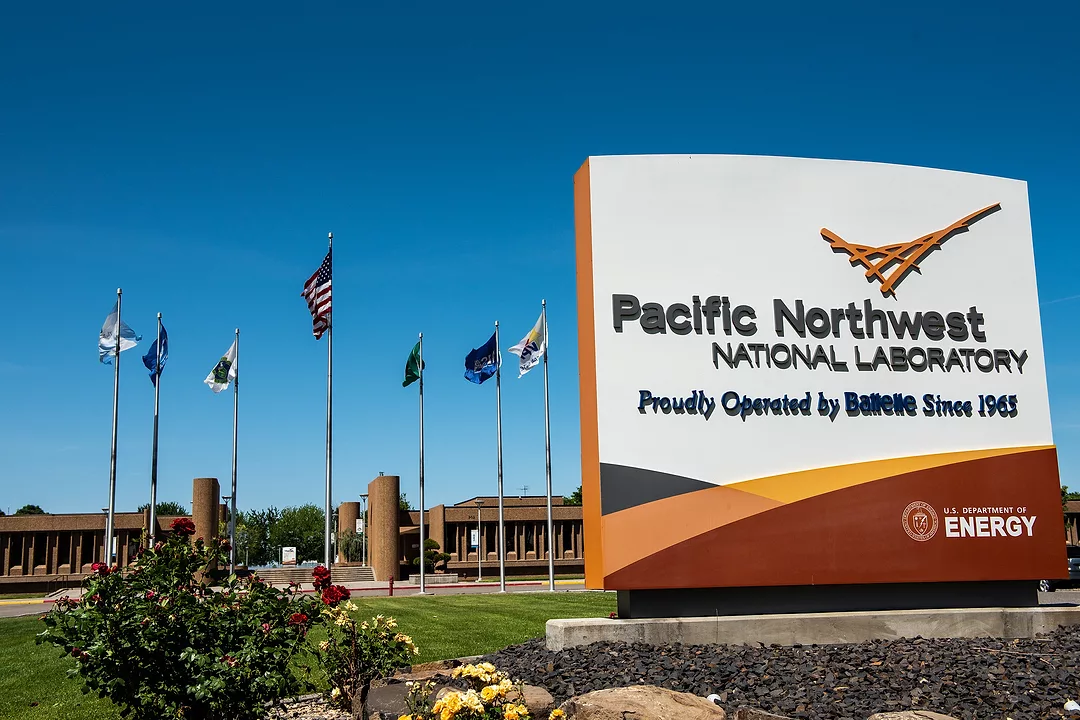
Research programs at Pacific Northwest National Laboratory may face more belt tightening if President Donald Trump’s budget proposal for the next fiscal year is implemented.
The fiscal year 2027 budget proposal, released April 4, would cut U.S. Department of Energy’s, or DOE’s, Office of Science – one of the primary sources of funding for the lab – by $1.1 billion, or 13% compared to current funding levels.
The budget proposal also specifically calls for cutting DOE’s Energy Efficiency and Renewable Energy programs, one of the primary programs at PNNL; cancellation of $15.2 billion in funding allocated by Congress in 2021 that invested in energy infrastructure, carbon sequestration and new energy technologies such as hydrogen; and a prohibition on federal funds being used to pay for subscriptions to and publishing in academic journals.
Rather, DOE would focus on artificial intelligence, particularly its Genesis Mission; fusion energy; and critical minerals and materials.
“These strategic investments are integral to (the Office of Science’s) mission to grow the scientific and technical knowledge that spurs discoveries and innovations, explore nature’s mysteries from subatomic particles to the building blocks of life and provide researchers with state-of-the-art user facilities,” according to a DOE memo detailing the budget proposal.
Nuclear nonproliferation activities as funded by DOE’s National Nuclear Security Administration also would see a 1% increase, or about $22 million.
The lab, operated by Battelle, is the largest employer in the Tri-Cities. Between August and December 2025 it shed hundreds of workers via voluntary and involuntary layoffs as the Trump administration looked to curtail research in three DOE programs with a large presence at the lab.
Doug Ray of grassroots group Friends of PNNL largely panned the budget request in comments to the Tri-Cities Area Journal of Business, saying “it seems that the Trump administration is not interested in long-term economic growth.”
“We do appreciate the emphasis on nuclear nonproliferation, cybersecurity, and advanced computing. However, the proposed FY2027 budget further cuts clean energy, grid modernization, and climate science – research areas that are essential for helping to prevent grid blackouts and climate-related disasters.”
Ray was particularly critical of the Trump administration’s plan to prohibit federal scientists from subscribing to or submitting research to academic journals using federal dollars.
“Researchers rely heavily on subscription journals to get instant access to the latest studies in their fields,” he said. “Take that away, and it’s like driving somewhere new with no GPS – still possible, but slower, full of wrong turns, and far more costly in time and resources.”

Stay Informed. It’s Free.
Subscribe to our newsletters and get the latest news and insights delivered to your inbox.
We respect your privacy.
Unsubscribe anytime.
Thank you!
You’re subscribed. Keep an eye on your inbox for the latest updates.