Innovation-minded
Private sector partnerships propel Richland startup toward large-scale deployment
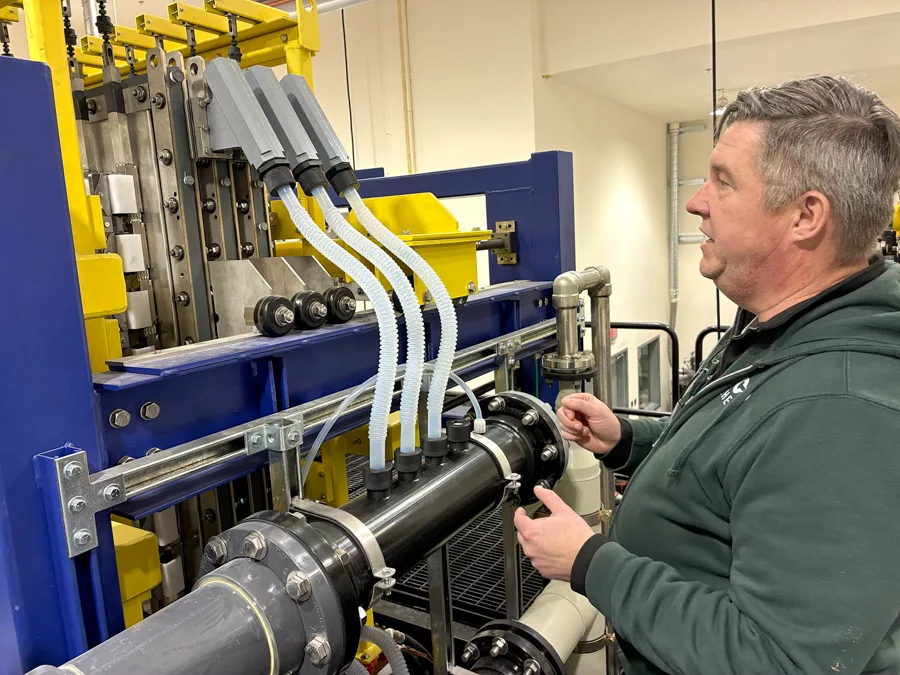
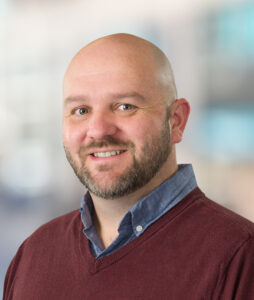
Todd Brix, co-founder and CEO of OCOchem, explains how the startup’s small-scale CO2 electrolyzer split hydrogen and oxygen from water before mixing the hydrogen with carbon dioxide to create formate.
Photo by Ty BeaverThe innovations at the center of a Richland-based startup are more than a billion years old.
Plants were the first to use water, energy and carbon dioxide to make the chemical components they need to grow and thrive. Humans first benefited from the fruits of their labor by literally using everything plants created and supported. Then we used fossil fuels – another legacy of plants – to power industrialization and technological advancement.
Now, Todd Brix and his employees at OCOchem are on the cutting edge of making the building blocks of almost everything civilization needs – fuel, pharmaceuticals, food and more – from those same three basic ingredients plants use every day. And they are accomplishing it without the detrimental impacts of fossil fuels.
“We do what photosynthesis does, but not how it does it,” he told the Tri-Cities Area Journal of Business during a recent tour of OCOchem’s Richland pilot facility. “We think of this as a full cascade of being able to make any organic molecule.”
The U.S. departments of Defense and Energy have financially backed the startup’s work through the first Trump and Biden administrations, as has Washington’s Commerce Department. Now private companies and startups are partnering with OCOchem, setting the stage for it to apply its technology at scale.
Small scale to start
Todd Brix, a Kennewick High School graduate, earned a chemical engineering degree from the University of Washington and an MBA from Harvard Business School.
His interest in harnessing hydrogen stems from watching his father Terry Brix, who was deeply involved in green chemistry, develop chemicals from waste biomass. That’s when he also learned one of the biggest challenges: How to safely store and transport an element that is typically found as a highly explosive gas.
Prior to launching the company, Todd Brix spent months researching various processes and securing technology to develop the small scale CO2 electrolyzers at the core of OCOchem’s business.
Electrolyzers split hydrogen and oxygen from water before mixing the hydrogen with carbon dioxide taken from the air. The product of that process, called formate, is an energy-packed material that is carbon-neutral. The process also can make other forms of formate using potassium and ethyl which have their own applications.
“OCOchem’s innovation could transform how we power vehicles, produce chemicals and manage carbon emissions,” the state Commerce Department said in a statement. “Instead of releasing CO2 into the air, OCOchem’s process makes it valuable to capture that resource, helping industries decarbonize, displacing products made from and by fossil fuels, while creating jobs and building new markets.”
Todd Brix was working out of a lab in his garage at his Woodinville home when he and his father formally launched OCOchem in 2020.
Four years later, the company had built the world’s largest CO2 electrolyzer cell, about the size of a dinner table.
When OCOchem first moved into Energy Northwest’s Applied Process Engineering Laboratory, or APEL, it used two offices and some lab space.
Today, it occupies 70% of the building and has 17 employees, with a multiple-story electrolyzer dominating part of the space that’s capable of producing 60 tons of formate per year.
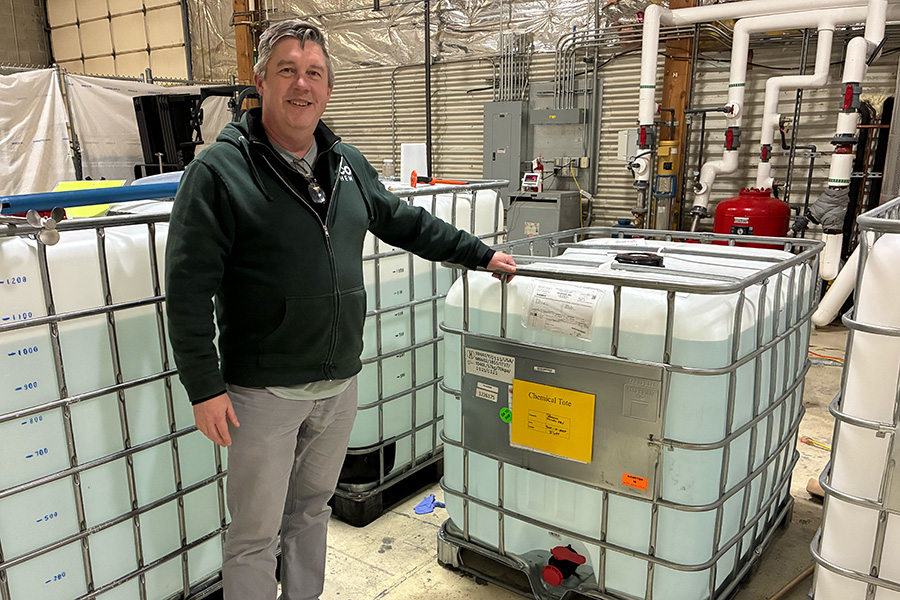
Todd Brix, co-founder and CEO of OCOchem, stands against one of the tanks of potassium formate his company's electolyzer has produced for a customer. Formate can be manufactured in various forms to meet multiple industrial, agricultural, food processing and other needs.
| Photo by Ty BeaverFormate’s potential
OCOchem is one of many enterprises in the burgeoning hydrogen economy, which has an increasing role in the Tri-Cities.
Switzerland-based Atlas Agro is seeking to build a green fertilizer facility north of Richland. Pacific Northwest National Laboratory has also contributed to the field and was part of the federally-designated Pacific Northwest Hydrogen Hub project.
But Todd Brix said his company’s product has broader applications than as fertilizer and is in demand as companies increasingly look for ways to reduce their carbon footprint.
Formate’s potential as fuel led the state Commerce Department to provide $1.5 million from its Clean Energy Fund, which was matched with the U.S. Department of Energy’s Hydrogen EarthShot initiative. More government partnerships have followed, including with Defense, which has shown interest in the technology’s potential for relatively small and portable electrolyzers to manufacture fuel for military vehicles in the field.
In August 2025, OCOchem partnered with ADM, an agricultural processer and food ingredient manufacturer, to build a demonstration plant in Decatur, Illinois, to create molecules such as the amino acid glycine and sweetener sorbitol, commonly used in modern food manufacturing. The plant is anticipated to finish construction by the end of this year.
“OCOchem has rapidly scaled an impressive CO2 conversion technology that aligns with ADM’s strategy to lead in industrial carbon management and sustainable molecule production,” said Kris Lutt, ADM’s president of sustainable materials and strategic initiatives, in a statement. “This collaboration represents a strategic step in demonstrating how CO2-derived formates can emerge as cost-competitive, next-generation C1 platform chemical – supporting lower-carbon supply chains and unlocking new value across the bio-based economy.”
The company shipped its first batch of formate to a New York firm in October to be used for deicing products for runways and driveways. And just before the close of 2025, German company b.fab announced its partnership with OCOchem to use formate to manufacture biochemicals rather than use fossil fuels.
“Now, with OCOchem’s industrial process commercialized, we can close the industrial CO2 circle and bring CO2 back into biochemicals via formate,” said Frank Kensy, b.fab’s CEO and co-founder, in a statement.
Innovation-minded
Widespread application of OCOchem’s technology faces some challenges.
Electrolyzers require large amounts of energy, which was another reason to establish its pilot plant in the Mid-Columbia: to be close to current and future nuclear power generators. Todd Brix is a proponent of nuclear power and sees its proliferation as key to OCOchem’s success.
Formate is more fuel efficient, but still isn’t as energy dense as fossil fuels. It takes roughly 1.5 gallons of formate to equal the energy stored in a gallon of gasoline.
And widespread adoption of hydrogen as a fuel is still years away, as evidenced by steady but slow integration of electric vehicles into the mainstream. And there’s been skepticism of hydrogen’s efficacy, as evidenced by the defunding of the hydrogen hub project by the U.S. Department of Energy in mid-2025.
But those issues don’t concern Todd Brix.
“We think we’ll have an inflection point over the next 10 years with regard to fossil fuels,” he said. “I don’t think we’ll be cheaper than gasoline, but we’ll have fewer emissions, less noise and no harmful waste products.”
And he already has eyes on the goal of building and operating an industrial scale formate production plant, one with dozens of electrolyzers, capable of producing more than 100,000 tons per year of formate.
“The Tri-Cities would be a great place to do that,” Todd Brix said. “When we went to build this company, this was the best place in the Pacific Northwest, it’s very innovation-minded.”