Blazing a trail
Old hospital provides new path to recovery
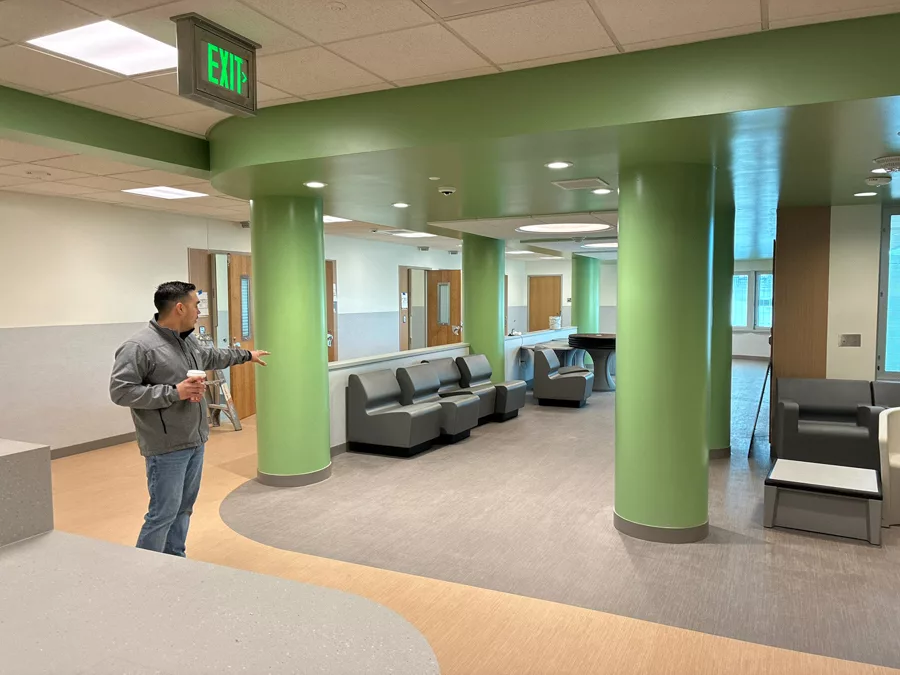
Riley Ollero, construction manager for Benton County, stands in common room of the evaluation and treatment unit at Columbia Valley Center for Recovery.
Photo by Ty BeaverThose working on the Mid-Columbia’s first inpatient residential behavioral health facility know they are blazing a trail.
From the outside, the former Kennewick General and then Trios Health hospital doesn’t look much different than it did when it closed in 2017, aside from fresh paint, new landscaping and new cinderblock walls.
But on the inside, the renovated spaces for Columbia Valley Center for Recovery are as transformed as the healing and support the facility and its staff will provide patients struggling with mental illness and substance use disorder.
“The intention was to set the standard for how one of these facilities should function,” Riley Ollero, Benton County’s construction manager, said during a recent tour of the recovery center, which is scheduled to open this spring.
It took years of fundraising and advocacy before work to remake the old hospital – portions of which are roughly 100 years old – into a behavioral health facility. Crews began demolition in the winter of 2024-25 to kick off the $23 million project, with Bouten Construction, NAC Architecture and MSI Engineers working as key partners with the county.
Benton County owns the facility, with Yakima-based Comprehensive Healthcare providing day-to-day operations.
The recovery center occupies roughly 56,000 square feet on the ground floor of the old hospital at 900 S. Auburn St., with its main entrance at the rounded entrance of what was the Spaulding Medical Building on 10th Avenue.
Light and color are front and center upon entering the rotunda, where those voluntarily seeking care will be able to engage with a staff member before being admitted. The walls of the rotunda are decorated with plaques naming those who donated $1,000 or more to the building campaign against a motif of a water lily-filled pond.
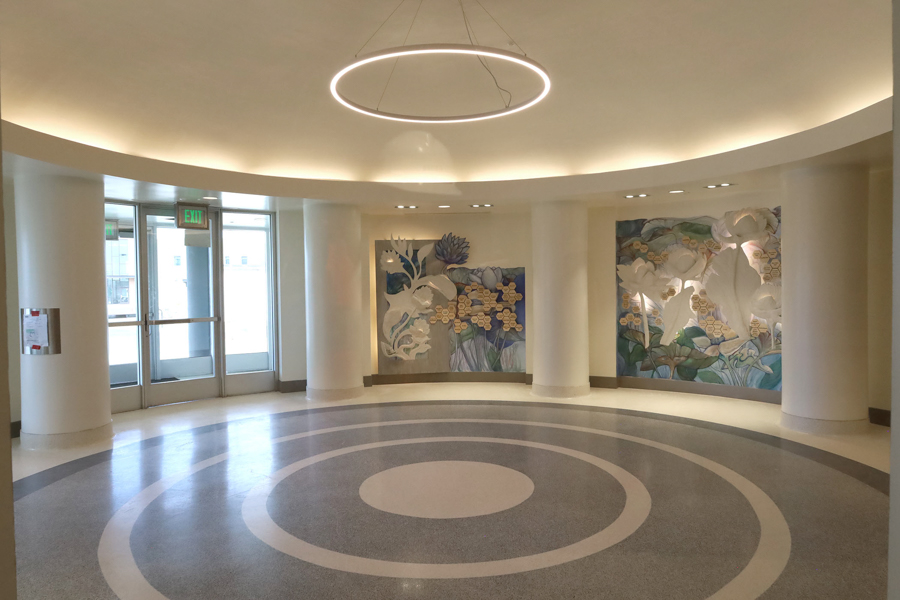
The main entrance into the Columbia Valley Center for Recovery opens into a rotunda that features a wall art installation with plaques honoring those who contributed $1,000 or more toward the facility’s construction.
| Photo by Nathan FinkeThe recovery center will be operated as a federally-designated Certified Community Behavioral Health Clinic, or CCBHC. Such facilities must offer 24/7 crisis response, a wide range of mental health and substance use services, and coordinate care and support via local hospitals, primary care providers, law enforcement and community partners.
The facility’s newly remodeled patient units, each with 16-bed capacity, reflect that model of care which will be provided by Yakima-based Comprehensive Healthcare.
The facility’s newly remodeled patient units, each with 16-bed capacity, reflect that model of care which will be provided by Yakima-based Comprehensive Healthcare.
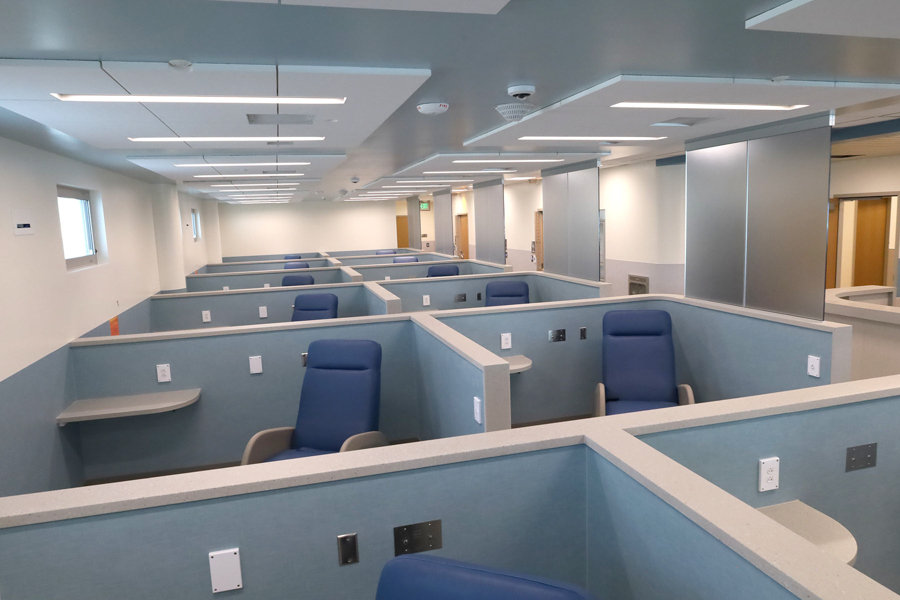
Specially-designed recliners sit ready in cubicles in the 23-hour observation unit at Columbia Valley Center for Recovery.
| Photo by Nathan FinkeNewly admitted patients go first to the 23-hour observation unit, which is outfitted with reclined seating in individual alcoves.
Next is the evaluation and treatment unit, where patients undergo medically-managed withdrawal. The crisis stabilization area will offer voluntary, short stay support while residential inpatient treatment will provide longer term integrated mental health and substance use disorder treatment.
Each unit has different color schemes but otherwise shares many of the same amenities. Abundant natural light, secure outdoor spaces for patients and dedicated areas for providing medication and meals round out each space.
Elsewhere in the facility, common areas such as a wellness center and family room will offer additional opportunities for patients to heal and begin rebuilding their lives.
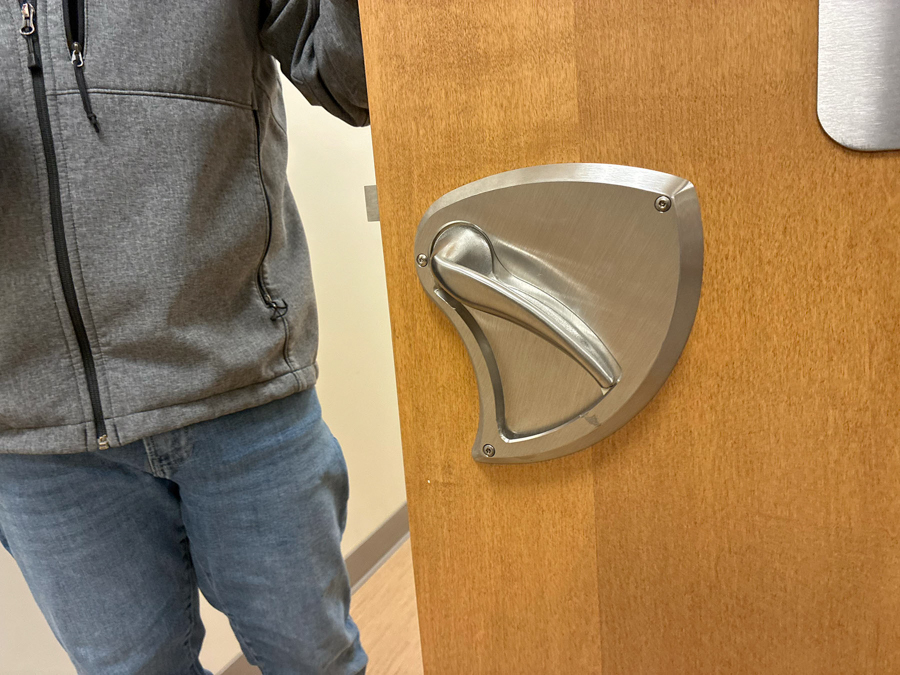
Features such as door handles, plumbing fixtures and lighting inside the Columbia Valley Center for Recovery are designed to be anti-ligature to prevent patient self-harm.
| Photo by Ty BeaverSavings from some lower than anticipated costs through the course of construction allowed additional work to be completed, such as a larger common dining room and prep work of areas for future use on the east side of the former hospital.
Comprehensive Healthcare also contributed $250,000 toward a vocational lab to help residential patients prepare for life after treatment.
But it’s the smaller details that demonstrate the unique needs of the recovery center’s future patients.
All furniture is either designed to be bolted to walls and floors, in the case of beds and wardrobes, or heavily weighted to prevent them from being used to barricade doors or thrown. Many of the center’s doors are equipped with special secondary hinges that can be used to open doors if patients barricade themselves in a room.
And every fixture, from door handles to shower faucets, is designed to be anti-ligature to reduce opportunities for patient self-harm. That element of the project was something Alex Ramos, a project engineer with Bouten, said sets the recovery center apart from other health care facilities he’s worked on.
“It was really exciting working here and having all the challenges,” he said. “It’s impactful on me as a person to see what this will do for the community.”


Stay Informed. It’s Free.
Subscribe to our newsletters and get the latest news and insights delivered to your inbox.
We respect your privacy.
Unsubscribe anytime.
Thank you!
You’re subscribed. Keep an eye on your inbox for the latest updates.