After sitting idle for years, Pasco Amazon facility set for $30M overhaul
Project shifts toward increased automation, fewer people
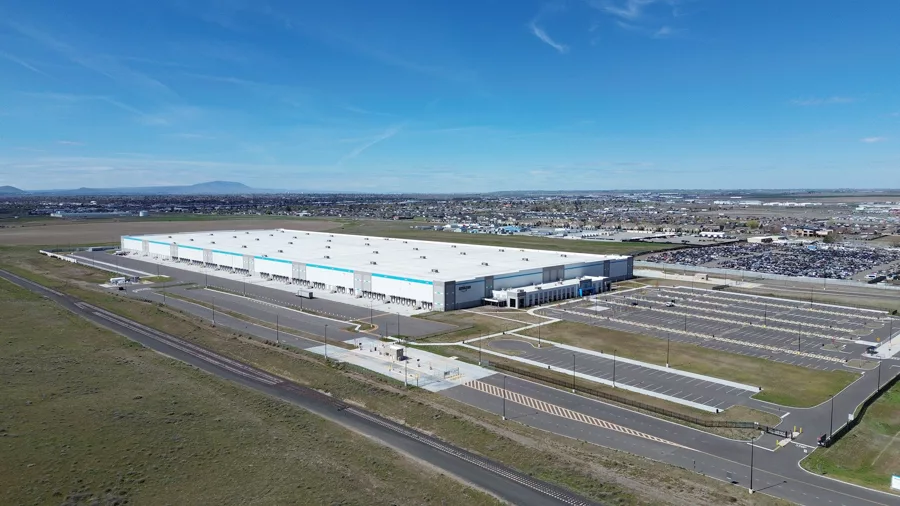
The Amazon facility commonly known as Project Pearl sits vacant on the east side of Pasco across from the currently operating Project Oyster cross-dock facility.
Photo by Nathan FinkeA vacant Amazon warehouse in Pasco that cost nearly $140 million to build will soon see another $30 million in improvements to make it operational, reflecting a shift toward increased automation and leaner staffing.
Building permits filed with the city of Pasco indicate Amazon is planning a slew of tenant improvements for the more than 1 million-square-foot facility at 1202 S. Road 40 E., known as Project Pearl while it was under development.
The facility has been vacant since receiving the green light for occupancy three years ago. It’s located just west of the operating Amazon cross-dock facility in east Pasco known as Project Oyster.
An Amazon representative confirmed to the Tri-Cities Area Journal of Business that “the planned work at this facility is being done to prepare it to support our local operations network, enabling us to provide great service to customers.” The representative did not provide a timeline or any other details about the project.
City planning officials said they are pleased to see Amazon continue to invest in the community. While they did not have any further information about the online retailer’s plans, they indicated that the improvements reflect changes in Amazon’s distribution operations.
“The city is aware that the proposed occupant load will be lower than originally anticipated due to increased automation, conveyors and a cross-over dock model,” Haylie Matson, Pasco’s community and economic development director, told the Journal in an email.
The Amazon facilities, including the multimillion-dollar delivery station at 5802 N. Capitol Ave., represent huge investments in the Tri-Cities.
The two Amazon properties on South Road 40 are among the highest assessed property values in Franklin County, at a combined $367 million. Project Pearl’s property tax bill this year is nearly $1.5 million, while Oyster’s is nearly $1.7 million.
Construction on the two massive Amazon warehouses began in 2021 between Highway 12 and where the Snake River flows into the Columbia River.
The operating Amazon warehouse came online in 2024 with roughly 1,000 workers. The facility is one of the company’s first national inbound cross docks, receiving shipments of incoming products from vendors and sellers from all over the world, which are then sent out to other Amazon facilities for processing and eventual delivery.
The vacant facility, however, has remained idle, with one Amazon official saying in late 2024 the company was working “to understand how best to utilize that facility within the fulfillment network.”
The list of improvements Amazon’s latest building permit calls for is extensive, impacting nearly all areas of the facility: additional dock doors; chain-link fence enclosures; electrical, telecommunications and security upgrades; fire protection system modifications; parking; water coolers; supporting structural modifications; and miscellaneous signage.
Ryan Companies US Inc. of Bellevue and Minneapolis, which built the facility, is implementing the improvements.
Irvine, California-based Ware Malcomb is listed as the architect.
Amazon has not hidden its intent to automate as much of its operations as it can, reducing its reliance on and the cost of human workers.
The New York Times reported in October 2025 that the online retailer had determined it could eliminate the need to hire 160,000 people by 2027 via automation. A flagship facility in Louisiana uses 1,000 robots to handle the bulk of its operations.
The retail giant announced plans to cut nearly 5,000 employees across the state so far in 2026 after announcing the reduction of 16,000 roles across Amazon nationwide in January to reduce layers and bureaucracy.
Amazon’s net sales increased 12% to $716.9 billion in 2025, compared with $638 billion in 2024, according to the company’s latest financial report. Net income increased to $77.7 billion in 2025, or $7.17 per diluted share, compared with $59.2 billion, or $5.53 per diluted share, in 2024.
That year also saw expansion and improvement of Amazon’s delivery operations, notching accomplishments such as delivering at the fastest speeds ever for Prime members globally, increased delivery speeds for rural customers and growing same-day delivery of its grocery and pharmacy items.