
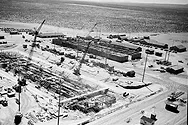
What does a U.S. Air Force base on the Pacific island of Guam have to do with the Hanford site? Enough that Washington's attorney general joined a Supreme Court brief over it.
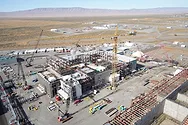
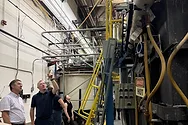
Hanford site contractors, U.S. Department of Energy officials and other partners recently completed a test of technology for the still-under-construction High-Level Waste Facility of the site’s Waste Treatment and Immobilization Plant two months ahead of schedule.
For the first time in years, we have a realistic opportunity to move much faster, without sacrificing safety or effectiveness. The only unacceptable option now is inaction.
Months after denying a strategy shift, DOE is advancing a plan to grout more Hanford tank waste instead of vitrifying it – drawing state and watchdog pushback.
The state Department of Ecology is seeking public comment on a draft renewal of the Hanford sitewide permit, which would cover 52 waste sites and facilities at the Hanford nuclear site.
Thousands of Tri-Cities workers at the Hanford nuclear site and Pacific Northwest National Laboratory are watching a federal budget process that could determine whether a second consecutive year of deep job cuts can be avoided.
U.S. Department of Energy officials have said plans to treat a portion of the 55 million gallons of underground tank waste at Hanford via a process different than stabilizing it in a glass form will cost between $480 million and $1.1 billion – and that does not include related costs.
With the help of artificial intelligence, research from scientists at the Pacific Northwest National Laboratory in Richland could help optimize the vitrification of nuclear waste at Hanford and other nuclear sites.
Federal lawmakers, including U.S. Rep. Dan Newhouse, R-Washington, passed a proposal to fund many U.S. Department of Energy projects out of committee on Wednesday, and the bill has bad news and good news for the thousands of Tri-City workers at the Hanford site and Pacific Northwest National Laboratory.