Feds yank funding for Northwest green hydrogen project
Big investments in Richland, Bellingham now in doubt

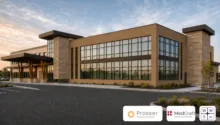
A rendering of Atlas Agro's proposed Pacific Green Fertilizer facility in Richland.
Courtesy Atlas AgroThe future of a $1 billion fertilizer plant in Richland is in doubt after the Trump administration on Oct. 1 nixed funding for the Pacific Northwest Hydrogen Hub and other federally-subsidized clean energy projects in Democratic-led states.
The hub launched last year to funnel up to $1 billion in federal dollars to the region to kickstart production and use of zero-emissions hydrogen fuel.
Atlas Agro’s planned fertilizer facility was the biggest single component and the Swiss company behind it had already started permit applications and lined up customers. Requests for comment to Atlas Agro from the Journal were not returned by an Oct. 9 press deadline.
The project is set to create a lot of family-wage jobs while providing a domestic source of high-quality fertilizer for local agriculture “so we are disappointed that the Pacific Northwest Hydrogen Hub was terminated,” said David Reeploeg, vice president for federal programs with the Tri-City Development Council, in an email to the Journal. He declined to comment on how the hub’s cancellation may impact Atlas Agro’s plans.
Washington Democratic Sen. Patty Murray blasted the Trump administration for playing “some sort of sick political game” on the first day of the partial government shutdown.
“This administration has had plans in the works for months to cancel critical energy projects, and now, they are illegally taking action to kill jobs and raise people’s energy bills,” Murray said.
Trump administration officials voiced deep skepticism about climate and green energy initiatives.
In a social media post, White House Office of Management and Budget Director Russell Vought celebrated the cancellation of nearly $8 billion in “Green new scam funding to fuel the left’s climate agenda.”
A news release from U.S. Department of Energy Secretary Chris Wright said his agency determined the cancelled projects did “not adequately advance the nation’s energy needs, were not economically viable, and would not provide a positive return on investment of taxpayer dollars.”
In total, the Trump administration pulled funding for 223 clean energy projects in 16 states. Nearly all were in states that voted for former Democratic Vice President Kamala Harris in the last presidential election.
There were recent signs of trouble for the hub, such as slower-than-expected emergence of demand for hydrogen fuel and the high cost of production. A half dozen energy developers exited from various projects that were originally included in the Northwest hub’s federal funding proposal.
Prospective large-scale clean hydrogen producers, including Atlas Agro, were also struggling to find enough affordable renewable electricity needed to split water molecules to make pure hydrogen.
In a late Oct. 1 email to project partners, Chris Green, the hub’s president, lamented the short-notice termination and uncertainty it created, but tried to close on a positive note.
“Whether or not this grant funding remains, I’m encouraged that the trail is now blazed for more development and projects to be delivered in this market and that there will be a bright future for H2 as a highly successful and lucrative energy product in the future in our region,” Green wrote.
This story is republished from the Washington State Standard, a nonprofit, nonpartisan news outlet that provides original reporting, analysis and commentary on Washington state government and politics.
The Tri-Cities Area Journal of Business and Oregon Capital Chronicle reporter Alex Baumhardt contributed to this story.