
Kadlec’s new heart implant helps reduce stroke risk
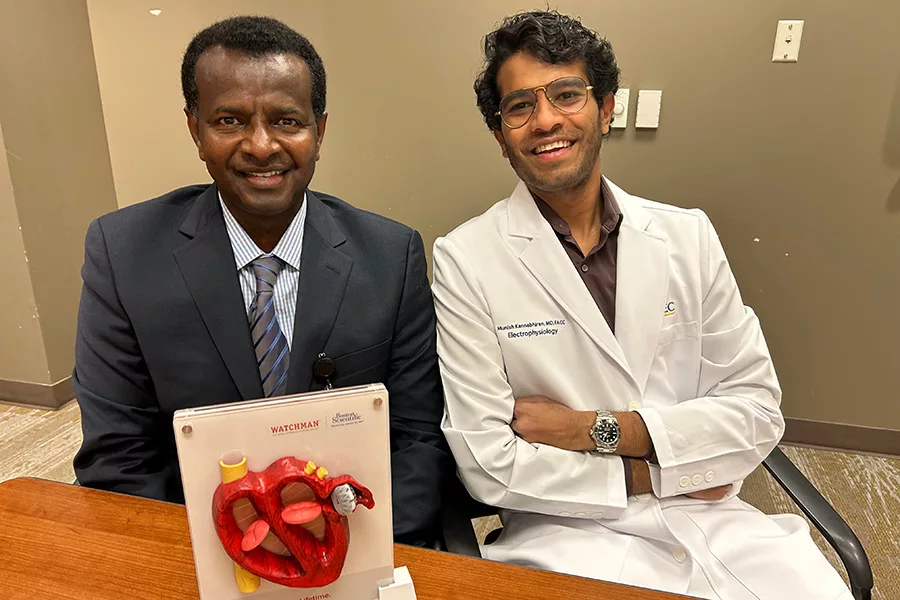
Thanks to new technology, Kadlec Regional Medical Center in Richland can now place a small implant in the heart to help prevent stroke in people with atrial fibrillation not caused by a heart valve problem.
For many patients, this WATCHMAN device, which is about the size of a quarter, can eliminate the need for lifelong blood thinners, according to Kadlec.
Atrial fibrillation is the most common type of irregular heartbeat. With the condition, the heart’s upper chambers contract rapidly and irregularly, leading to inefficient blood flow.
Blood can pool in a small pouch of the heart called the left atrial appendage, where clots can form and travel to the brain, causing a stroke.
About 90% of stroke-causing clots in people with atrial fibrillation originate in the left atrial appendage. People with the condition have a five to seven times higher risk of stroke than those without it, Kadlec said in a release.
WATCHMAN works by sealing off the left atrial appendage, preventing clots from forming there and entering the bloodstream.
Until now, Tri-Cities residents who needed the procedure often had to travel hours away, including to Spokane or Seattle.
“There were many of our patients who needed this device, and they were driving hours to get it,” said Abdelazim Hashim, an interventional cardiologist at Kadlec, in a statement. “Many are older, and it can be difficult for them to travel for treatment. We saw it as a service to this community to offer WATCHMAN here.”
Blood thinners are commonly prescribed to lower stroke risk in people with atrial fibrillation, but they are not appropriate for everyone.
“Blood thinners remain the standard initial treatment for stroke prevention in atrial fibrillation, but they aren’t suitable for everyone,” said Munish Kumar Kannabhiran, a cardiac electrophysiologist at Kadlec, in a statement. “WATCHMAN is considered for patients with non-valvular atrial fibrillation who are at increased risk of stroke but have a reason they cannot take long-term blood thinners – for example, those with a history of major bleeding, a high risk of future bleeding, or intolerance to anticoagulant medications.”
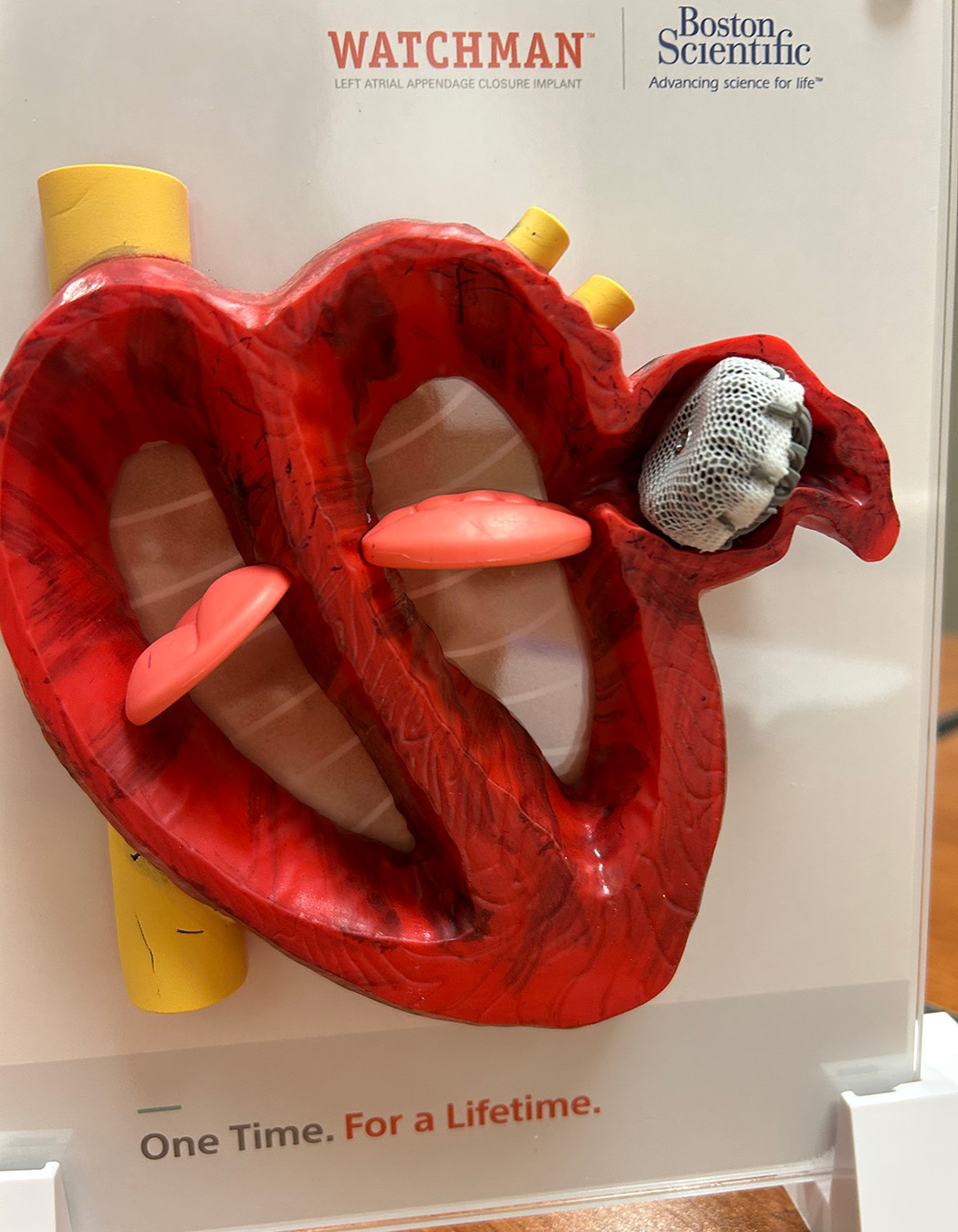
The mesh device can be implanted through a minimally invasive procedure. A flexible tube is inserted through a vein near the groin and threaded to the heart to deploy the device. Most patients can go home the same day.
Over time, heart tissue grows over the device, creating a permanent barrier against clots. In clinical trials, 96% of patients were able to stop taking blood thinners within 45 days after placement, according to a Kadlec release. A video explaining the device is available at watchman.com/video.
WATCHMAN does not treat atrial fibrillation itself, only the stroke risk associated with it. Kadlec offers a range of atrial fibrillation treatments, including pulsed field ablation.
“The sooner a patient with atrial fibrillation is evaluated by a cardiologist, the better,” Kannabhiran said. “Early assessment allows us to consider the full range of treatment options – including advanced therapies like catheter ablation – which can help restore normal rhythm and improve quality of life.”
People experiencing possible symptoms such as heart palpitations, shortness of breath, fatigue, dizziness, chest discomfort or unexplained weakness are encouraged to speak with their health care provider and, if appropriate, request a referral to a cardiologist.