
PNNL scientist receives $2.5 million grant to research violent storms

Richland researcher is among 57 nationwide to receive award
A Pacific Northwest National Laboratory scientist will receive $2.5 million over five years to study the growing frequency of violent thunderstorms in the central United States.
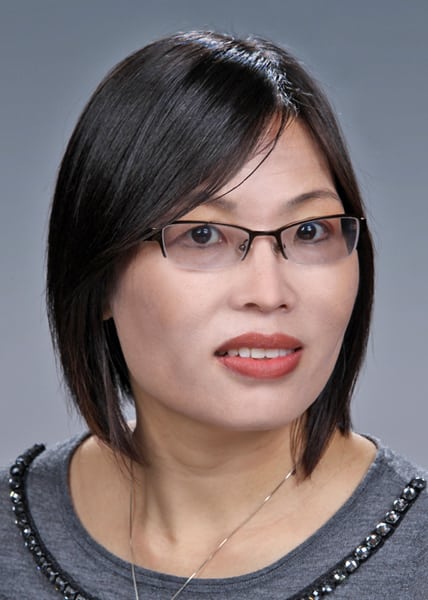
Jiwen Fan is among 57 scientists nationwide to receive the award designed to bolster the nation’s scientific work force by providing support to researchers early in their careers.
“Scientists recognized with this prestigious award represent some of the brightest minds in the nation. We are fortunate to have Jiwen on our team at PNNL, where her expertise in atmospheric chemistry has advanced our understanding of severe weather events and other complexities within our Earth system,” said Steven Ashby, director of PNNL, in a news release. “Her dedication and creativity exemplifies PNNL’s commitment to scientific excellence and support of the Office of Science mission.”
The money that Fan receives from the Early Career Research Program grant, a program of the U.S. Department of Energy, also will support several post-doctoral research associates.
Fan, scientist in the Atmospheric Sciences and Global Change Division at PNNL in Richland, will use the award to study storms producing large hail, damaging winds, tornadoes and torrential rainfall. She will look at how the storms form, why they’re changing and how they’re influenced by several factors, including the growth of cities as well as the effects of wildfires hundreds or even thousands of miles away.
At any given moment, there are 2,000 thunderstorms in progress across the globe, according to the National Severe Storms Laboratory.
The storms are an incredibly powerful brew of natural phenomena. Typically, warm air rising from the Earth’s surface cools as it moves higher, causing cloud droplets to form. Under certain conditions, storms can quickly become fierce.
Thunderstorms in the nation’s heartland are growing more frequent and violent, and scientists like Fan are starting to learn why.
One reason is the growth of cities like Kansas City, Dallas and Oklahoma City — expanding so-called urban “heat islands” that soak in light and trap more heat. This boosts the amount of energy near the Earth’s surface, increasing the severity of thunderstorms that form.
Cities also tend to have more airborne particles, which can influence cloud growth. Fan thinks these are important factors for understanding why severe thunderstorms occur more frequently over cities in the Midwest than they do over rural areas.
Wildfires, which are becoming more common and cover larger areas than they did just a few decades ago, might also feed thunderstorms in the central United States. Fires not only in the western United States, such as California, but also in Central America pump vast numbers of tiny particles into the atmosphere. Those particles change the way energy moves around the atmosphere and they can also help cloud droplets form. Particles that drift in the atmosphere to areas like Kansas or Oklahoma can increase the intensity of thunderstorms, leading to stronger rainfall, hail and even tornadoes.
Fan will put these and other factors together to more fully understand severe thunderstorm formation and intensity and how that is changing in the central United States. She will draw on powerful supercomputers managed by DOE to conduct an unprecedented close-up look at the roles that several different factors play in shaping severe thunderstorms.
The Early Career Research Program, now in its eighth year, is managed by DOE’s Office of Science and awards research grants to young scientists and engineers at U.S. universities and national laboratories.
Fourteen awards have been earned by PNNL staff since the program’s inception in 2010.