Legislators reach compromise on controversial water rights bill
Hirst decision agreement gets several construction projects back on track
A number of stalled Mid-Columbia construction projects are now shifting into gear since the Washington Legislature reached a compromise on a controversial water rights bill.
The irony is despite the rural nature of the well-digging conflict, the compromise does not really affect Benton, Franklin and Walla Walla counties other than getting numerous construction projects back on track.
This so-called Hirst controversy deadlocked the Legislature in 2017. The state Supreme Court’s ruling in 2016 blocked landowners from digging new wells without proving they wouldn’t threaten nearby stream levels needed for fish, essentially halting construction of homes and businesses in many rural areas.
The Building Industry Association of Washington commissioned a report to analyze the effect of the Hirst decision and said an estimated $6.9 million would be lost in economic activity each year.
In 2017, Democrats in charge of the House and Republicans in control of the Senate could not agree on any proposal to loosen up the restrictions. The Senate Republicans refused to pass the state’s $4.3 billion capital last year unless a compromise was reached on the Hirst fix-it bill. That stalled the capital budget that would have provided state money for many Tri-City area projects.
In mid-January, the two sides reached a compromise.
The agreement addresses 15 specific watersheds — essentially rivers and their tributaries. Each watershed would have a committee of stakeholders — ranging from tribes to developers to local governments—look at the well digging-permit applications for each watershed. The Washington Department of Ecology would be in charge of the 15 committees.
Also, the new law has the Legislature appropriating $300 million over the next 15 years to tackle environmental mitigation measures needed to deal with the digging of the new wells.
The 15 watersheds do not include the Lower Yakima River and Walla Walla River watersheds, or the Odessa Aquifer, which supplies most of the water to Franklin County. The Odessa Aquifer is separate from streams that have salmon runs and its levels do not affect the fish, said Franklin County Planner Loren Wiltse.
“We were in kind of a holding pattern (awaiting the Hirst compromise),” said Jerrod MacPherson, Benton County planning manager.
But the county did not receive any well-digging applications during the legislative impasse.
Though the Lower Yakima is not one of the target watersheds, the state Department of Ecology might upgrade the well-digging regulations for this area at a later date.
The Walla Walla River watershed went to advanced fish-related water conservations standards in 2009, meaning it is already in compliance with the new law, said Chris Hyland, executive director of the Walla Walla Watershed Management Partnership.
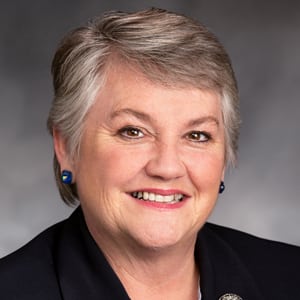
“We’re kind of ahead of the curve,” he said.
The Senate and House overwhelmingly passed the compromise bill, with some liberal Democrats and conservative Republicans opposing it. The two chambers almost unanimously approved the capital budget. All Mid-Columbia legislators voted in favor of the two bills.
“The compromise on Hirst is a fragile agreement. Like most political compromises, our solution to the rural water crisis is imperfect as it places unnecessary restrictions and costs on rural property owners. But after months of negotiations, it is the best deal we are likely to strike this year, and we need to act quickly. For thousands of rural property owners, no legislation would mean no water,” said Sen. Maureen Walsh, R-Walla Walla.
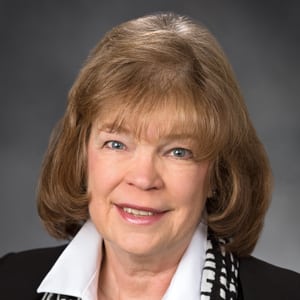
“Meanwhile, passage of the capital budget is crucial to communities across the state, including southeast Washington. The fact we were finally able to resolve these issues during the second week of our legislative session should come as a relief to rural property owners, to anyone with a public works project at stake,” she said.
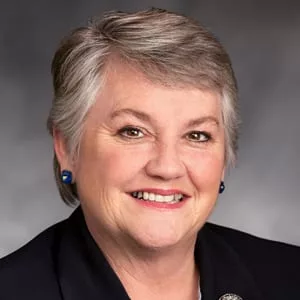
Sen. Judy Warnick, R-Moses Lake, was the GOP leader on the Hirst negotiations. “It has taken us this long to get here because many in Olympia didn’t take the plight of rural Washington seriously. We did what we had to do to represent our constituents and get the attention of urban lawmakers who don’t need to worry about where their water comes from,” Warnick said.
Sen. John McCoy, D-Tulalip, is the only Native American legislator in Olympia. He voted against the Hirst compromise, saying it violated treaty rights preserving water for salmon runs.
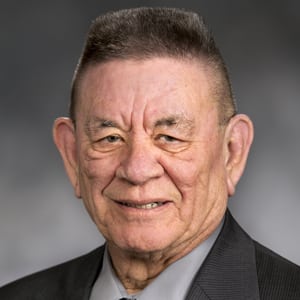
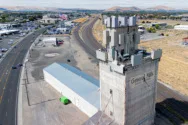
For the Mid-Columbia, the capital budget included money for Tri-County Habitat for Humanity to build new homes in the Whitehouse Addition in Pasco. It will help restore the Naval Air Station Pasco control tower for use as a future aviation museum and with the rehabilitation of the Princess Theater in Prosser.
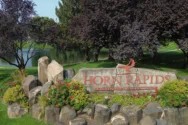
Work also can begin on upgrading the intersection of Highway 395 and Ridgeline Drive serving south Kennewick, on water supply projects in the Yakima and Columbia river basins, on design work for a 40,000-square-foot center for an Army infantry Stryker company in the Horn Rapids area, and for improvements at Richland’s Jefferson Elementary School.
Other local projects include building labs, classrooms and offices in the middle of the Washington State University Tri-Cities campus, a 9,000-square-foot new building to hold classrooms, exhibits and offices for student outreach at the Laser Interferometer Gravitational-Wave Observatory, or LIGO, doing upgrades to the city of Kennewick’s water-meter-reading system from using workers walking from home to home to instead transmitting all the information electronically, and building a new North Franklin School District bus center.