How to protect against attractive nuisances to avoid liability
By Beau Ruff
If you’ve ever driven past an abandoned house with rusted play equipment in plain sight and thought that it looked like a dangerous trap for unwary children, then you intuitively know about the concept of an “attractive nuisance.”
 Beau Ruff,
Landowners owe a duty to those who come on their property. The level of “duty” owed to a person on your property usually depends on the status of the guest. And, that level of duty affects the potential liability of the property owner. The status of the guest and resulting duty can be broken down into the following categories: Invitee, Licensee, or Trespasser.
Here’s how they’re defined (Source: Younce v. Ferguson, 1989):
- Invitee: A person who is invited to enter or remain on land for a purpose directly or indirectly connected with business dealings with the possessor of the land. This applies to most businesses. They are owed the highest duty to prevent harm to the invitee under all circumstances under a standard of reasonable care.
- Licensee: A person who is privileged to enter or remain on land only by virtue of the possessor’s consent. This includes social guests and others invited onto the land who do not meet the legal definition of an invitee. They are owed a lesser duty to prevent harm but only if the landowner knows or has reason to know of the condition and should realize it involves an unreasonable risk of harm to such licensees, and should expect they will not discover or realize the danger, and landowner fails to exercise reasonable care to make the condition safe, or to warn the licensees of the condition and the risk involved, and licensees do not know or have reason to know of the condition and the risk involved.
- Trespasser: They are owed the lowest duty. The general rule is that a landowner owes no duty to a trespasser, except to refrain from causing willful or wanton injury to him.
The status of the guest and resulting duty becomes more nuanced, however, when the guest is a child.
Our laws recognize that young children need greater protection. Thus, the “attractive nuisance” doctrine was created out of concern for the welfare and safety of children who trespass on land to take advantage of an attractive, but dangerous, condition (Degel v. Majestic Mobile Manor, Inc., 1996). At its heart, an attractive nuisance is simply a condition upon property that draws the attention of children (be they trespasser or not) that can expose the child to harm. When applied, the attractive nuisance doctrine substantially increases the duty owed to the guest, even in the case of one who would otherwise be categorized as a “trespasser.”
Courts have generally required the following five elements to be present to apply the attractive nuisance doctrine: a condition existed which was dangerous and likely to or probably would cause injury to those coming into contact with it; it was attractive or enticing to young children; the child was incapable, by reason of his or her age, of comprehending the danger involved; it was left unguarded and exposed at a place where children were accustomed to resort; and it was reasonably practicable and feasible either to prevent access by children or else to render it innocuous without obstructing any reasonable purpose or use for which it was intended (see e.g. Schneider v. City of Seattle, 1979).
So how does this commonly come up? You’ve likely seen examples of people or businesses protecting against the attractive nuisance doctrine in many ways.
Think of the building being heavily renovated in the middle of the city that is surrounded by plywood or dark mesh screening. A construction site is a common attractive nuisance that requires safeguarding from children. The screening not only keeps the child out but obscures the construction site, so the child can’t see the attraction.
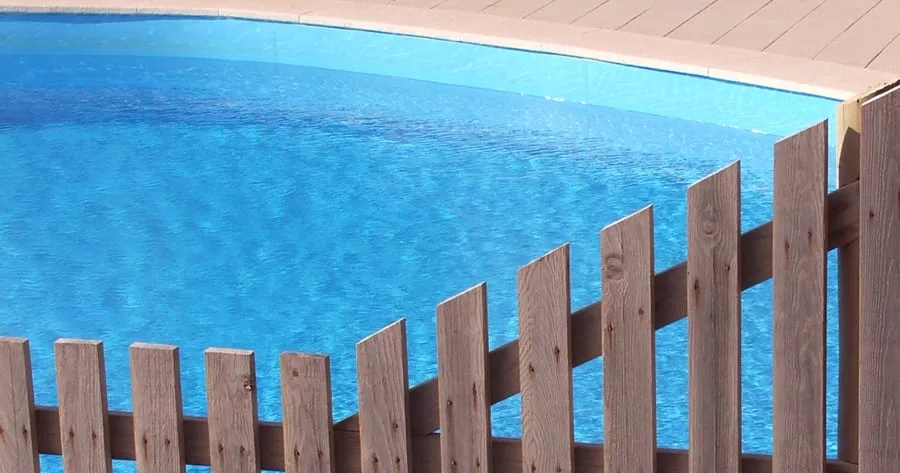
Think of the swimming pool that has its own fence surrounding just the pool portion with a secured gate. Though natural features are often exempt from attractive nuisance laws, the man-made variety of ponds and canals are subject to the laws and require safeguarding. Abandoned cars or trucks or farm equipment can also be an attractive nuisance.
What’s the potential liability? Failure to comply with safeguarding obligations is not, in and of itself, wrong. However, when a person is injured on the property due to the landowner’s failure, then the landowner has potential liability, usually to the hurt child or his or her family, through a lawsuit.
What can you do to protect against potential liability? First, survey your property and the items located on your property. If you find something that children would generally like to explore, then add safeguards. Put up a fence. Put away the equipment. Block the view of the attraction. Put up warning signs. Second, consider your homeowner’s or business owner’s insurance. Talk to your agent about your specific concern and how to guard against the attraction both with and without insurance. Consider getting, or adding to, an umbrella policy.
Attorney Beau Ruff works for Cornerstone Wealth Strategies, a full-service independent investment management and financial planning firm in Kennewick, where he focuses on assisting clients with comprehensive planning.