
Families may be at risk of losing financial assistance for long-term care
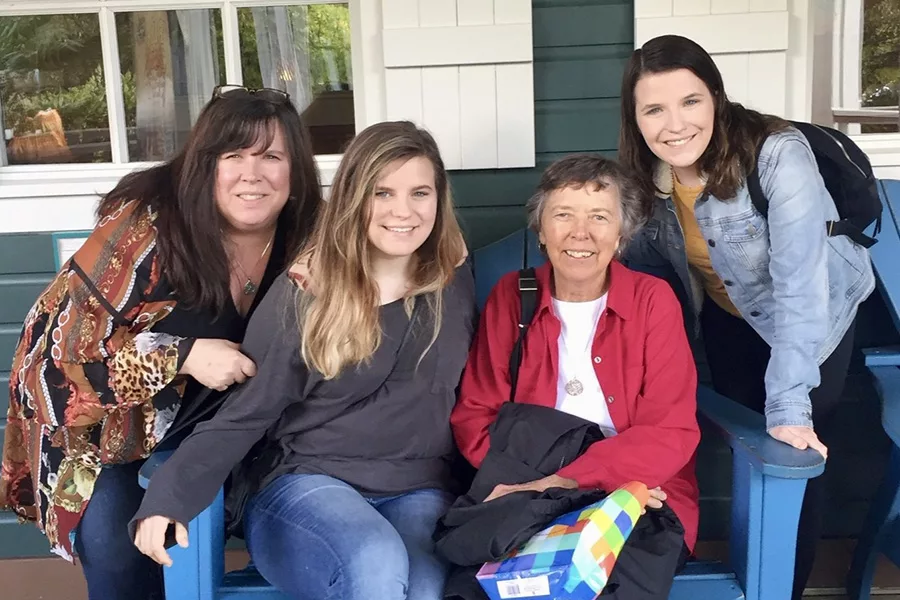
Cathy MacCaul, left, with her daughters and her mom, Betty.
AARP WashingtonAARP knows that family caregivers are the backbone of our nation’s long-term care system. In Washington state, 820,000 family caregivers provide $16.8 billion in unpaid long-term care annually, spending an average of $7,200 a year out of their own pockets. This is why AARP Washington has been hyper-focused on supporting these unsung heroes and those who depend on them for care.
My caregiving journey started early. In my 20s, my parents welcomed my grandmother into our home after my grandfather passed away and she was no longer able to care for herself because of dementia. It was a labor of love, but caring for my grandmother placed an incredible strain on my parents. Providing for her needs meant they had to adjust their work schedules and make other sacrifices, which meant I stepped in when I could.
During this time, my mom and I had several conversations about how she wanted to be cared for, considering our family history and the likelihood that she would deal with dementia in her later years. Even so, I never thought I would be the primary caregiver for my mother, but I did know that whatever her health circumstances, she wanted to stay in her home as long as possible.
That knowledge guided me when she ended up hospitalized after complications from Covid-19. I moved in for what I thought would be a temporary stay until she recovered. Nearly three years later, I live with my mom because she is no longer able to take care of herself. As her primary caregiver, my job is to keep her healthy, calm, happy, active and engaged with her friends. And, while she is strong and capable, there are days when she does not remember who I am or how to make a sandwich.
As the advocacy director for AARP, I know the challenges that caring for a loved one brings to bear. My mom has an in-home care provider who works three to four days a week so I can go to work. I’m also fortunate to work for an organization that provides flexibility when we must step in to care for loved ones. Other workers aren’t as lucky. Too many caregivers – often working women who step in as family caregivers – must reduce hours or leave a job altogether.
While I am a fierce advocate for my mother, I am also a fierce advocate for older adults. One of the things I have learned over the last 10 years working for AARP is the long-term care system is flawed. There are too many hurdles and barriers to accessing help when you are a middle-class family. It is up to all of us to make sure that we remove those barriers and hurdles so that families can do what they want: love and care for their families as long as possible.
Currently, Washington has a program that will provide financial assistance to families when they face serious long-term illness, injury or disability. Our public long-term care insurance program supports family caregivers who help their older parents, spouses and other loved ones remain in their homes, where they have told us they want to be.
This November, voters will have a chance to weigh in on ballot initiative 2124, which aims to make this program voluntary. If it passes, it will take away a program that helps families provide care when they need it most. It will also leave families with the choice of paying for care services out of pocket or purchasing expensive, often unattainable, long-term care insurance.
At AARP, we have worked steadily since 2019 to improve this program and make sure it is the best it can be. We’ve expanded coverage to near-retirees, and this year, we made the program portable if we move out of state.
This November, AARP is asking you to vote “no” on Initiative 2124. It hurts working Washingtonians and our families and hinders our ability to care for family members and do what we do best … be a family.
Cathy MacCaul is the advocacy director for AARP Washington.