Methane from landfills could be an important energy source
If you live in Spokane, you know about its waste-to-energy facility which burns up to 800 tons of solid waste a day and can generate 22 megawatts of electricity. That is enough to power 13,000 homes.
It is part of Spokane’s overall system that encourages recycling and waste reduction along with generating power.
But what about the landfills spewing greenhouse gases from rotting trash?
Earlier this year, Washington lawmakers approved legislation requiring large garbage dumps to capture methane gas thereby preventing its escape into the atmosphere.
It says owners of landfills with 450,000 tons or more of waste, or that generate methane equivalent to 3 million British thermal units of heat per hour must install and operate gas collection and control systems.
Washington has 24 landfills which store more than 450,000 tons of refuse, according to the Washington State Department of Ecology. And it has at least a couple dozen that are mostly closed with less than 450,000 tons.
Greenhouse gases from Washington’s landfills average approximately 50% methane and 45% carbon dioxide. They account for about 3% of the state’s greenhouse gas emissions, equivalent to the yearly emissions from 320,000 gas-fueled cars, according to a 2021 Ecology report.
Nationally, methane accounted for 10% of the country’s greenhouse gas emissions in 2019, according to the Environmental Protection Agency.
EPA figures landfills account for 17% of the nation’s emitted methane, behind fossil fuel production (30%) and livestock-related emissions from livestock (27%).
Methane is often overshadowed by carbon dioxide in the climate debate, but it is far more potent. Because human-related methane emissions in the United States accounted for about 15% of the air pollution last year, it needs added attention.
EPA has a landfill methane outreach website. It encourages actions to control methane emissions from landfills. In 2020 landfill gas emissions were equivalent to 20.3 million passenger vehicles driven for one year or the carbon dioxide emissions from nearly 11.9 million homes’ energy use for one year.
At the same time, methane emissions from municipal landfills represent a lost opportunity to capture and use a significant energy resource, EPA adds.
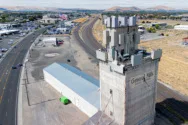
The Klickitat County Public Utility District and the landfill’s owner, Republic Services, are purifying the landfill methane from the Roosevelt Regional Landfill into renewable natural gas and feeding it into Williams’ Northwest Pipeline in southern Washington.
Trains from across Washington deliver 300 containers of trash and garbage daily to the 2,500-acre site, which is 75 miles southwest of Richland, on the Washington side of the Columbia River.
Current Roosevelt methane production generates 20 megawatts of electrical power, enough for 20,000 homes. The owners hope to boost generation to 36 megawatts and power 30,000 homes.
In past landfill capping, methane was contained on site. For example, at the Midway (Kent) and Hawks Prairie (Lacey) landfills along Interstate 5, pipes were drilled into the dump, methane was collected and flared off.
Mother Earth News reported new technology to boost gas recovery.
“The gases can be vacuumed from underneath a landfill and cleaned, leaving pure methane to fuel an engine that converts the energy into usable electricity. With this science, waste centers are capturing and converting the gas into natural gas reducing the smell, the threat of explosion, the damage to the ozone, and the possibility of smog formation.”
Hopefully, our elected officials also will look at landfill gas as an energy source.
That means they will need to accept methane, which is the key component of liquified natural gas, as a source for heating, cooking and transportation and include it as part of our future energy portfolio.
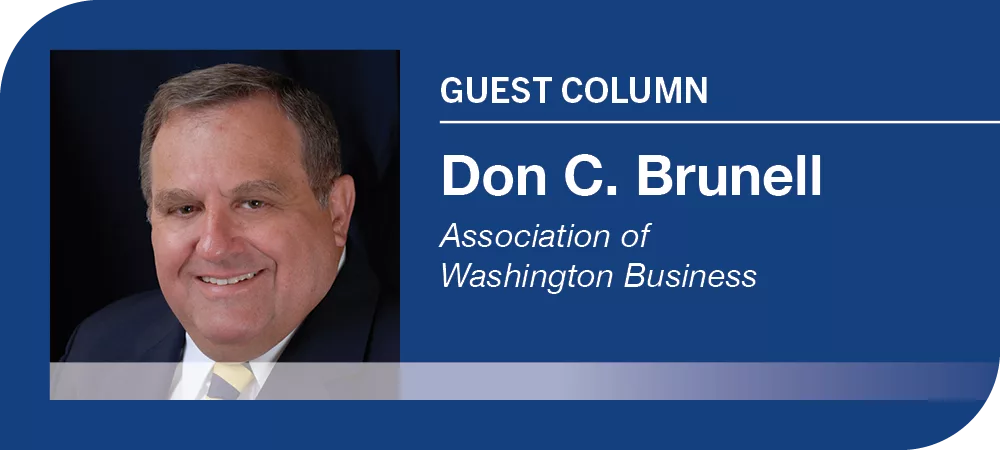
Don C. Brunell is a business analyst, writer and columnist. He retired as president of the Association of Washington Business, the state’s oldest and largest business organization, and now lives in Vancouver. He can be contacted at [email protected].