
‘Smart home’ research aims to keep seniors in their homes longer
In the not too distant future, “smart homes” could be as common as smartphones.
A Washington State University researcher believes so-called “smart homes” might be a way to keep senior citizens independent and in their homes longer.
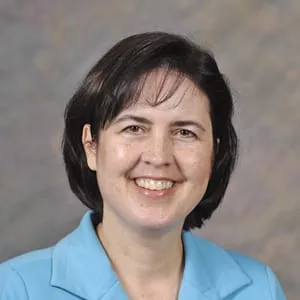
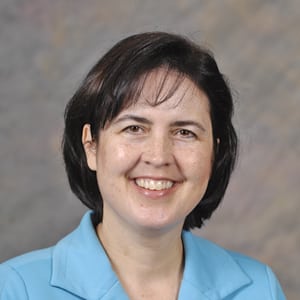
“We want to provide intervention to increase independence,” said Diane Cook, whose research work in data mining and artificial intelligence focuses on the design of “smart homes” to provide health monitoring and intervention.
Her research has been noticed at the national level. Cook recently was named a fellow of the National Academy of Inventors.
“Smart home” research uses programmed sensors — they look like smoke detectors — to monitor, predict and improve quality of life, particularly in elder care.
As the U.S. population ages, using technology to address challenges is of increasing interest to senior citizens who wish to stay in their homes, care providers and government leaders, especially since assisted living costs can average $70,000 per year, according to a WSU release.
Someday soon seniors might be able to rely on a “smart home” to alert their caregivers or loved ones if they fall or to provide them a snapshot of their week’s activities, Cook said.
Cook works with “smart home” test sites that feature 25 sensors strategically placed throughout a home. One hundred different sites have been equipped, usually for about a month at a time. Roughly 30 “smart homes” are currently active, she said.
The sensors are meant to be unobtrusive.
They aren’t cameras, but infrared motion sensors — similar to the way a garage door sensor works, Cook said.
Another kind of sensor monitors the opening and closing of doors, from a front door to a medicine cabinet door.
Cook, a professor in the School of Electrical Engineering and Computer Science, is working to design software to analyze the sensors’ data to recognize activities and patterns in a “smart home.”
When changes in routines or behavior occur, the system could dispatch a call for help or alert a caregiver.
The “smart homes” may even be able to interact with seniors, alerting them to take their medicines during a meal, for example.
Cook said she works closely with health care experts to interpret and label the data to make it more meaningful.
When asked about a timeline for when “smart homes” could be commonplace, she said she expects to “see big changes within the next 10 years.”
She also joked that the ideal “smart home” would be able to do laundry.
Cook holds several patents in environmental sensor-driven activity model development. She co-founded Adaptelligence, a startup company that focuses on activity recognition using sensors in wearable and mobile devices. A former WSU graduate student also founded Behaviometrics, which is building a consumer product for elder care that uses an in-home sensing array developed in Cook’s lab.
“Cook is making a difference in people’s lives through her innovations in elder care and health monitoring,” said Don Bender, interim dean of the WSU Voiland College of Engineering and Architecture, in a statement. “This prestigious (fellowship) demonstrates the impact that she is having in addressing our nation’s biggest health challenges.’’
Ranked in the top 5 percent of her research peers, Cook is a fellow of the Institute of Electrical and Electronics Engineers and is a recipient of career development and research initiation awards from the National Science Foundation. She is co-director of the National Institute on Aging’s training program in gerontechnology and a director of its artificial laboratory.
Cook was inducted into the National Academy of Inventors this month as part of the sixth annual Conference of the National Academy of Inventors in Boston.