Drought drives new statewide initiative, water monitoring tools
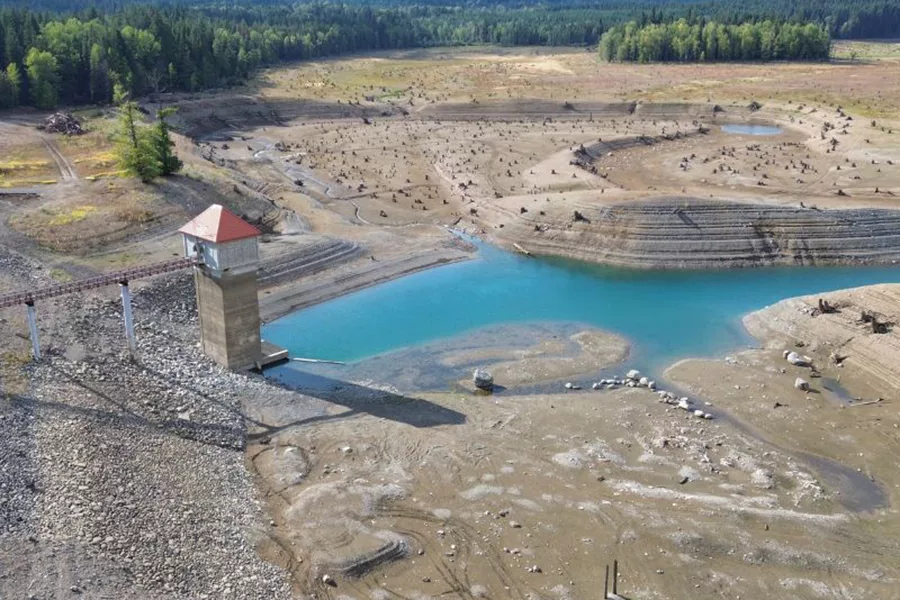
Low storage in Lake Kachess, one of five reservoirs in the Yakima Basin, in fall 2025.
Courtesy Washington State Department of EcologyAs irrigators around the state wrestle with another year of drought, state officials have launched an effort to brainstorm solutions with communities along with a new tool to help Yakima Valley property owners track water restrictions.
Gov. Bob Ferguson and the state Department of Ecology announced the Washington’s Water Future initiative on May 6. It will work to bring stakeholders ranging from communities, tribes, farmers, businesses and local leaders together at regional roundtables this summer to determine water needs and challenges as well as identify paths forward.
“We have an opportunity to learn from success both in Washington and across the West, and identify and discuss solutions that build our resiliency to the impacts of more frequent extreme weather events,” Ecology said in a statement. “These solutions need to be tailored to the impacts facing Washington’s watersheds and the water needs in each basin. Approaches like aquifer recharge, reclaimed water, storage, conservation and restoring habitats like wetlands and floodplains will all be on the table for discussion.”
After four years of drought, the Yakima Valley is one of the hardest hit regions in the state. The U.S. Bureau of Reclamation estimated on April 9 that proratable water users will receive only 52% of their normal water supply. This means junior water rights won’t receive any water as proratable users need to receive 100% of their normal supply before junior users can access whatever remains.
Ecology recently launched a new webpage aimed at keeping water users in the region informed on water supply conditions and restrictions.
“We have some of the best water supply in the nation because the generations before us had the foresight to protect it – but climate change is jeopardizing that,” Gov. Bob Ferguson said a statement. “We need to work together now to plan for the future.”
The governor’s office said the latest climate projections by the University of Washington Climate Impacts Group indicate conditions will only get worse in the years ahead. More rain in the winter will continue to increase flooding risk, while less snow will reduce how much water is available for people and fish in the summer. This will be a statewide problem, including for the traditionally “wet” western Washington, according to the governor’s office.
Go to: https://ecology.wa.gov/water-shorelines/water-supply/water-availability/yakima-basin