
Hanford union members get reprieve from office consolidation plan
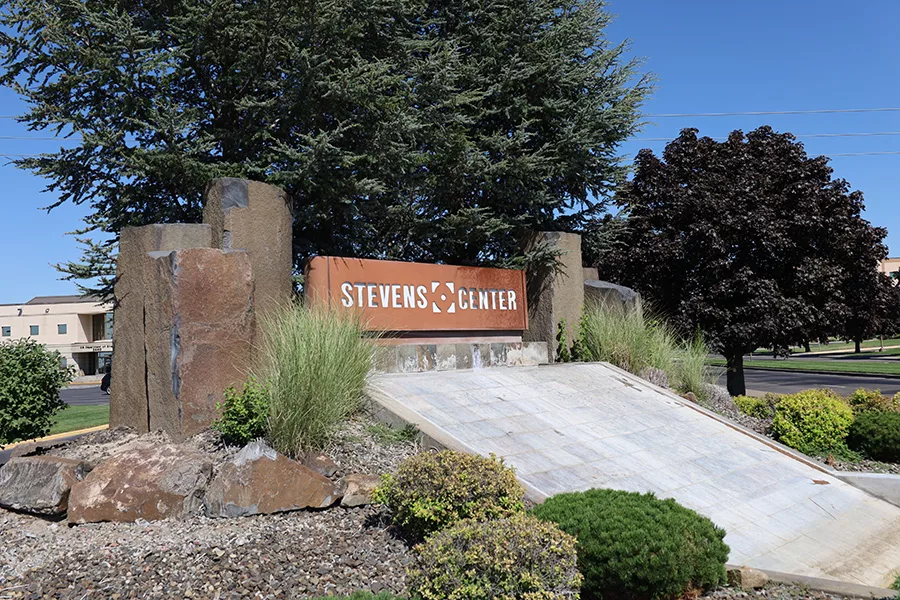
Dozens of unionized Hanford site workers suddenly ordered in mid-June to begin packing their offices as part of an office consolidation may not have to start putting boxes together just yet.
A federal judge in California recently ruled against the executive order President Donald Trump issued in March removing collective bargaining rights from 950,000 union-represented government employees. The judge also granted a preliminary injunction against the executive order.
“With respect to the public interest, Congress has declared that ‘labor organizations and collective bargaining in the civil service are in the public interest,’” Judge James Donato wrote in his order. “The government has not articulated a good reason to conclude otherwise, or that an injunction would not serve the public interest.”
Trump argued that national security concerns gave him the power to exclude certain federal employees from collective bargaining. His executive order was cited by federal administrators as the reason grievances and other collective bargaining actions, such as the building consolidation effort for Hanford site workers, were ignored or disregarded, according to documents and union officials.
“This is in all agencies, not just the Department of Energy,” Dave Owens, a representative for the American Federation of Government Employees, or AFGE, told the Tri-Cities Area Journal of Business. “They’re saying, ‘We’re holding all these decisions in abeyance.’ There’s nothing in our contract that allows them to do that.”
Roughly 150 Hanford site government workers are represented by AFGE Local 788. The union members received notice on June 13 of the building consolidation starting as early as July 2025, according to union member communications.
The consolidation would have consisted of relocating employees into vacant offices closer to their divisions and relocating employees with offices at 2430 Stevens Center to either 2440 or 2420 Stevens Center.
“The Union is requesting to bargain, as is our right, even though unofficial documents have stated that, ‘Building Consolidation office moves will not be bargained and formal discussions are not necessary when assigning office space,’” AFGE reported to its members.
That situation is on top of a grievance the union submitted regarding DOE’s refusal to negotiate a recently implemented Return to In-Person Work policy, with DOE reportedly replying that the grievance is being held in abeyance pending the outcome of litigation pertaining to executive order 14251.
A DOE representative told the Journal that its policy is to not comment publicly on personnel matters.
Owens said the union saw some hostility from federal administrators during Trump’s first term but they really are keeping union leaders on their toes now. They’ve also begun advising local union leadership, who are typically still employed federal employees, to be less in the spotlight to avoid retaliation.
“I was a federal employee and a union member for 38 years,” Owens said. “I have never seen anything like this in our experience.”