From farmland to data hub
Amazon moves to close $36M land deal for Wallula Gap data center
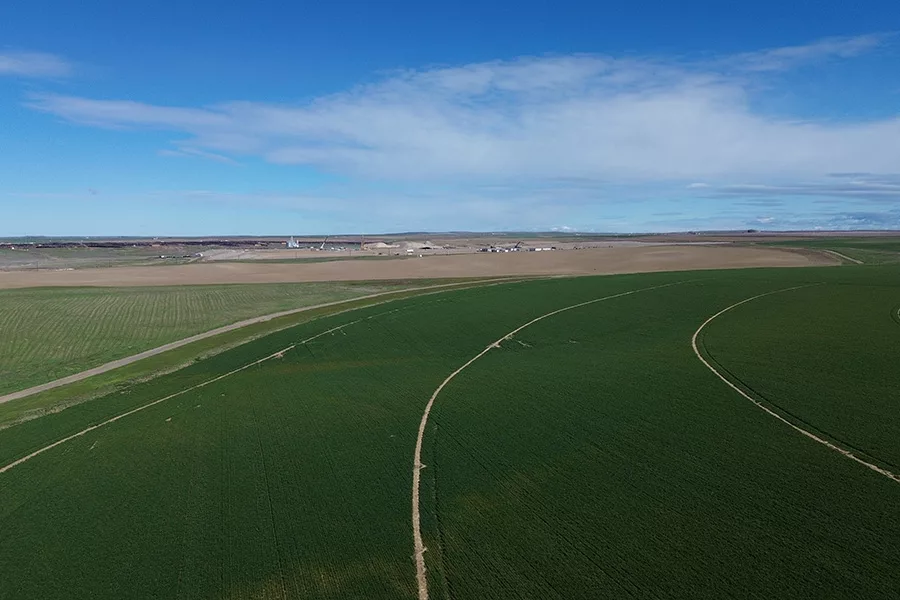
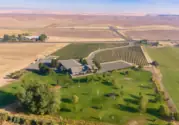
Amazon plans to spend more than $36 million to buy more than 550 acres to build a data center campus on these agricultural fields at the Port of Walla Walla’s Wallula Gap Business Park.
Photo by Nathan FinkeAmazon, the company once shrouded in secrecy that wants to build a $5 billion data center at Wallula Gap, is looking to buy even more land for the project.
Port of Walla Walla commissioners in February approved an amendment to a purchase and sale agreement for 500 acres at its Wallula Gap Business Park. The amendment changed the buyer from the previously unknown Advance Phase LLC to Amazon Data Services and also increased the acreage to more than 550 acres for a total price of more than $36 million.
The port is now scheduling a closing date to complete the sale, though that date wasn’t announced. Based on past comments, the project is expected to create hundreds of full-time permanent jobs as well as construction jobs.
Concerns voiced
While commissioners were unanimous in supporting the latest changes to the property sale, Commissioner Amy Schwab posed questions to Patrick Reay, the port’s executive director, after she heard concerns from constituents about the impact of data centers on water and power resources. A Walla Walla resident also pleaded with commissioners at the recent meeting not to go through with the sale.
“Do we really want to jeopardize our water sources for a quick payout?” said Cameron Hartwood, who said her comments also represented the position of the Democratic Socialists of America (DSA) in Walla Walla.
Word that a large American tech company wanted to build a data center valued in the billions of dollars at Wallula Gap surfaced in November 2024 after Amazon, under the Advance Phase LLC name, signed a letter of intent with the port.
Port officials at the time said the project, which would be in the business park southeast of the Tri-Cities on Highway 12, would grow Walla Walla County’s tax base by 50% as it is built out over four phases. Each phase will reportedly involve constructing four buildings, each about 215,000 square feet.
Amazon being the company behind the project makes sense; it has also partnered with Energy Northwest and nuclear power company X-energy to develop and build four small modular nuclear reactors, or SMRs, near the nuclear-powered Columbia Generating Station north of Richland. The deal for that project gives Amazon first call on the energy the SMRs produce, and data centers require substantial energy to operate.
Amazon already operates numerous data center campuses further south in Hermiston, Umatilla and Boardman. And others are looking at the potential for data centers in West Richland.
Before voting to move forward with the sale, Schwab told Reay she had “gotten a lot of concerns from folks” about the resources needed by data centers to operate.
“What gates could be in place to ensure that (Amazon) actually is living up to the agreements they make?” she asked.
Reay said questions regarding power usage are on the entity providing power via the grid. However, he said the anticipated water usage for the data center would be less than what could be expected if the property were in full agricultural production, even considering that water is only used for a portion of any year to water crops.
“The technology in data centers today is making less heat,” Reay told commissioners, adding that active cooling is only necessary when ambient temperatures exceed a certain threshold, which will generally only be during the summer months. “They won’t be a 24/7, 365-day water user,” he said.
Hartwood countered Reay’s comments, saying “the environmental cost and human well-being cost of data centers in the long run is unacceptable.” She added that any economic benefits are short-lived and that it would be irresponsible and naive for the port to move the project forward.
Critics of data center development, which include environmental advocates, skeptics of the artificial intelligence, or AI, boom and others have criticized the “resource ravenous” infrastructure.
“Even a mid-sized data center consumes as much water as a small town, while larger ones require up to 5 million gallons of water every day – as much as a city of 50,000 people,” according to an October report from the Lincoln Institute of Land Policy.
Amazon recently partnered with the city of Hermiston to fund an underground water storage project capable of storing up to 1.2 billion gallons of potable water for the city. Amazon said in a release that the project will replenish 400 million gallons of groundwater by 2027 by diverting Columbia River water during the winter. The city will own and operate the infrastructure under a 25-year agreement.


Stay Informed. It’s Free.
Subscribe to our newsletters and get the latest news and insights delivered to your inbox.
We respect your privacy.
Unsubscribe anytime.
Thank you!
You’re subscribed. Keep an eye on your inbox for the latest updates.