The proof is in the potato
This local vodka is grown and distilled in the Mid-Columbia
Alford family launches state’s only farm-to-bottle potato vodka distillery, releasing the liquor statewide, including in local stores, bars and restaurants
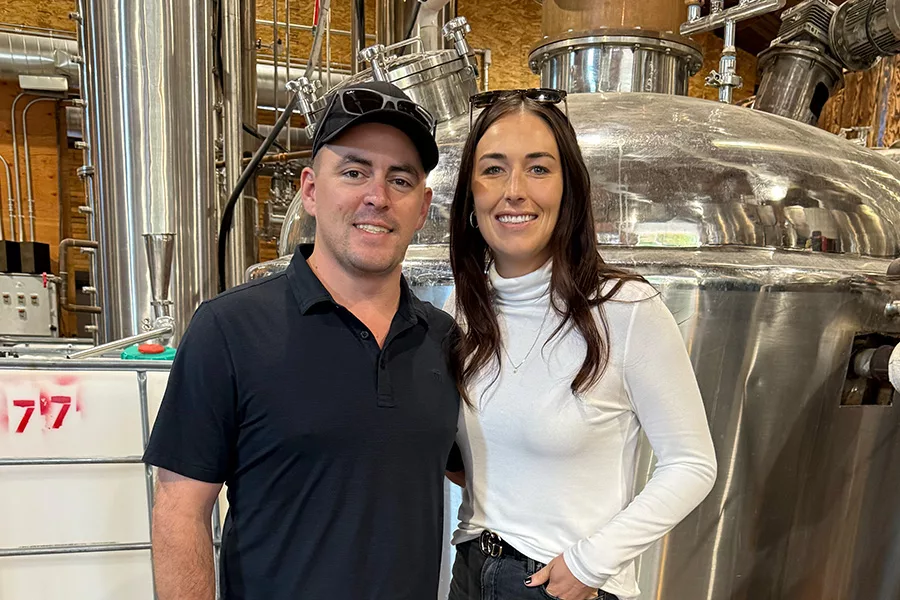
James and Karis Alford launched a farm-to-bottle distillery called Block One that features their homegrown potatoes.
Courtesy James and Karis AlfordAn influential Pasco farming family has developed the state’s first farm-to-bottle potato vodka distillery and received early accolades for their premium liquor, taking top honors in a Best of the Northwest contest.
James and Karis Alford established Block One Distillery in 2024 but only recently began to distribute the product to the pubilc, getting it on shelves at Mid Columbia Wine & Spirits in Kennewick, throughout dozens of local bars and restaurants, and for purchase in Washington through their website.
More spirits coming
It’s just the first of a larger vision the Alfords have for Block One – one of 10 ag-related and real estate businesses they currently own.
The couple intend to release more spirits, including a gin in the spring, which begins as vodka, plus a whisky and bourbon later in the year, using their own wheat and corn.
They also are actively working on plans to open a 5,000-square-foot tasting room, distillery and restaurant on five acres off Road 100 in Pasco.
The distillery idea began to ferment when James heard about another potato grower in Montana using potatoes that weren’t fit for market as the basis for a vodka.
“This fit for us because we’re potato farmers already,” he said, meaning he wouldn’t have to source the spuds. “I was very excited about it and thought it would be great to do on our side. But at the same time, we don’t have a lot of time,” he said.
A father of four, business leader, landowner, president of the Franklin County Farm Bureau, Mid-Columbia Agriculture Hall of Fame Rising Star Award winner, vodka soda fan and frequent international traveler, James keeps busy.
High standards
Still, he and his wife quickly turned a passion project into their latest business venture. James does note a key difference from his original inspiration, as he said his crops nearly always have a customer from the fresh, French fry or dehydrated potato market.
“We’re not just trying to grow potatoes to grow potatoes,” he said. “We grow potatoes to insanely high standards because the consumer has very high standards and customers like McDonald’s have very high standards on the French fry side. We’re not just making potato vodka because we're potato farmers. It's actually a good product that embodies what we're trying to do on our own farm.”
Many vodkas on the market today are made from wheat or corn. James said using potatoes as a base, as is common in eastern Europe, results in a much different taste and a premium product. Block One bottles retail for $30.
Because of this, James said potato vodkas aren’t typically used in well drinks as they start with a more expensive commodity than wheat or corn.
“Basically, we're making a big batch of mashed potatoes, but adding yeast to it. In the primary fermentation, we let that cook on until we kill the yeast off to then put it through the still. In that process, starch in the potatoes create some byproducts like glycerol, polysaccharides, and these are all things that create a smooth, creamy, velvety mouthfeel,” he said.
That mouthfeel results in a sweeter vodka without the need to add sugar, a common practice in vodkas made from other grains, which require charcoal filtration to remove tannins or other harsh compounds.
James said it was their goal from the start to keep a neutral taste in the alcohol that’s naturally gluten- free. “It's just pure potato product. This is one you can drink straight; it doesn’t have that insane burn that most vodkas do,” he said.
Block One Potato Vodka is distilled by Brian Morton, one of the first distillers in the state.
Morton works with the Munsons, another local farming family which operates Goose Ridge Estate Winery and Monson Ranch Distillers.
“When we found what we wanted with Brian (Morton) and dialed that recipe in, we decided to have fun with it,” James said. “We shared it with our family and friends. Everybody said it was great. OK, so let's share it with some industry people. And they're like, ‘This is great. This might be the best vodka I've ever had.’”
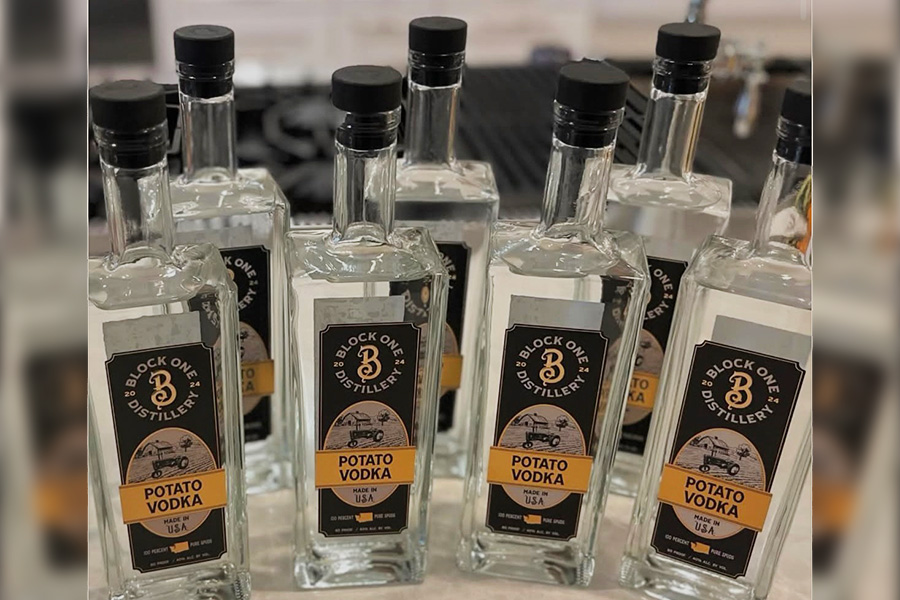
“We spent time here walking through the liquor store and found most vodkas are tall and round,” said James Alford, who chose a bottle with squared edges for Block One vodkas.
| Courtesy James and Karis AlfordLaunching Block One
It was off to the races working to settle on a brand, website, bottle design and licensing on the federal and state side – all new ventures for the couple to figure out.
“We spent time here walking through the liquor store and found most vodka (bottles) are tall and round,” said James, who chose a bottle with squared edges instead. “This glass was handmade in Europe, but it was just a sample. It took forever to try to find more because we didn't have enough quantity to trigger a full run. So, we're trying to buy from here or trying to buy from there. They had some in California and some in New Jersey, so we bought all of that.”
Yakima's Invisible Ink designed the Block One logo and its website.
Alcohol sales require extensive permitting and meeting particulars on the label. “Originally, ‘Potato vodka’ was written in one line straight across, and we found out that was not legal,” Karis said. “To distinguish it, you have to put ‘potato’ above ‘vodka.’”
The couple hired a consultant to help with the labeling process to ensure their best chance of having a quick approval on the federal side through the Alcohol and Tobacco Tax and Trade Bureau, a process that became especially hard to navigate through a government shutdown in late 2025.
Ag roots
James had some previous experience with alcohol production and sales through his family.
“My mom and dad are founding partners with Fidélitas Winery. I was on the bottling line with Charlie (Hoppes') kids for the first couple of years when we were fairly small, so I knew what it was like to have kind of a premium brand growing up,” he said.
James and Karis both grew up in Block 1, the namesake of their brand, which defines an irrigation area in the South Columbia Basin Irrigation District serving many agricultural plots in Franklin County.
“My family homesteaded back in 1954 in Block 15, but I grew up in Block 1, on the bluff across from Richland,” James said. “If you're in north Richland near WSU, or on that stretch and you look at Pasco, that's all Block 1.”
From that original homestead, his family began its extensive influence on local farming, especially potatoes.
“Twenty-five percent of the potato seed in the state of Washington goes through Karis and I,” James said of the couple’s 10 active businesses, which include 2,000 acres of farmland that’s in use.
James, a third-generation farmer, said, “We’re farming 600 acres of potatoes, and the rest is a bunch of diversified seed crops. We grow seed wheat, seed corn, grass seed and pharmaceutical pollen. We also do canola seed, carrot seed, onion seed, a lot of seed crops. It's all under the farming entity, JCAgriculture, and then Premier Seed is our potato seed side of the business.”
Alford Custom Ag receives, handles, stores and ships many crops, but mainly potatoes and onions. They have contracts with Lamb Weston and many other growers to both supply and receive crops, meaning that depending on its size or quality, a potato grown by the Alford family could end up at McDonald’s, in a kettle potato chip bag, or in their vodka – which requires about 15 pounds of potatoes to make every bottle.
The Alfords also own and operate multiple ag-related facilities, with locations on Ione Road and off Selph Landing in Franklin County, plus one they recently purchased in Hermiston. They can accommodate 200,000 tons of potato storage. James said during many times of the year, the facilities are running 24/7, and they employ about 100 people seasonally.
“The lion’s share of our business is everything related to supporting all the other growers and processors,” James said, as those needs are capital intensive and he’s equipped to supply those logistics.
Future distillery
For their vodka venture, the couple is working with MMEC Architecture & Interiors out of Spokane to design a distillery, tasting room and restaurant intended for Block 1 in west Pasco with Morton designing the still to go inside.
Until that’s ready, the early attention from Seattle’s Sip Magazine put Block One Vodka on the map in its Best of the Northwest competition covering Washington, Oregon, Idaho and part of northwest Canada, “It was the very first competition we entered in,” Karis said.
This immediate validation came as no surprise to her husband. “In all of our operations, with all of our crops we grow, any of the businesses we own, we ... always want to make sure we're doing the best we can. And if we can't do the best we can, or we can't make it financially feasible, we'll pivot and do something else.”
Go to: potatovodka.com.