Ag update
Farmers face tough row to hoe
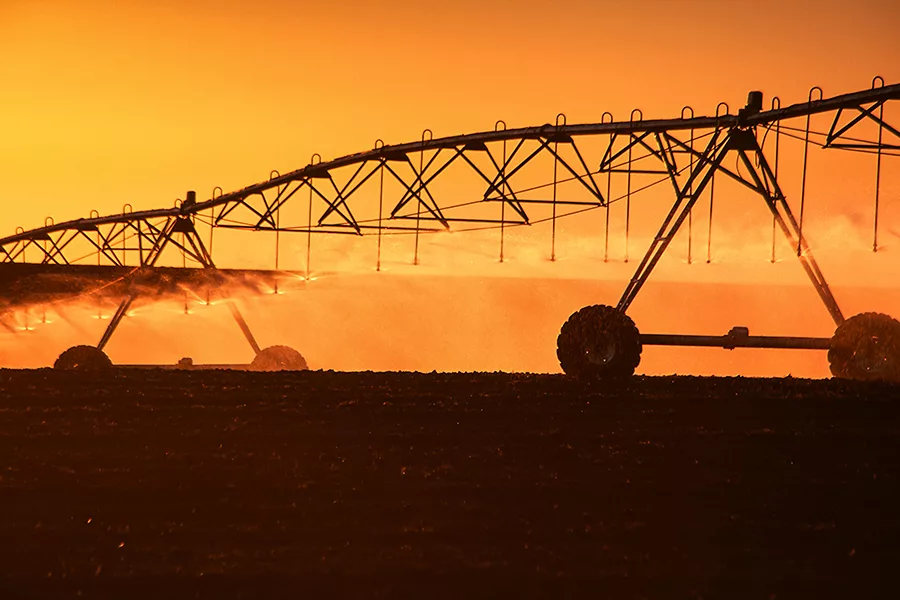
A fourth straight year of drought is bearing down on Mid-Columbia farmers.
Though some growers may see slightly more water this season, rising costs and falling commodity prices have some farmers weighing whether irrigating is worth the effort.
Jim Willard, who grows grapes and apples on more than 300 acres outside of Prosser, said the Roza Irrigation District, which serves Benton and Yakima counties, is estimating it may receive 47% to 48% of its water, while last season it only received 40%. That could stretch the water the irrigation district purchases from senior water rights holders to keep flows going through September, a practice it’s pursued in recent years.
But at a late March irrigation district meeting, some questioned whether it was pragmatic to secure those additional water supplies at all, Willard said.
“The discussion this year was why should we go out and get water for crops that aren’t even paying for the cost of production,” he said.
As farm laborers begin planting fields and pruning vines and fruit trees this spring, growers and ag advocates said the industry in Washington state is on the brink and the growing unreliability of water is just a part of the problem.
With most commodity prices down and production costs – which include everything from labor to diesel for equipment – constantly climbing, many are trying to figure out not just how to survive another year, but whether to continue irrigating at all.
“We’re seeing a lot of orchards come out, a lot of vineyards come out,” said John O’Callaghan, secretary-manager for South Columbia Basin Irrigation District, which serves much of Franklin County.
Water rationing ahead
A few heavy precipitation events during the winter did some good. As of late February, reservoirs serving the Yakima Valley were at 132% of average capacity, according to the Washington Department of Ecology.
“This sounds encouraging. But at full capacity the reservoirs there only hold 1 million acre-feet of water,” the department said in a blog post. “The water needs for irrigation and fisheries in the Yakima Basin from April through September are 2.5 million acre-feet.”
And the drought declared by state officials in December that will stretch into its fourth year remains unchanged. The average snowpack across the state was 51% of median as of March 11, the fourth lowest on record, according to data from the Washington State Climate Office.
The agency also indicated in its most recent report to the state Water Supply Advisory Committee that current climate prediction models have the southeastern part of the state experiencing above average temperatures through June with below average precipitation affecting much of the state, particularly east of the Cascades. Those same trends are expected to remain or worsen going into the fall.
Kennewick Irrigation District and the city of Pasco called on those using irrigation water in their jurisdictions to follow voluntary watering schedules before canals were even filled.
“We understand that the watering schedule can sometimes be frustrating,” KID wrote in a message to its 65,000 irrigators. “The more customers who follow the schedule early in the season, the better our chances of shortening, or possibly avoiding, mandatory scheduling later this summer. Our community did an outstanding job conserving water last year, and those efforts helped us get nearly to the end of the normal season before the curtailment order took effect.”
Growers struggle
Across the Columbia River in Franklin County, drought impacts won’t be as immediately felt, at least not for O’Callaghan’s South Columbia Basin Irrigation District. Its water comes from the Columbia at Grand Coulee Dam. Flows there are expected to be sufficient to meet the roughly 1 million acre-feet for the more than 200,000 acres it services.
Yet its growers are facing many of the same struggles as their counterparts in Benton County and the Yakima Valley, O’Callaghan said. Washington state farmers ranked last in the country in take-home pay in 2024, according to U.S. Department of Agriculture, or USDA, data reported by Capital Press, with estimated returns to operators at a loss of $396.2 million.
With all neighboring states seeing their farm industries in the black, O’Callaghan said it comes down to factors common across Washington: taxes, regulation and labor costs.
“The big issue is that we do so much to protect workers here but opt for cheaper food from abroad,” he told the Journal. “It’s a consumer issue and I think agriculture has really struggled to educate the consumer.”
State Sen. Perry Dozier, R-Waitsburg, whose district includes parts of Benton and Franklin counties, said the state moving to make all agricultural workers eligible for overtime pay was a significant hit to ag operations. As a dryland wheat farmer, he said he was glad that a bill to unionize agricultural workers in the state didn’t make it off the floor of the Legislature.
Ultimately, though, it’s the fact that the cost of production for any crop is not coming close to meeting the prices they fetch on the market.
“Right now there is not a commodity that you can make a great profit on,” Dozier said. “We are at a point where we’re cannibalizing our assets to keep operating in hopes for the future.”
USDA data from the end of 2025 showed that while the cost of producing crops had risen 50% since 2011, the prices farmers received for those same crops only went up about 21% during that same period, one of the largest gaps in the past decade, according to agricultural media reports. Retaliatory tariffs from importers made in response to the Trump administration’s trade policies last year just piled on top of that.
Unable to justify the cost to harvest, Dozier said that’s why he still sees fruit from last season sitting on trees in some orchards. It’s also why dairies in the Yakima Valley are bringing in potatoes rather than corn as silage for their cows, Willard said.
“They’re getting potatoes hauled in just for the price of hauling,” he said.
State agriculture officials acknowledge that the industry is struggling.
“As we head into the 2026 growing season, Washington’s agricultural producers are facing continued challenges from drought conditions, rising input costs, and, for some crops, increasing labor expenses,” the Washington State Department of Agriculture (WSDA) said in a statement to the Journal. “Since 2016, the cost of key inputs like feed, fertilizer, and electricity has risen by 60% in Washington, with labor costs increasing even more sharply.”
Identifying threats
WSDA said it is working with producers and other partners to find a path to the future for agriculture in the state. A February 2026 report from the agency identified the threats facing farmers but also opportunities to help them thrive.
“Our hope is that by candidly sharing these challenges and highlighting the work already underway to address them, Washington can advance solutions that preserve local food production, protect environmental resources and create conditions in which farmers and ranchers can not only persist but genuinely thrive,” read the report.
For his part, Willard is formulating a plan to make it through 2026 as unscathed as possible.
It involves cutting his workforce down as much as 20% and preparing to not manage up to a quarter of his acreage for the purposes of production this season.
“We’re basically going to go into maintenance mode and keep the vines alive with limited water,” he said.
But there will still be punches to roll with. Recently, a winery he’s provided Cabernet Sauvignon grapes canceled their order for the year. Fortunately, they did place a new order for Sauvignon Blanc grapes – which go for two-thirds the price of the Cabernet.