
High hopes
Cherry season looks promising, weather permitting
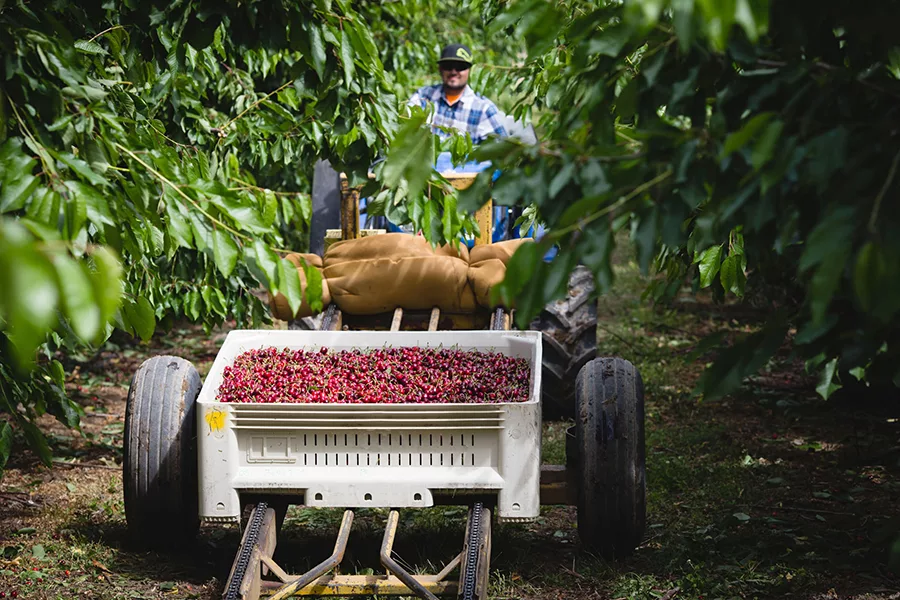
Northwest cherry growers are optimistic that this year will be a good one.
Courtesy Northwest CherriesThis year’s cherry forecast is looking brighter after the previous year’s prices let growers down despite a large and high-quality crop.
2025 promised to be a good year for Washington cherries, and growers across the five-state Northwest region of Washington, Oregon, Idaho, Montana and Utah produced 23.6 million 20-pound boxes of cherries. But cherries didn’t prove to be very profitable.
That can happen when wholesale pricing drops due to a large crop, said Jon DeVaney, president of the Washington State Tree Fruit Association. A good year with depressed pricing can leave growers frustrated – but this season, hopes are high for better returns.
2026 crop
As of mid-May, about 18.4 million 20-pound boxes of cherries were estimated to be harvested across the five-state Northwest region. While there is no individual data for Washington, it’s the top U.S. producer of sweet cherries, according to a Northwest Horticultural Council fact sheet.
This year’s crop size is closer to 2023’s, when 18.7 million 20-pound boxes of cherries were produced.
A profitable year for cherries is often dependent on the staggered Northwest and California cherry seasons. Cherry season in California typically starts earlier than the Northwest, and when California’s season is delayed or Northwest cherries ripen faster due to weather factors, the two markets overlap, making it more difficult to sell cherries.
While warm weather this year has moved the Northwest’s cherry season up by a couple of days, DeVaney said the West Coast has had a warm spring, so the overlap between the two markets should be relatively small.
Washington cherry production in 2025 was valued at $432 million.
This year, cherry season in the Northwest was expected to take off around Memorial Day weekend.
Export stability
Federal retaliatory tariffs caused uncertainty around exports of Washington products like cherries in 2025. About 25% of Washington’s cherries are exported each year, according to data from the Washington State Department of Agriculture.
“There’s still a lot of global uncertainty, but less so on immediate tariff actions,” DeVaney said. “And we really haven’t seen a lot of retaliatory tariffs on Northwest cherries.”
While there have been some tariffs against U.S. products in China, “most of our trading partners have not been retaliating against our products,” he said.
That’s part of what has created optimism among growers this year: A more stable trade environment with less uncertainty and frustration.
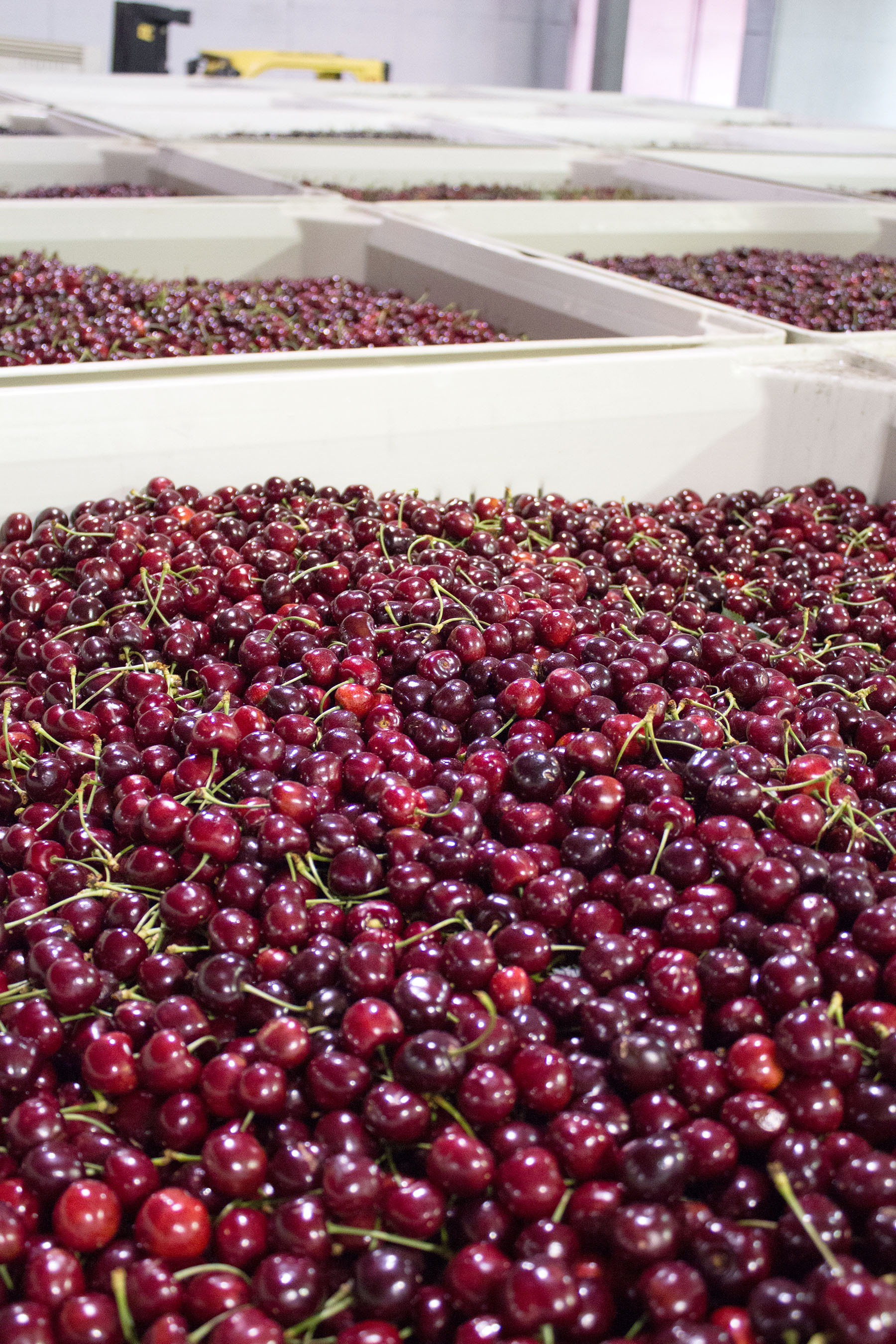
In 2025, cherries ranked No. 8 among Washington’s top exports, bringing in $319.9 million – a 9.11% increase over the previous year.
| Courtesy Northwest CherriesIn 2025, cherries ranked No. 8 among Washington’s top exports, bringing in $319.9 million, a 9.11% increase over the previous year, when cherries ranked No. 9, according to export statistics from the Washington State Department of Agriculture.
Canada, South Korea and Taiwan were the top three export markets for the fruit in 2025.
While some countries, like Canada, were more resistant to U.S. products last year, DeVaney said that’s been mitigated a bit. About 34% of cherry exports go to Canada, followed by 14.6% of exports going to South Korea. Taiwan, China and Mexico round out the top five countries for cherry exports, then Japan, Hong Kong, Australia, Vietnam and Thailand are further down the list, he said.
DeVaney said that the global economic situation is one to keep an eye on. Consumers in east Asia already pay well for premium fruit, he said, and with oil and gas prices on the rise, consumers may be more cautious in their spending.
It’s important to remind consumers that there’s a limited window to enjoy Northwest cherries, since they aren’t available year-round, DeVaney said.
Price, labor pressures
High gas prices also add pressure to Washington growers, who already “have been struggling with all of their costs of production rising faster than returns,” DeVaney said.
The growing season for cherries is extended by spreading the fruit out across various production areas and altitudes so that the cherries mature at different times, moving from south to north. That way, the cherry crop isn’t all ripening in the same week or two.
The flip side of that structure is that orchards in more remote areas means workers will have to commute there, potentially causing challenges as gas prices rise and they need to spend more to get to their jobsite, DeVaney said.
In terms of labor, growers continue to rely on the H-2A visa program, a program which bolsters agricultural labor by allowing farmers to hire workers from other countries for seasonal or temporary work.
DeVaney said, “the immigration enforcement environment has created some uncertainty, though the emphasis has not been on agriculture and agricultural workers thus far.”
Cherries are positioned to do well. Because the industry offers strong wages to farmworkers – sometimes more than $50 an hour – the crop has a strong labor supply, DeVaney said.
Despite the uncertainties of economics and labor, the year is shaping up to be a promising one for cherries – as long as the weather continues to cooperate.
“I think that this has the potential to be a very strong cherry year, and our growers could certainly use a good year,” DeVaney said.