

City of Richland
Ironman, infrastructure shape city’s next chapter
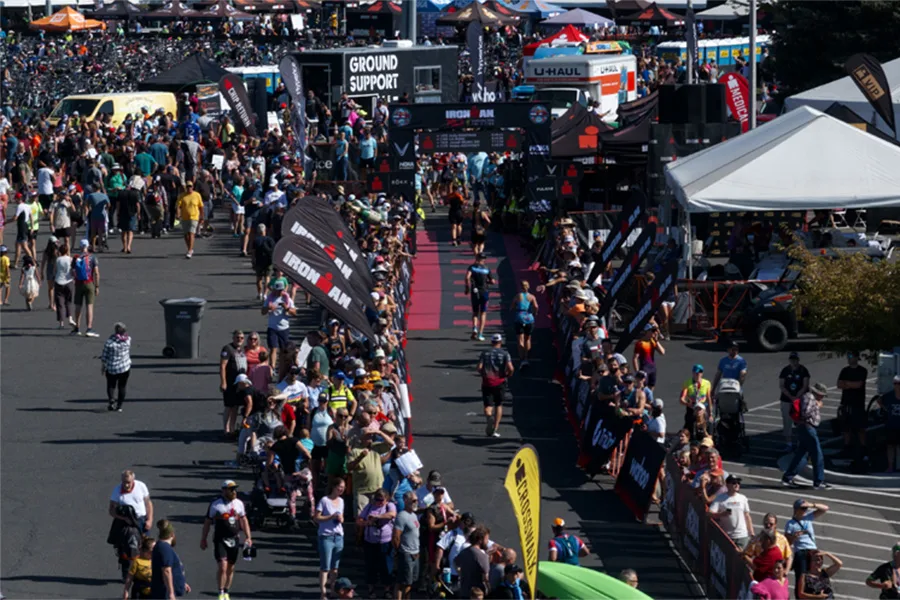
Thousands attend and participate in Ironman 70.3 in Richland. Visit Tri-Cities estimates the 2026 race generated $6.5 million to $7.5 million in direct visitor spending during race weekend. The Tri-Cities will host the event through 2029.
Courtesy Visit Tri-CitiesThousands of athletes competing on a global stage have unexpectedly become some of the strongest ambassadors for the city of Richland, which finished hosting its third Ironman competition in September 2026.
After an initial three-year agreement to bring the elite race to Richland, a new three-year contract is now in place, extending the event’s presence through 2029. The race has become a key economic engine and a surprising catalyst for how outsiders and locals view the city, and leaders expect the Ironman brand to remain a long-term presence in the region.
“We saw a 161% surge in positive media about the area when we brought the race in. It puts us on a stage in a way we haven’t been before – it gives us street cred,” said Kevin Lewis, president and CEO of Visit Tri-Cities.
The spotlight on Richland, population 66,290, also shapes how national retailers and investors perceive the Tri‑Cities, Lewis said.
And the triathlon’s influence extends beyond tourism. “You’re connected to a global brand – a brand people tattoo on their bodies,” he said. “Business owners and CEOs understand what that means. It opens their eyes and makes them look a little closer.”
A sharper focus
The Tri-Cities’ Ironman course – including a swim in the Columbia River, road race cycling portion through vineyards and a run along the waterfront – has already earned worldwide recognition, including the Best Run Course in the world as voted by Ironman athletes. The distinction stunned even seasoned tourism professionals when it was announced after just two races had been held in Richland.
“It’s pretty remarkable,” Lewis said. “That’s not something you expect in just two years.”
The accolades tell only part of the story, as having such a high-profile event in Richland each September has put the city’s strengths in sharper focus.
Lewis describes Ironman athletes as “focused, driven, often leaders in their businesses and communities.” They are frequently CEOs, executives and high‑income professionals who often travel widely. When these folks come to Richland, they bring visibility.
“One athlete said, ‘I would never have thought of coming to this area if you hadn’t had the race. Now that I’ve been here, I want to come back, and I’d even consider moving here,’” Lewis recalled.
It turns out, when the world comes to town, even longtime residents are forced to reflect on their own surroundings. “A couple who lives here told me about meeting an athlete who talked about how wonderful our community is – how clean, how friendly and how beautiful. And afterward, the couple looked at each other and said, ‘We really do live in a great place.’”
More than 1,300 volunteers support the race each year. Lewis said that level of civic engagement is part of what impresses Ironman organizers.
“The folks at Ironman are very interested in continuing the event,” Lewis said. “They’ve been really pleased with the way it’s operated.”
Richland’s market potential
The city’s heightened visibility comes at a time when new retailers are already evaluating Richland’s market potential. Among them are two proposed 7 Brew coffee stands eyeing central Richland and the Queensgate shopping sector. The Arkansas-based retailer has opened hundreds of drive-thrus throughout the country, but so far have no locations in Washington.
The first Chick-fil-A in the Tri-Cities brought excitement to Kennewick, and Richland’s economic development director, Mandy Wallner, expects a second location to roost in Richland.
“They have a site and they’re still trying to work through how close to the intersection you can have driveways,” Wallner said.
The city is also looking at traffic management changes on Duportail Street in 2027 to mitigate increased volumes, especially around the Richland Costco.
“They are working on design for at least two roundabouts,” Wallner said. “I’m not sure of the timeline, but it is happening.”
Few topics animate Richland residents like Trader Joe’s, and Wallner confirmed the company continues to scout the region on the regular.
“I know of two fairly recent drive‑thrus (by company representatives); I kind of feel like it’s an inevitability,” she said.
Distribution remains the sticking point. Trader Joe’s prefers proximity to supply hubs, which is why Wallner always pitches Richland’s industrial park alongside potential retail sites.
“We would love both sides of the business,” she said. For anyone thinking the retailer should use the former Albertsons on Lee Boulevard, the site is too large for Trader Joe’s business model. With a lease with Albertsons in place until 2035 despite sitting vacant, major movement isn’t expected, though a locally-owned coffee shop is coming to the corner of the parking lot.
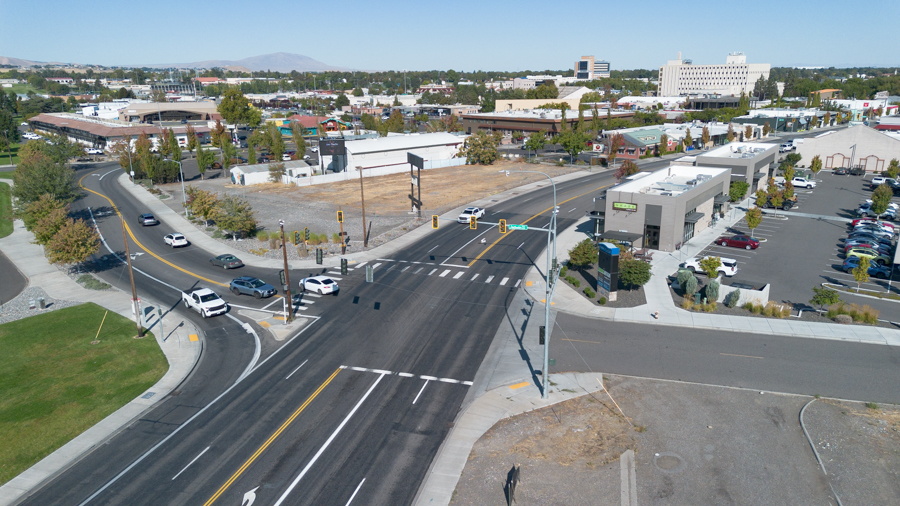
Richland’s long anticipated downtown Loop project would flip traffic patterns along a portion of George Washington Way and Jadwin Avenue once right of way acquisitions are completed.
| Photo by Nathan FinkeDowntown Loop
In 2025, Richland officials felt confident the long anticipated Downtown Loop project would flip traffic patterns along a portion of George Washington Way and Jadwin Avenue by winter 2026.
While that has yet to happen, Wallner said the timeline is out of the city’s hands.
“As far as everything we can control, we were on point for that,” Wallner said. “When you start doing right of way acquisitions, those just didn’t go as planned.”
To shift the current traffic flow to northbound-only and southbound-only lanes on a core section of the downtown, the city needs everything from simple driveway access agreements to partial property purchases.
A third‑party agency handles all of those and is a little over halfway complete with those acquisitions. Because federal dollars are involved, Richland cannot negotiate directly with property owners affected by the traffic pattern changes, and it also can’t fully move forward with its long-term intentions.
“We can’t bid the project until we have all the property secured,” Wallner said. She expected physical construction cannot begin until at least the spring and would begin with work on some intersections first. “Those improvements have to be done to get the one‑way portion moving.”
Only after those intersections are reconfigured will the roadway itself shift to the new one‑way pattern – with one big result Wallner wants to emphasize: At no point will the road be closed entirely. “There will always be some traffic flow,” she said.
The city is even considering extra events during construction to counteract the natural avoidance that occurs when people assume a project will be disruptive. “We’re trying to support the businesses and keep all the events here we can,” she said.
Despite public perception, the Downtown Loop will increase capacity – allowing for more cars – versus reducing it.
“Right now, it’s two lanes going north,” Wallner said. “This project will give three lanes going north and, in some places, you’ll have a fourth lane.”
Improved flow could also draw people to the downtown core – an area Lewis sees as a prime location that could continue to elevate Richland’s profile for visitors and locals alike.
“If I had my wish, I’d lean into continued development of our riverfront areas,” he said. “We should create a real gathering place – almost iconic.”
He envisions a district with restaurants, lodging, entertainment and walkable public spaces. “We may have underrated our riverfront. Athletes rated it so highly. It’s a special place and we could turn it into an incredible destination asset.”
Lewis also sees Ironman as one piece of a broader economic strategy. “There’s a lot of work happening in Richland on larger projects – smaller reactors, manufacturing and innovation,” he said. “For those industries to succeed, tourism and hospitality need to succeed, too.”
A growing city
Richland’s population continues to grow, increasing 2.1% in 2026 over the previous year and 9.5% since 2020.
To accommodate this steady growth, the city approved 100 more single-family home building permits, or 324, through August 2026 compared to the same period the previous year.
Quality of life matters to employers, since recreation options and cultural assets help attract and retain talent, Lewis said.
“We’re part of that ecosystem,” he said. “As bigger projects come to life, I foresee continued growth in recreation and tourism assets that support them.”
Both Lewis and Wallner describe a city with momentum. Ironman has given Richland a global spotlight and a new narrative about its quality of life while infrastructure projects aim to support future growth.
Leveraging its natural benefits and rising profile, “I really believe Richland is poised for success,” Lewis said, and if Ironman athletes are any indication, others are beginning to notice.





