
BPA
Expanding affordable, reliable service in the Tri-Cities
Across the nation, the electric utility industry is confronting concerns about the rising cost of energy and increasing demand. The fast-growing Tri-Cities is no exception. Those of us fortunate enough to live in the Pacific Northwest, however, have an advantage in the Federal Columbia River Power System (FCRPS). For more than 80 years, this system has made it possible for Northwest utilities to offer some of the most reliable and lowest-cost electricity in the nation. The Bonneville Power Administration aims to keep it that way.
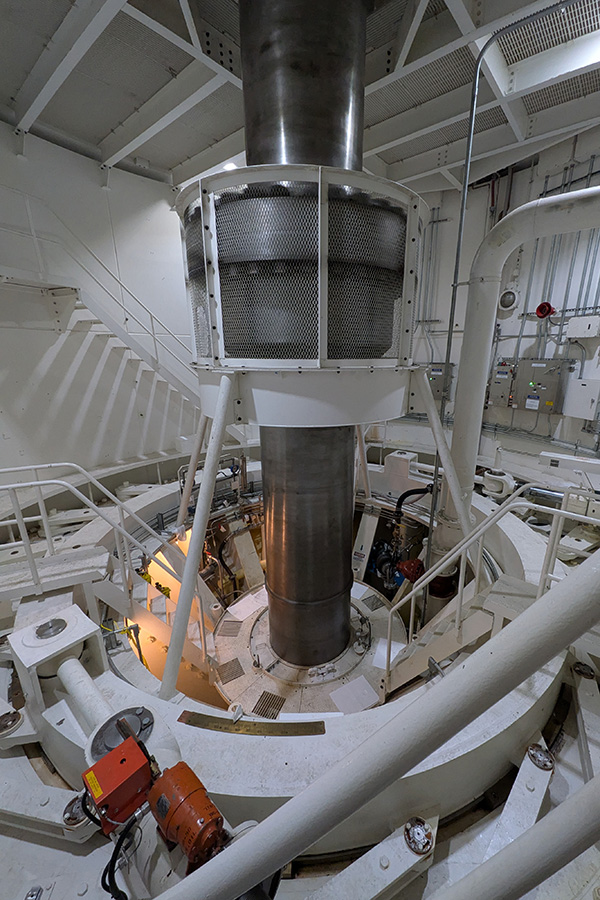
One of three new turbines being installed at Ice Harbor Dam on the lower Snake River in Washington. The new turbines are more efficient for power production and safer for migrating fish.
| Courtesy BPAOne of three new turbines being installed at Ice Harbor Dam on the lower Snake River in Washington. The new turbines are more efficient for power production and safer for migrating fish.
As a wholesale power marketer under the U.S. Department of Energy, Bonneville supplies most of the energy consumed in the Tri-Cities area, primarily with cost-effective hydropower from the FCRPS. We are working hard to expand this valuable public resource, consisting of 31 federal dams, the output of the region’s only nuclear plant, and 15,000 miles of transmission line.
With our generating partners at the U.S. Army Corps of Engineers and Bureau of Reclamation, we are implementing a rolling 20-year portfolio of projects to improve the reliability, efficiency and capacity of the FCRPS. This portfolio represents a potential capacity increase of more than 800 megawatts across the system.
Current projects include the installation of new, more efficient turbines at the Corps-operated Ice Harbor Dam – the only controllable energy resource directly serving the Tri-Cities area. These state-of-the-art turbines are safer for fish passage and can generate more power with the same amount of water – a benefit that is especially valuable when water is scarce. When all three of the new turbines are operational in 2026, Ice Harbor will have the potential to produce an additional 30 to 48 gigawatt-hours annually.
During a recent tour of Ice Harbor, Secretary of Energy Chris Wright expressed his full support for preserving these critical resources and the reliable benefits they provide for millions of Northwest residents. With a short-term peaking capacity of 3,000 MW, the lower Snake River dams have helped the region avoid blackouts during extreme weather events, which have become more frequent and severe in the last decade.
The secretary also visited the Hanford site, where another significant upgrade is underway. BPA is partnering with the Columbia Generating Station’s owner and operator, Energy Northwest, to increase the capacity of the 1,200 MW plant by roughly 160 MW – enough firm capacity to power about 125,000 homes. Construction for this upgrade will occur during Columbia’s prescheduled refueling outages and will be complete in 2031.
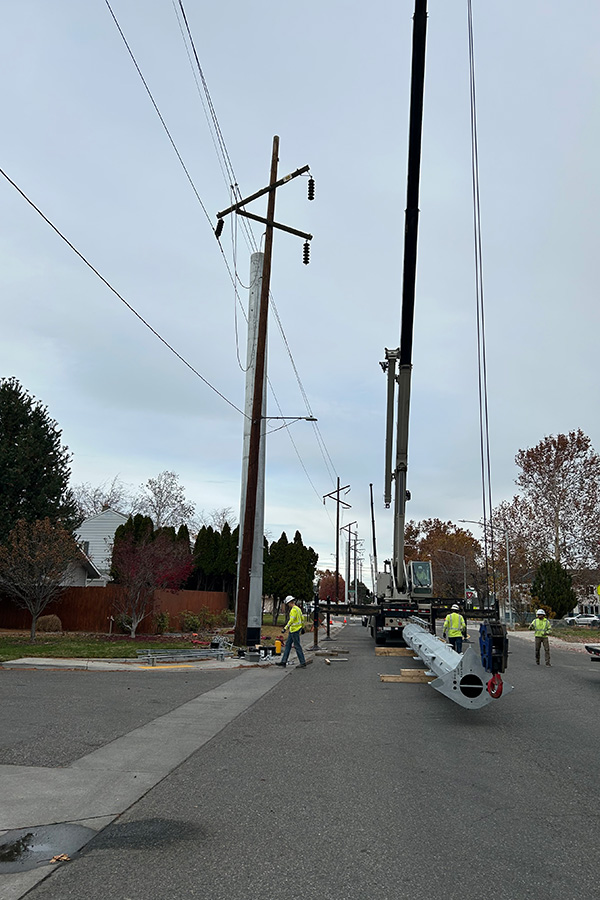
As part of the Tri-Cities Area Reinforcement, BPA is rebuilding the 115-kilovolt Richland-Stevens Drive transmission line, adding another circuit to create two lines where there had only been one. This group of projects will strengthen the transmission system and prevent power outages in the Tri-Cities.
| Courtesy BPAExpanding the grid
As power demand grows, so does the need for transmission capacity. As one of the fastest growing areas in our service territory, BPA is prioritizing and accelerating grid expansion in the greater Tri-Cities area.
Collectively known as the Tri-Cities Area Reinforcement, these projects will provide another link to BPA’s main grid and increase transmission capacity in the area by 66%. Projects include building new lines, upgrading existing infrastructure and adding a new substation. These projects will be energized in phases, with the last of them slated for completion in 2028.
Regionwide, we have prioritized $5 billion in high-voltage transmission expansion investments. Combined, the 23 projects in this portfolio would add more than 6,000 megawatts of transmission capacity by 2035 to meet future energy needs across the Northwest.
These regional projects could upgrade and add hundreds of miles of line to BPA’s existing 15,000-mile grid, but transmission line mileage is not the only measure of grid expansion. BPA energizes hundreds of transmission projects each year – including 277 projects in fiscal year 2025 alone – ranging from meter installations to entire substations. Even the smallest projects can add up to greater reliability and allow us to transfer more energy across the grid.
Fiscal year 2025 was a record year for BPA’s transmission capital program with an investment of nearly $774 million, and we continue to find ways to build faster. We launched the Grid Access Transformation Project to redesign and streamline our long-term transmission planning processes, with the goal of completing projects within four to six years compared to 10-plus years.
Long-term reliability
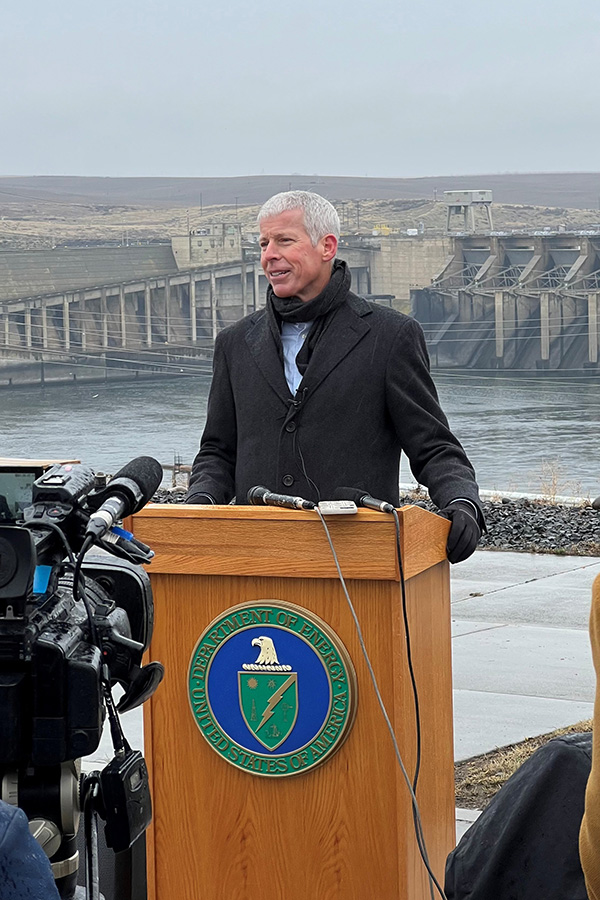
At a recent visit to Ice Harbor Dam, Secretary of Energy Chris Wright expressed his support for hydropower and the region’s efforts to increase the abundance of this reliable, cost-effective energy resource.
| Courtesy BPAAfter several years of intense effort and collaboration, BPA is on track to execute new long-term wholesale power contracts with its utility customers by the end of December. We have signed contracts with all utilities serving the Tri-Cities area: Benton Public Utility District, Franklin PUD, the city of Richland, and PNGC Power, whose membership includes Benton and Columbia rural electric associations.
Known as provider of choice contracts, these agreements provide a financially stable foundation for Northwest utilities, ensuring access to federal power priced at the cost of the existing system for nearly two decades.
BPA is a nonprofit provider that aims to offer the lowest possible rates, consistent with sound business principles. This requires a careful balance against our broader mission to ensure reliable operations and fulfill other statutory obligations, such as mitigating the impacts of the FCRPS on fish and wildlife.
As we have ramped up investments to expand the existing system, we also experienced three consecutive years of below-average water in the Columbia River Basin. In normal conditions, BPA sells surplus energy in wholesale markets, boosting revenues that we use to offset costs and help keep rates low. In poor water years, we purchase more energy in wholesale markets to supplement the output of the FCRPS, reducing our revenue potential.
While we hope for improved water conditions in the coming year, we are taking steps to ramp up cost-containment efforts and reduce budgets for fiscal year 2026. We remain steadfast in our commitment to cost-discipline and will continue to prioritize the most cost-effective investments.
On behalf of the entire Bonneville workforce, it is an honor to serve as stewards of such valuable regional resources. We will continue to collaborate with our generating partners and utility customers to bring reliable, low-cost electricity to your communities. We are excited about opportunities to build on BPA’s legacy and support economic prosperity in the Tri-Cities and beyond.
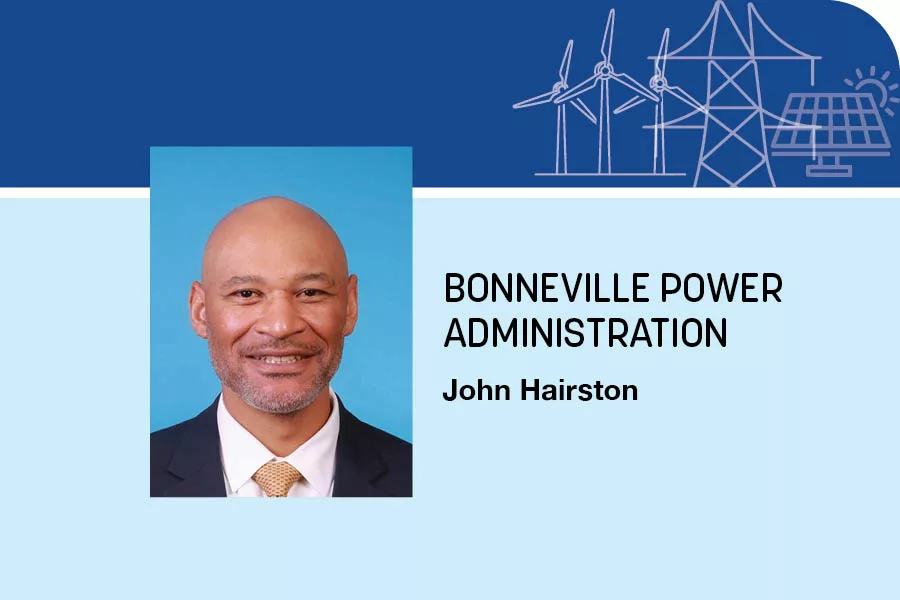
John Hairston is BPA’s administrator and chief executive officer.