Hanford 2026
HMIS crews advance technology on all fronts to support cleanup

Hanford Mission Integration Solutions (HMIS) operates like a city manager for the complex, 580-square-mile U.S. Department of Energy (DOE) cleanup site. We manage the critical utilities, transportation networks, emergency response, digital systems and sitewide services that keep Hanford running, enabling our contractor counterparts to focus on their critical cleanup missions.
With more than 250 unique services and infrastructure responsibilities, our work is pivotal to the Hanford cleanup mission. We continue to right-size and modernize Hanford’s infrastructure, ensuring essential services meet mission demands now and into the future.
Water and power
The Central Plateau Water Treatment Facility is now delivering water to the site’s water system, increasing reliable water supply to meet growing cleanup needs. The facility supplies up to 3.5 million gallons of treated water daily. The new adjacent 1.1-million-gallon water tank is also operational, further strengthening site resources.
Our Electrical Utilities team partnered with the Bonneville Power Administration to install a new 18-mile, 230-kilovolt high-voltage transmission line connecting two key substations serving Hanford. This critical modernization replaced the original 70-year-old transmission line.
Innovation and technology
We continue to drive progress through innovation and technology, streamlining processes and increasing efficiency. Our Unmanned Aircraft Systems program continues to reach new heights, completing their first flights utilizing lidar (light detection and ranging) technology. The flights mark a new era in precision mapping and land use, offering groundbreaking insights into terrain and structural analysis.
A new emergency radio system has greatly enhanced communication capabilities for Hanford’s emergency services. Utilizing state-of-the-art technology, the new system offers improved coverage and integrates seamlessly with other area responders, enhancing response capabilities.
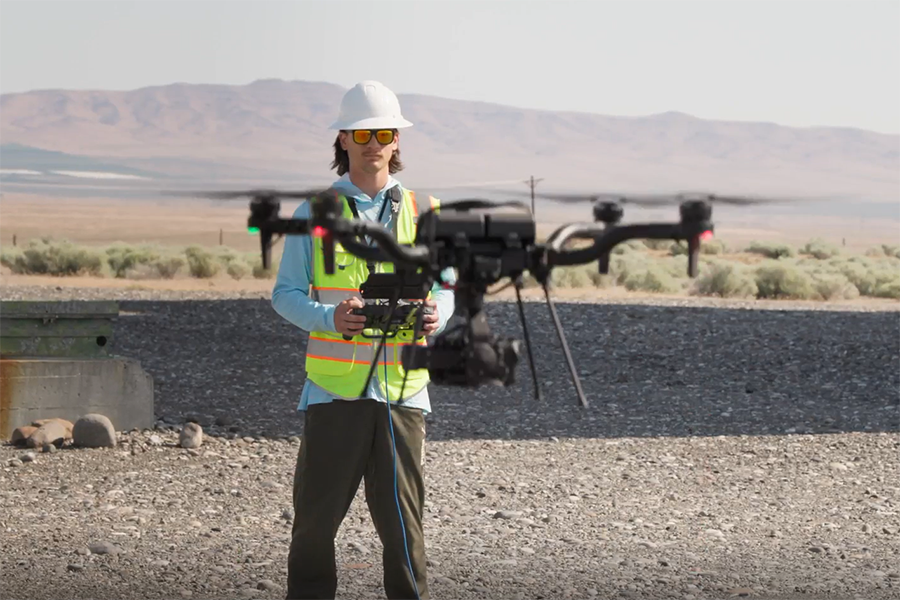
Our Unmanned Aircraft Systems program continues to reach new milestones, completing their first flights utilizing lidar (light detection and ranging) technology.
Courtesy HMIS
Cybersecurity and efficiencies
Our Digital Forensics and Incident Response team is taking a bold, proactive approach to cybersecurity with a threat hunting program, deliberately searching for trouble on Hanford’s expansive computer networks. Analysts actively comb through more than 10,000 devices to uncover hidden risks, providing a stronger defense of Hanford’s sensitive information.
An updated, integrated approach to apparent cause analysis developed by our Contractor Assurance team is reducing investigation time by more than 50%. DOE’s Accident Prevention and Investigation Program recognized our method as a best practice and is incorporating it into event investigation training across the DOE complex.
We joined forces with Hanford Tank Waste Operations & Closure and Central Plateau Cleanup Company to streamline procurement processes and consolidate systems to ensure a seamless experience across platforms. Newly integrated supply ordering, P-Card and electronic Billing of Materials systems have launched a new era of efficiency and security for Hanford’s procurement process.
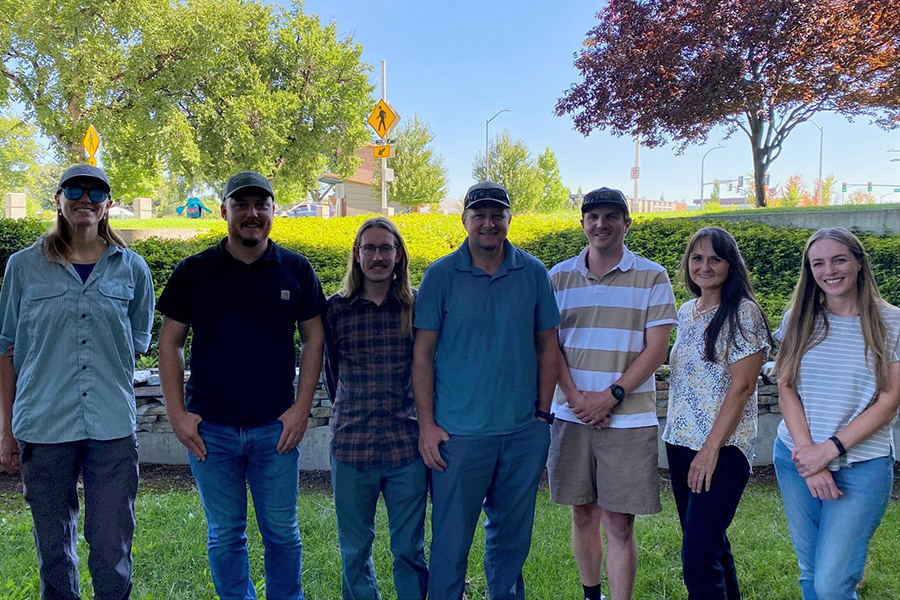
Our Ecological Monitoring & Compliance team was honored as the Organization of the Year by the Washington Department of Fish and Wildlife for their efforts in protecting Hanford’s plants, animals and habitats.
|Courtesy HMIS
Safety and security will always be our top priority and the HAMMER Federal Training Center, managed by HMIS, once again earned star status from DOE’s Voluntary Protection Program. This is a testament to the unwavering commitment of the HAMMER team to champion a strong safety culture not just for HMIS, but across the Hanford site.
HAMMER’s Radiological Safety Training program completed a five-month-long training regimen for more than 500 Hanford site radiological control technicians. The training included critical updates to emergency procedures on sitewide requirements for key personnel who assist firefighters in safely removing their protective gear after entering potentially contaminated areas.
In addition, our Ecological Monitoring & Compliance team was honored as the Organization of the Year by the Washington Department of Fish and Wildlife. The award highlighted the team’s efforts in protecting Hanford’s plants, animals and habitats.
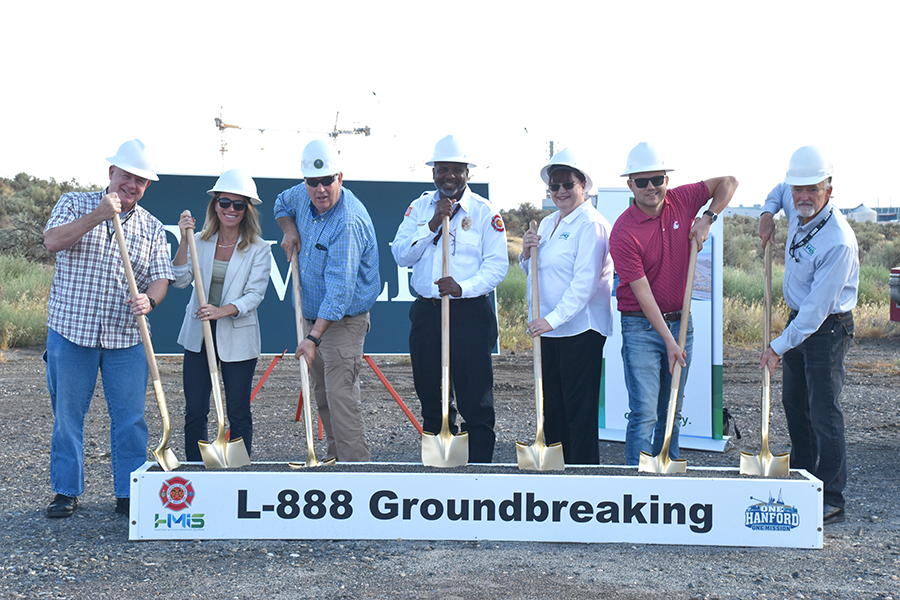
Construction is underway on a new fire station in the 200 East Area, which will consolidate resources and bring fire protection services closer to the Waste Treatment and Immobilization Plant.
|Courtesy HMIS
Planning for the future
Looking ahead, as the federal government continues its push to drive innovation, increase affordable energy and unlock potential energy resources, we’ve restructured our company to create a Land & Regulatory Stewardship organization to better serve Hanford’s land use planning needs.
HMIS continues to lead the DOE complex with advancements in AI capabilities. Hanford’s powerful generative AI tool, known as HAL, is securely boosting worker productivity. Now, the focus shifts to grounding HAL to Hanford’s critical applications and databases, while building customized AI agents to perform specific tasks. These capabilities will be invaluable to the workforce, enabling users to access and analyze data better than ever, and automating routine and time-consuming activities with precision.
Our Information Management team is leveraging advancements in commercial 5G solutions to install operational technology on site systems. Examples include cellular-based fire alarm communicators, which monitor the status of a building’s fire alarm control panel, and advanced electrical meters that transmit electricity usage to a central application for data evaluation and billing. These advancements help ensure reliable and seamless insight into our most critical systems.
Construction is also underway on a new fire station in the 200 East Area. The new station will consolidate resources and bring fire protection services closer to the Waste Treatment and Immobilization Plant and other active cleanup areas on the Central Plateau. The station is expected to open in spring 2027.
Through a relentless focus on cost savings, efficiency and resource optimization, HMIS continues to deliver exceptional value, enabling long-term progress while being responsible stewards of public resources. We succeed when DOE and our contractor partners succeed; and by removing barriers, reducing risk and delivering innovation and efficiency, HMIS ensures every contractor has what they need, when they need it, to accelerate continued progress on the Hanford cleanup mission.
Amy Basche is president and general manager at Hanford Mission Integration Solutions.


Stay Informed. It’s Free.
Subscribe to our newsletters and get the latest news and insights delivered to your inbox.
We respect your privacy.
Unsubscribe anytime.
Thank you!
You’re subscribed. Keep an eye on your inbox for the latest updates.