Hanford 2026
Board balances year of transitions with progress
2025 was a tumultuous year for the Hanford Advisory Board. We saw the departure of many long-standing employees from all three of the Tri-Party Agreement agencies, some of whom worked at Hanford for decades. While there are too many individuals to mention by name, the former employees of the U.S. Department of Energy (DOE), Environmental Protection Agency (EPA), and Washington State Department of Ecology (Ecology) demonstrated dedication, leadership and integrity. Their efforts led to significant progress in the cleanup of the Hanford site.
We are grateful for everything they have done to make the Hanford site and the surrounding region a safer place, and we hope they were able to pass down their institutional knowledge to the next generation.
However, these transitions also allowed the HAB to interact with new individuals currently working on the Hanford site cleanup. This included Ray Geimer, the new Hanford site manager, and a new deputy designated federal officer for the HAB, Meegan Tripp. We have appreciated the communication, openness and transparency that Geimer and Tripp have brought to the board, and we look forward to collaborating further in the coming year.
We also appreciated meeting with the new EPA Region 10 Administrator Emma Pokon and Ecology Deputy Director Heather Bartlett.
Challenges and successes
Due to the government shutdown in late 2025, the HAB did not meet as frequently as desired. We felt the loss of in-person opportunities to connect and share information and receive updates on site progress and challenges.
The HAB is an advisory board that represents the interests of government organizations, business interests, tribal nations, the Hanford site workforce, members of the public and others interested in the successful cleanup of the Hanford site.
Another challenge the board faced in 2025 was not having new and certain continuing HAB members formally approved to start their terms on Oct. 1, 2025.
HAB members may serve up to three two-year terms, and the terms are approved by DOE headquarters. This delay prevents both continuing and new members awaiting appointments from fully participating in board meetings.
However, these continuing and prospective members have been able to participate in subcommittee meetings and the early development of advice. We are hopeful these new and continuing members will be approved in the near future.
Board members continued to be dedicated to learning about Hanford cleanup issues and participating in on-the-ground activities. In addition to updates from each of the Tri-Party Agreement agencies, the agencies provided educational briefings on the Phoenix operating system, and the latest path forward for cleanup of the 324 Building.
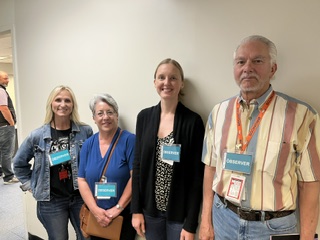
HAB board members had the unique opportunity to observe the annual field exercise at the Emergency Operations Center in June. From left: Rebecca Holland, Susan Coleman, Miya Burke and Rob Parmelee.
| Courtesy HABIn June, board members had the unique opportunity to observe the annual field exercise at the Emergency Operations Center, which simulated a commercial aircraft crashing into the B Tank Farms. It was fascinating to see how the different agencies responded to a crisis, instilling confidence in the site’s emergency response approach.
In August, HAB members toured the Advanced Modular Pretreatment System mockup, showcasing the replacement for the existing Tank-Side Cesium Removal System on-site, and learned how the new system included various improvements based on feedback from workers.
Providing advice
Despite the challenges over the past year, the board was productive and provided three pieces of advice:
- Fiscal Year 2027 Cleanup Priorities, which outlines the board’s top priorities for Hanford cleanup.
- Protect the Safety of Hanford Site Commuting Workers, which emphasizes traffic safety for the Hanford workforce.
- Path Forward for the 324 Building Removal and Remediation, which provides the Board’s perspective on cleanup of the highly contaminated 324 Building.
These informed pieces of advice reflect the dedication of HAB members to achieving the safest, most effective cleanup of the Hanford site.
The HAB also celebrated two significant Hanford site cleanup accomplishments that were decades in the making.
The first was the successful vitrification of the first gallons of tank waste at the Direct-Feed Low-Activity Waste facility.
Second, Hanford site personnel transferred the first cesium capsules from storage pools at the Waste Encapsulation Storage Facility (WESF) into safer dry storage. The board is thrilled to see major progress on these two risk reduction projects at Hanford and applauds the Tri-Party Agencies and workers who made these accomplishments possible.
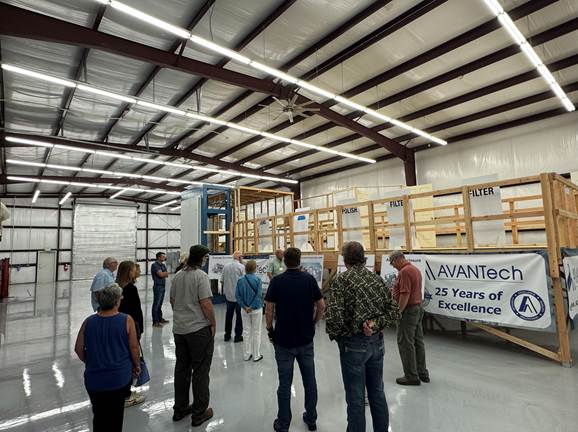
HAB members toured in August the Advanced Modular Pretreatment System mockup, showcasing the replacement for the existing Tank-Side Cesium Removal System on-site, and learned how the new system included various improvements based on feedback from workers.
| Courtesy HABWhat’s next
The board continues to be committed to working with DOE, EPA and Ecology to provide informed, policy-level advice on Hanford cleanup. Looking ahead to 2026, we aim to provide advice on public involvement, cleanup priorities, stakeholder considerations for transuranic waste shipments, the Hanford Sitewide Permit, Revision 9A, community engagement and more.
We anticipate more significant accomplishments and cleanup progress on site in the coming year and look forward to strengthening our collaborative and transparent relationships with the Tri-Party agencies. We hope for more opportunities to collaborate with agency staff and leadership, understand different perspectives, and find common ground to provide our recommendations for the continued success of the Hanford site cleanup.
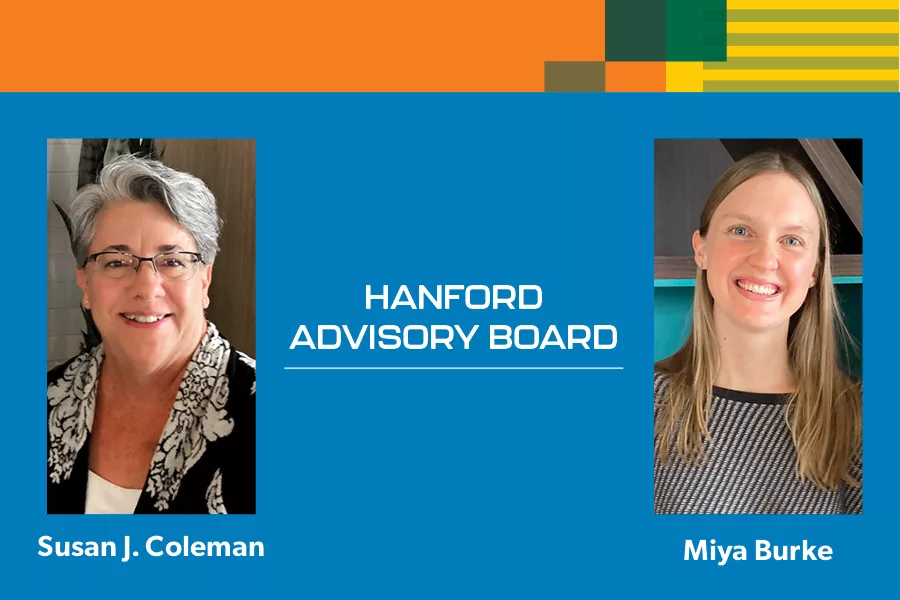
Susan J. Coleman is chair and Miya Burke is vice chair of the Hanford Advisory Board.

Stay Informed. It’s Free.
Subscribe to our newsletters and get the latest news and insights delivered to your inbox.
We respect your privacy.
Unsubscribe anytime.
Thank you!
You’re subscribed. Keep an eye on your inbox for the latest updates.