
Lower interest rates, higher incomes made homes more affordable in June
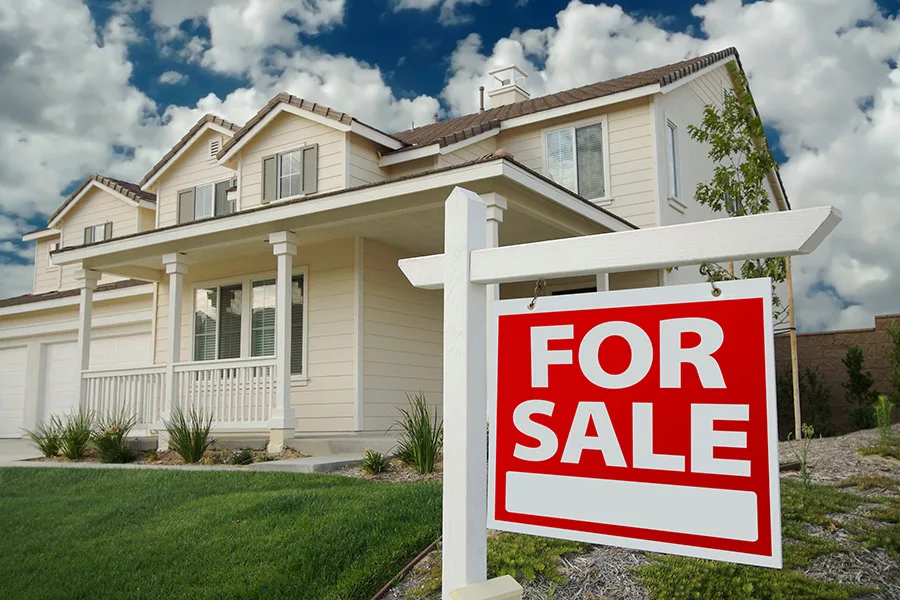
Housing became more affordable this June, as higher incomes and slightly lower interest rates overcame higher prices, according to a National Association of Realtors report. However, the West, and the Tri-Cities, continues to be a tough market for homebuyers.
The affordability gap is highest in the West, where the typical family income is $113,783, just over two-thirds of the $164,832 that would be needed to purchase a median-priced home.
In the Tri-Cities, home prices are more affordable than the state average. But most homes in the region remain unaffordable for those earning the median income or less, according to one housing affordability index from the Real Estate Research Center at the University of Washington.
For the local market to be “in balance,” communities should score 100 on the index. Levels above 100 imply “affordability” while levels below 100 connote a lack of affordability.
As of the first quarter of 2025, Benton and Franklin counties register an 84 on the index, a decline from an index score above 100 last seen in 2021. However, in the last three quarters, the decline of the index has stopped, raising the question if affordability is returning to the local market.
“Mortgage rates aren’t helping, but rising incomes may,” according to an analysis by the Institute for Public Policy and Economic Analysis at Eastern Washington University for Benton-Franklin Trends. “The prior year represented a departure from the recent rapid rise in household incomes in the two counties. With prices of resale homes increasing only slowly, whether the ratio improves will likely depend on an income increase.”
Elsewhere around the country, the South and the Midwest are the only regions where a family with typical or median income can afford a median-priced house, according to the National Association of Realtors report. The group considers a mortgage to be affordable if the monthly payment (principal and interest) is 25% or less of the family’s income.
The Northeast, where the typical family makes $114,559, is also unaffordable by this measure, as a median-priced home requires an income of $141,264.
In the Midwest, the median family income is $102,419, more than the $86,256 needed to buy a median-priced home. The same is true in the South, where the median income is $97,812, slightly more than the $96,720 required to buy a typical home.
Nationally, affordability increased slightly compared with June of 2024, with the typical family making $105,431, about 94% of the $111,648 it would need to buy the median-priced home. That’s up from about 92% in June 2024.
In a video posted Aug. 15, Lawrence Yun, chief economist for the National Association of Realtors, said he expects lower interest rates to increase affordability in the months ahead.
“We know that mortgage rates will be coming down and that will bring additional buyers into the market. We just need to make sure we have more supply, more supply to meet that demand,” Yun said.
The Tri-Cities Area Journal of Business contributed to this story.
This story is republished from the Washington State Standard, a nonprofit, nonpartisan news outlet that provides original reporting, analysis and commentary on Washington state government and politics.

Stay Informed. It’s Free.
Subscribe to our newsletters and get the latest news and insights delivered to your inbox.
We respect your privacy.
Unsubscribe anytime.
Thank you!
You’re subscribed. Keep an eye on your inbox for the latest updates.