
PNNL, PDX explore using hydrogen fuel cell buses for backup power
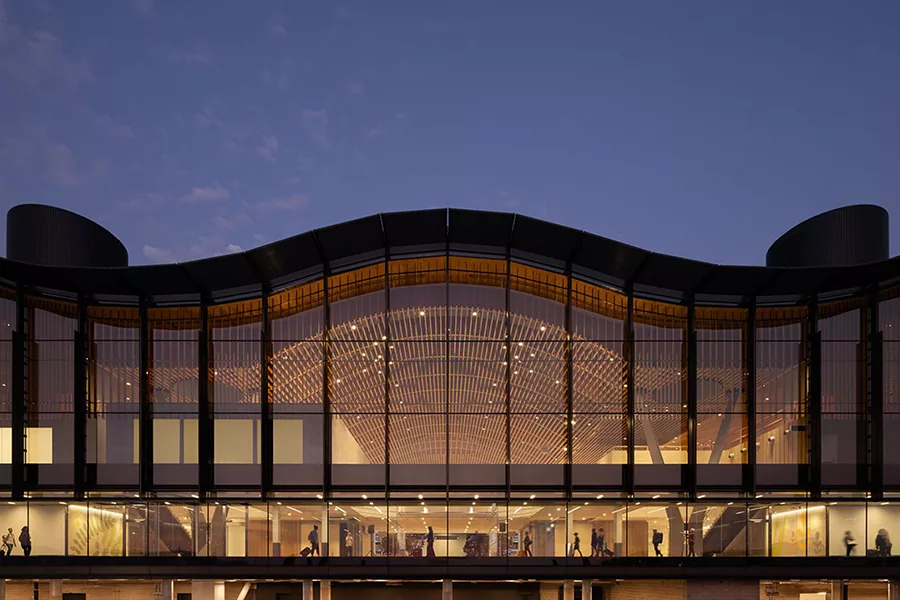
Among recent upgrades at Portland International Airport: a newly remodeled main terminal, which opened its doors to travelers last year.
Photo by Dror BaldingerShould the lights ever go out, Portland International Airport wants to know exactly where it can find batteries to turn them back on. And Pacific Northwest National Laboratory is studying whether PDX looks no further than its own bus fleet.
PNNL and Sandia National Laboratories are jointly studying whether the airport should consider converting its fleet of natural gas-fueled shuttles to those using hydrogen-powered fuel cell electric buses, or FCEBs, according to a release.
Doing so could simultaneously meet airport passenger transportation needs and serve as a particularly reliable bank of backup generators in an emergency.
“Unlike conventional backup generators, FCEBs (depending on the condition of drivable surfaces) can be relocated to meet the needs of the moment – a major boon during a disaster for airports like PDX that have big footprints,” said Arun Veeramany, a senior data scientist at PNNL and the study’s principal investigator, in a statement. “And unlike conventional backup generators, the FCEBs would also serve an essential day-to-day purpose for the airport during normal operations.”
Hydrogen fuel has received increasing attention as a clean and abundant energy source. Switzerland-based Atlas Agro plans to use hydrogen to power its proposed $1.5 billion Pacific Green Fertlizer Plant north of Richland.
In 2023, the U.S. Department of Energy selected the Pacific Northwest to receive as much as $1 billion in funding as one of seven regional hubs to kickstart clean hydrogen production. PNNL researchers are among those advising the hub’s development.
PDX officials’ interest in hydrogen fuel stems from its location, or what could happen in and around its location. Portland is in the Cascadia subduction zone, which means it may have to endure a catastrophic earthquake at any time and without warning.
That’s led the airport to pursue initiatives to strengthen its ability to withstand that kind of calamity, such as seismically resilient runways and enhancing its energy and backup power systems.
“In the event of a high-magnitude earthquake, our goal is for PDX to be able to help our region recover, providing important facilities and services to first responders and civilians,” said Danelle Peterson, program development manager at the Port of Portland, in a statement.
To that end, fuel cell electric buses could be used as emergency generators for many essential purposes at airports, Veeramany said, though he cautioned that there would be logistical challenges to overcome. However, FCEBs could power anything from landing lights to PDX’s passenger terminals.
The researchers are conducting a hazard assessment for all the equipment and connections that would be involved in providing backup generation via FCEBs, as well as assessing regulations, codes, and standards to ensure that any implementation would meet requirements.
The researchers plan to deliver the final study to PDX soon. The airport will consider their findings and then evaluate whether to pursue a switch to hydrogen buses.
“We’re excited to showcase a scenario where hydrogen fuel could add reliability and resilience to our nation’s critical infrastructure,” Veeramany said. “Whether or not PDX ends up implementing hydrogen buses, this analysis is laying crucial groundwork for airports across the country to understand not only the risks, but also the potential rewards, of hydrogen fuel.”