Q&A with Kyle Lepper
Principal architect, LPR Architecture

Number of employees you oversee: Currently, we have four employees.
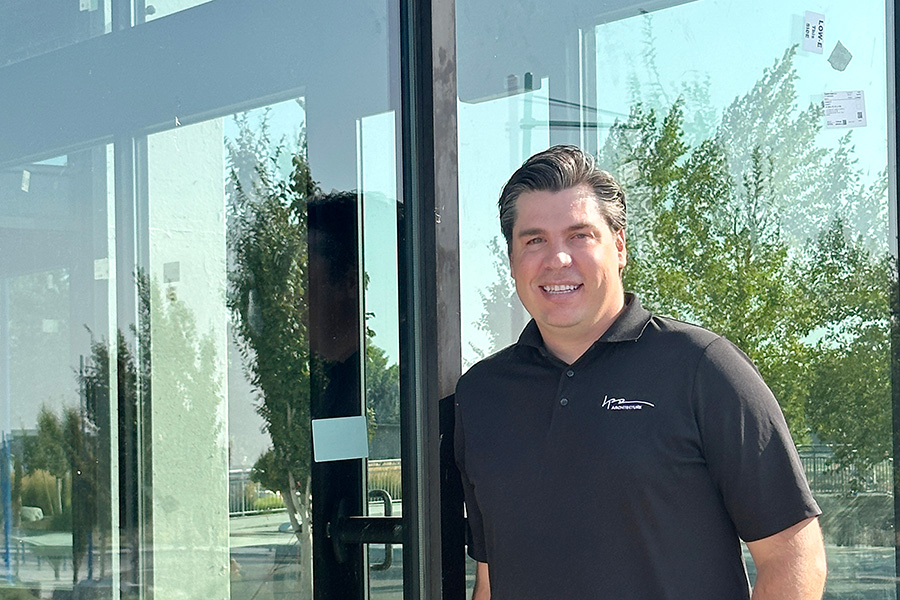
Kyle Lepper, principal architect, LPR Architecture
Brief background on your career and what led you to architecture:
I’ve wanted to be an architect since fifth grade. I grew up in a family connected to the construction industry. I was always interested in design, whether sketching ideas or getting hands-on with building projects. That early exposure gave me a deep appreciation not just for how things are built, but for why good design is important. It’s what started my lifelong passion for architecture.
I went on to study at the University of Idaho, where I earned both my bachelor’s and master’s degrees in architecture. It was a formative time that helped me refine my creative instincts and develop the technical foundation I still rely on today.
I started my career at Loofburrow Wetch Architects in Yakima in 2011. One of the highlights was working on Davis High School, my first major project. I was part of the project from the early design stages through construction. This experience provided me with valuable insight into delivering a complex public project.
In 2014, I moved to Seattle to broaden my experience. At Jackson Main Architecture, I worked on many project types. This included multifamily housing, retail, data centers and storage facilities. I also witnessed the firm evolve rapidly, growing from about 10 people to over 60 during my time there. That period really shaped how I think about design in a fast-moving, growth-focused environment.
In 2017, I joined DLR Group as a project architect. I concentrated on K-12 education. I was hired as the project architect for the Parkwood Elementary project in Shoreline. I led this school project from scratch, working with an amazing team. DLR was a large, multi-office firm with over 1,400 employees at the time, and it gave me exposure to how national design firms operate and collaborate. I also worked in the civic studio and contributed to key projects like Climate Pledge Arena and correctional facilities. These experiences made me think about urban and social issues on a bigger scale.
In 2020, my wife and I made the decision to return to the Tri-Cities to be closer to family. Soon after, I co-founded WL Architects with my good friend Tyler Wilson. We worked on high-end custom homes in the western U.S. Our projects included unique houses in Texas, California, Utah and Wyoming. I enjoyed the work, but I missed the community connection found in public and commercial architecture.
In 2023, Tyler kept growing WL as Tyler Wilson Architects, and I started LPR Architecture full time to focus on commercial, civic and public work that benefits the Tri-Cities and nearby areas. With LPR, my goal is to design thoughtful and lasting architecture. I think strong client relationships, clear communication and understanding our communities are important.
Brief background about LPR Architecture and some of its Tri-City projects:
LPR Architecture was originally founded in 2017 as a side business, shortly after I became a licensed architect. At the time, it started as a small design practice focused on side projects, primarily spec homes and townhomes in Boise and southern Idaho. It was a creative outlet that allowed me to take ownership of design work early in my career.
In January 2023, after years of growth and planning, we opened our first physical office in downtown Richland. That step began a new chapter. We moved from a side project to a full-service architecture firm. We are dedicated to the community and committed to thoughtful design. As our project portfolio and team expanded, we moved into a larger office in Kennewick, where we continue to grow today.
Since we opened our doors two and a half years ago, we’ve been very fortunate. We’ve partnered with passionate clients, talented consultants and skilled contractors. Our work spans a wide variety of scales and sectors, from small local businesses to major regional developments.
Some of our notable projects in the Tri-Cities and surrounding region include:
- The McCurley service center expansion and Overturf Kia dealership.
- Kuki Izakaya Japanese Restaurant and Columbia Point Eyecare at Vista Field.
- Commercial shell buildings include the 400 Building, Shelby’s Auxiliary Building and the Stevens Drive development.
- Columbia Basin Pediatrics and Paradise Way Plaza, home to Swigg Coffee, in West Richland.
- A series of travel plaza developments in Grandview, Ritzville, Ellensburg and Durkee, Oregon.
- The campus design for Pacific Northwest Christian College.
- The Veteran Ranch Lodge for Friends of Disabled Veterans.
What are LPR’s top priorities for the remainder of 2025?
For the rest of 2025, we focus on growth, design excellence and client service. We focus on delivering high-quality projects. These projects meet our clients’ goals and help the communities they serve. As our project portfolio grows, we’re prioritizing better internal processes. We’re also adopting new technology and searching for smarter design and documentation methods.
We have several key projects under construction. Our main priority is to provide strong support during this phase. This will help ensure they are completed successfully by year-end. We want to finish 2025 strong. We aim for buildings we’re proud of, thriving partnerships and a foundation that keeps us moving into 2026.
Tell us about some recent or current projects you’re particularly excited about.
We’re currently working on several projects that we’re genuinely excited about. Two that stand out are Kuki Izakaya and Columbia Point Eyecare, both under construction at Vista Field. We are excited to be among the first projects in this important development. It’s a privilege to help create a lively, walkable district in the heart of Kennewick.
We have a number of projects in design that reflect our passion for modern Northwest architecture. This includes a new office building in Richland that boasts a sleek, modern design. There’s also a townhouse development in West Richland. This project combines smart land use with a fresh architectural style. These projects reflect our passion for design that is both practical and innovative. They also make a meaningful impact on the growth of the Tri-Cities.
Do you have a favorite building in the Tri-Cities? One that you didn’t design?
In the Tri-Cities, some buildings stand out to me. I’ve always liked the financial institutions for their interesting architecture. The Old National Bank building in Pasco, for example, has a strong, enduring presence that reflects a different era of design. I admire the Banner Bank building on Jadwin in Richland. It mixes mid-century modern architecture with touches of brutalism and international style.
What do you see as the biggest challenges facing the architecture industry today?
One major hurdle is permitting timelines and increasing regulations. Long approval processes can slow down projects, leading to uncertainty and extra costs. Also, dealing with complex regulations takes a lot of time and skill.
Another critical challenge is promoting sustainability and reducing embodied energy in our buildings. As awareness of climate change grows, architects must focus on sustainable design. They need to choose eco-friendly materials while also considering budgets and client requirements.
The rising cost of construction and supply chain issues puts financial pressure on projects. This affects their feasibility. Material shortages, high labor costs and inflation all raise expenses. This makes it tougher to complete quality projects on budget.
Tell us about your work with the American Institute of Architects Washington Council (AIA) Central Washington Chapter.
This year, I am honored to serve as the chair of the AIA Washington Council and as the political advisor for the AIA Central Washington Chapter.
The council advocates for and develops policy for architecture and the built environment at the state level. Representing Central Washington on the board has changed my perspective on the legislative process. I’ve learned first-hand how decisions made in Olympia affect our industry and the impact individuals can make in the process. It’s clear that by engaging with lawmakers in a meaningful way, we can create change.
During my tenure on the board, we’ve advocated on many bills focusing on issues such as school construction, environmental sustainability, housing affordability and historic preservation. We are currently working with the state board for architects to update the Architect’s Practice Act in Washington, which outlines the roles and responsibilities of licensed architects. This update will strengthen the law, provide better defined boundaries for the profession, and update administrative procedures. Our goals are to strengthen the role of architects and always to protect the health and safety of the public.
What is one characteristic that you believe every leader should possess?
I believe the most important characteristic every leader should possess is the ability to lead by example. Great leaders aren’t always the loudest voices. Instead, their actions reflect their values and show their commitment. When they speak up, their words matter. They earn respect through integrity, dedication and accountability. Leading by example inspires others to follow, fosters trust and builds a strong, cohesive team culture.
What advice would you give someone going into a leadership position for the first time?
My advice for someone stepping into a leadership role for the first time is to embrace the fact that you’re going to make mistakes – and that’s OK. Mistakes are part of the learning process and valuable opportunities for growth.
Also, be a great listener. Leadership isn’t just about giving directions. It’s also about knowing your team, hearing different views and learning from others.
Finally, have a strong work ethic. Leading by example through dedication and consistency sets the tone for your team and builds trust and respect.
Who are your role models or mentors, and why?
Throughout my life, I’ve been fortunate to have some incredible role models and mentors. One who immediately comes to mind is Gregg Percich, the former principal at Jackson Main Architecture. I spent two years sitting next to Gregg. He was always open and ready to answer my questions about architecture, business, golf and basketball. Direct access to a firm principal was invaluable. It sped up my growth as an architect, both in my career and personally.
Today, I work to provide the same mentorship to my employees. I want to create a space where they feel supported and can ask questions. This helps them grow in their careers and personal lives.
How do you keep your employees motivated?
I feel that motivating employees starts with offering clear paths for career growth and encouragement. We support this by covering the costs of professional exams. We promote involvement in professional and community organizations.
We also maintain an open office environment where leadership is accessible to staff. A lot of growth happens naturally just by being able to observe and engage with experienced leaders.
Having a strong office culture is equally important. We’re very selective about who we hire to ensure good team chemistry, and we prioritize making work enjoyable. We started Wine-Down Wednesdays to encourage connection and fun while being productive.
How did you decide to pursue the career that you are working in today?
My family has a strong background in construction. My dad was a third-generation mason, and many relatives work in the industry, including two cousins who are architects. Growing up around construction, I was naturally exposed to the skills, craftsmanship and problem-solving that go into building.
One of my favorite childhood memories is when my dad would point out buildings he had helped work on. I was always amazed by how something he contributed to had become a lasting part of the community. It was exciting to think that real, tangible places were created through hard work and skill, and I wanted to be able to do that myself someday.
My early exposure sparked my curiosity about building design and construction. I became interested in how thoughtful design affects how people live and interact with their spaces. I found myself drawn to the blend of creativity and technical challenges that architecture offers.
In the end, architecture seemed like the perfect way to blend those interests. It allows for creating spaces that are functional and inspiring. Plus, it helps people connect personally with their surroundings. It has been a rewarding journey to turn that early fascination into a lifelong career.
How do you measure success in your workplace?
I prioritize client satisfaction. I ensure clear communication throughout the design process. I deliver solutions that align with our clients’ goals. Repeat clients and referrals are strong indicators that we’re hitting the mark.
Internally, I measure success by the professional growth and engagement of our team. Are we fostering an environment where people are challenged, supported and proud of the work they’re doing? If our team is thriving, it shows up in the quality of our designs, our efficiency, and our collaborative culture.
What do you consider your leadership style to be?
I’d say my leadership style is quiet and lead-by-example. I’m not the loudest in the room but I try to set the tone through how I work, how I communicate and how I treat others. I think consistency, accountability and professionalism are contagious. When leaders show these traits, it helps build a culture. People then want to hold themselves to a higher standard. I also try to be approachable and a good listener, so the team feels supported but also empowered to take ownership of their work.
Tell us about your family, and how you balance work and family life.
Although I didn’t grow up in the Tri-Cities, it’s very much home now. My whole family lives here and my wife Jessica is originally from Pasco. Most of her family is still in the area, which was a big reason we moved back from Seattle in 2020. We have a son, Frankie, who’s almost 2, and two goofy dogs, Ernie and Palmer, who’ve become unofficial mascots of our office.
Balancing work and family is never easy, especially as a business owner, but it really comes down to being intentional with time. I try to stay focused and efficient during the workday so I can be fully present at home. Prioritizing what matters – whether that’s a project deadline or family dinner – is what helps keep everything in balance.
What do you like to do when you are not at work?
When I’m not at work, my wife and I enjoy golfing together, so you can usually find us out on the course playing a round. It’s a great way to unwind, enjoy some fresh air and spend quality time together.
Most of my free time is spent with my family. Our toddler is a busy little guy who keeps us constantly moving and entertained. There’s never a dull moment at home! We also love hanging out with our dogs, whether it’s taking them for walks or just relaxing together. Having pets around adds a lot of joy and balance to our lives.
What’s your best time management strategy?
My best time management strategy is blocking out dedicated time and setting clear time frames for specific tasks. This helps me stay focused and ensures that important work gets the attention it needs.
At the same time, I stay organized but also build in flexibility to adapt when unexpected issues arise. Balancing structure and flexibility helps me manage my workload well. I can avoid feeling overwhelmed.
Best tip to relieve stress?
One of my best tips to relieve stress is to engage in simple activities, like taking the dogs for a walk. It’s a great way to clear your mind, get some fresh air and reset your focus.
What’s your most-used app?
My most-used app is YouTube. I always turn to it to learn new things. I explore the latest architectural software, get tips for woodworking or home projects and find tweaks to improve my golf swing. It’s a fantastic resource that helps me keep learning and improving in many areas of my life.
Do you have a personal mantra, phrase or quote you like to use?
One mantra I’ve held onto is, “Slow is smooth, and smooth is fast.” I first connected with it during my days playing basketball. It has stayed with me through college, my early career and now as a business owner. It’s a reminder that precision, patience and intention often get you further than rushing. In architecture – and in life – it’s easy to get caught up in the end goal, but real progress comes from respecting the process and doing the work the right way.