Report: More invasive beetles detected this year
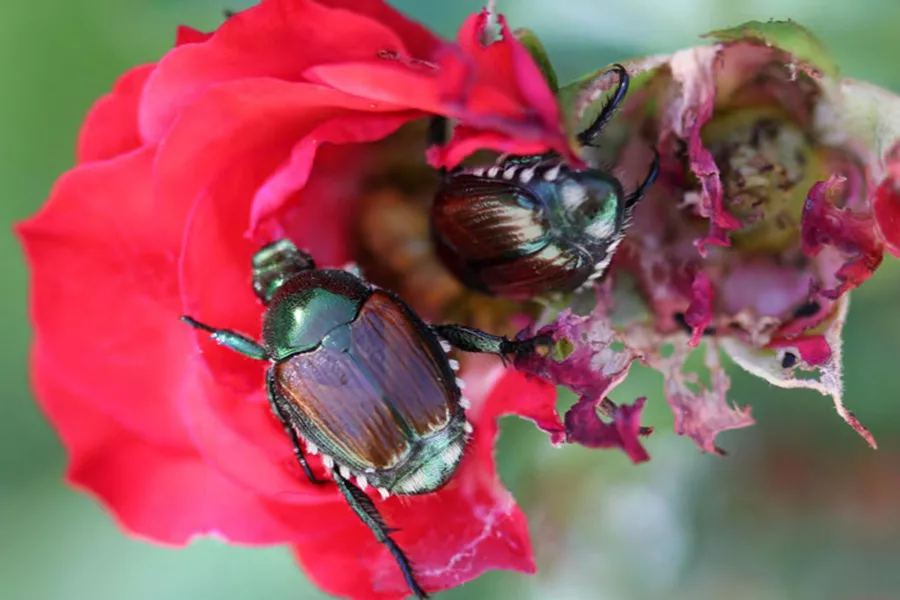
Adult Japanese beetles are mainly seen in the summer, often first emerging in June. However, they have been reported from mid-May through mid-October. They range from 1/3 to 1/2 inches long with metallic green head and thorax, and copper wing covers.
Courtesy Washington State Department of AgricultureAn invasive beetle that can devastate crops ranging from apples to grapes has settled even more firmly in the Mid-Columbia.
State agriculture officials report that despite treatment efforts, more than 108,000 Japanese beetles have been detected across the state, a nearly 50% increase over last year. Plus, they are now being detected in Spokane County.
“Eradication efforts appear to be slowing the spread of Japanese beetle, but so far landowner participation in the eradication project has not been sufficient yet to significantly decrease the number of beetles we are finding,” said Nathan Chambers, Japanese beetle program coordinator with the state Department of Agriculture, in a statement. “We’re exploring new ways to connect with communities and look forward to working with them to find solutions together.”
Most of the beetles have been found in the lower Yakima Valley, but thousands have also been trapped in the Tri-Cities, particularly in Pasco. Fewer than half of eligible properties have provided treatment consent since the project started in 2021.
Japanese beetles (Popillia japonica) feed on more than 300 plants, including roses, hops and grass, by stripping foliage. Adults also feed on buds, flowers and fruit while their larvae feed on roots.

Stay Informed. It’s Free.
Subscribe to our newsletters and get the latest news and insights delivered to your inbox.
We respect your privacy.
Unsubscribe anytime.
Thank you!
You’re subscribed. Keep an eye on your inbox for the latest updates.