She witnessed SIGN’s impact firsthand, now she’ll lead the nonprofit
Transition between CEOs becomes official Nov. 1
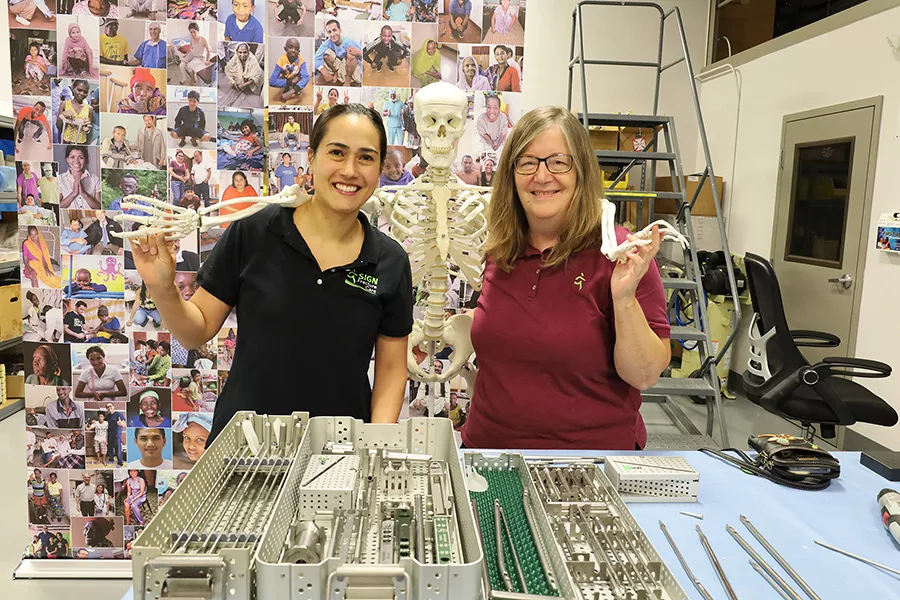
SIGN Fracture Care has named a new incoming CEO who embraces the nonprofit’s mission of helping the injured poor in need of orthopedic surgery. Dr. Sariah Khormaee, left, will work alongside current CEO Jeanne Dillner through the end of October.
Photo by Rachel VisickA Tri-City nonprofit focused on helping the injured poor in need of orthopedic surgery has named a new CEO who embraces the heart of the organization’s mission – helping those most in need.
SIGN Fracture Care has been designing and manufacturing metal orthopedic implants in Richland for low-resource hospitals in countries across the world and training surgeons to use them since 1999.
It expects to hit a milestone of treating 500,000 patients within a year.
SIGN surgeries have healed fractures while improving countless lives in Cambodia, Tanzania, Malawi, Myanmar, Afghanistan, Pakistan, Ethiopia and elsewhere.
For the past 25 years, Jeanne Dillner has been at SIGN’s helm as the nonprofit’s CEO, helping to shape the organization it has become today. Now, an incoming CEO is coming on board, working alongside Dillner until her last day on Oct. 31.
Incoming CEO
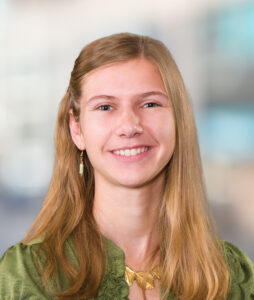
Dr. Sariah Khormaee, an orthopedic surgeon, is set to take over SIGN’s reins Nov. 1.
Khormaee first came into contact with SIGN 15 years ago, when she was in Vietnam with a different nonprofit and saw a SIGN surgery.
Often, after an incident like a car accident, patients’ families must go to a market before surgery to buy a piece of metal to put in the bone, Khormaee said. But in this case, the surgeon said, “‘Oh this, this came for free for this patient. It was donated, it’s from Washington state,’” she recalled. That’s when she learned about SIGN.
Originally from Vancouver, Washington, Khormaee was so moved she not only reached out to contact SIGN, but she also decided to go into orthopedic surgery.
She joined SIGN Aug. 1 after several years in private practice.
Dillner expressed confidence in her abilities, praising her excitement and investment in SIGN’s mission. Khormaee also inspires trust, Dillner said, a key trait when working with donors.
“There’s a certain energy level that I feel our organization needed to have reinserted, and because of her enthusiasm and the fact that she is … an orthopedic surgeon, I think it just will give the whole organization that revitalization of energy” to help the nonprofit accomplish its goals going forward, Dillner said.
Looking ahead, Khormaee said, “it’s important that SIGN continue its core mission of helping poor patients who otherwise wouldn’t have access to care. That’s what SIGN does and does well, so the more patients that we can help in that way, I want to make sure that that is sustainable.”
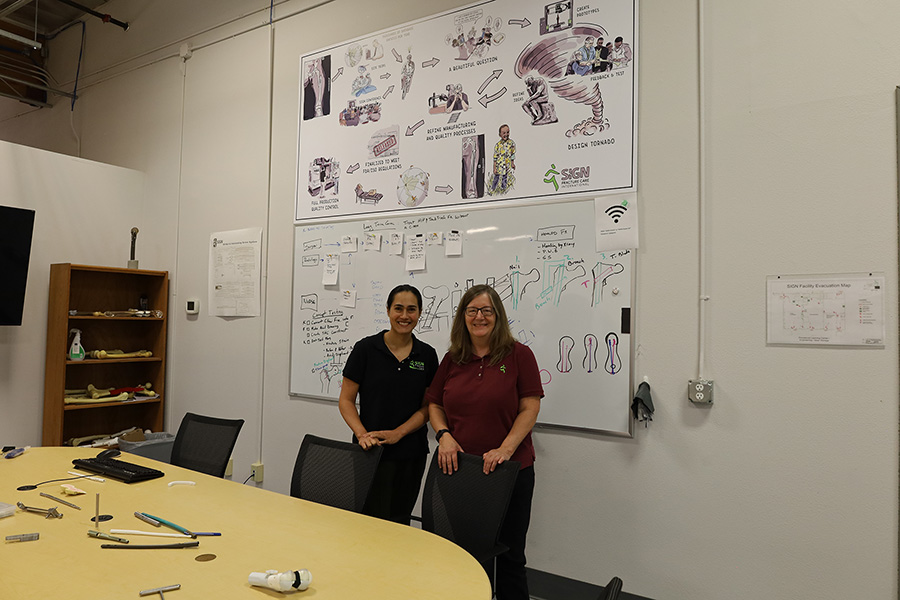
Founded by Dr. Lewis Zirkle in 1999 and headed by Jeanne Dillner since 2001, SIGN manufactures orthopedic implants and provides training in how to use them in low-resource hospitals in countries across the world. Dillner, right, stands with Dr. Sariah Khormaee, incoming CEO.
| Photo by Rachel VisickSIGN’s impact
The orthopedic implants SIGN manufactures in north Richland are special because they’re designed to be implemented without the guidance of an X-ray machine. That’s crucial, since hospitals in low- and middle-income countries often don’t have access to that type of equipment.
But the organization extends beyond simply manufacturing the right tools: training is an essential part of SIGN’s mission.
Rather than bringing doctors to hospitals in need, SIGN trains the doctors already in those places so that they can use SIGN’s equipment to heal fractures.
“Within a year, we’ll probably have treated half a million people by equipping the local surgeons to do those cases,” Dillner said. “If we were limited to attracting U.S. surgeons to travel and do the surgeries, our numbers would be far, far smaller.”
She estimated that about 7,000 surgeons have been trained by SIGN in one way or another. Around the world, 458 hospitals in 61 different countries use SIGN products.
For Khormaee, it’s important that SIGN continues to innovate, seeking ideas from the surgeons overseas who are engaging with the patients and implants and building on the foundation developed by Dillner and Dr. Lewis Zirkle, SIGN’s founder.
The organization has expanded a lot since its beginnings, growing from a handful of people to 40 employees.
Dillner helped guide the nonprofit through early manufacturing challenges as it first got started and through the later difficulties presented by the Covid-19 pandemic when the organization shifted operations online but was able to keep doing its work.
“We’re all involved in different ways than we were 26 years ago,” Dillner said. “… Dr. Zirkle’s vision continues to inspire the staff here and the SIGN surgeons around the world to devote their careers to giving the injured poor the chance to walk again.”
For Khormaee, there is no other organization that does what SIGN does, combining the technical elements of orthopedic surgery with a culture of being a part of something good, amplifying SIGN’s mission.
And for SIGN, Khormaee’s experience and dedication are vital, too.
“SIGN needs Sariah,” Dillner said.