
Smaller regional hospitals offer attractive alternative for patients
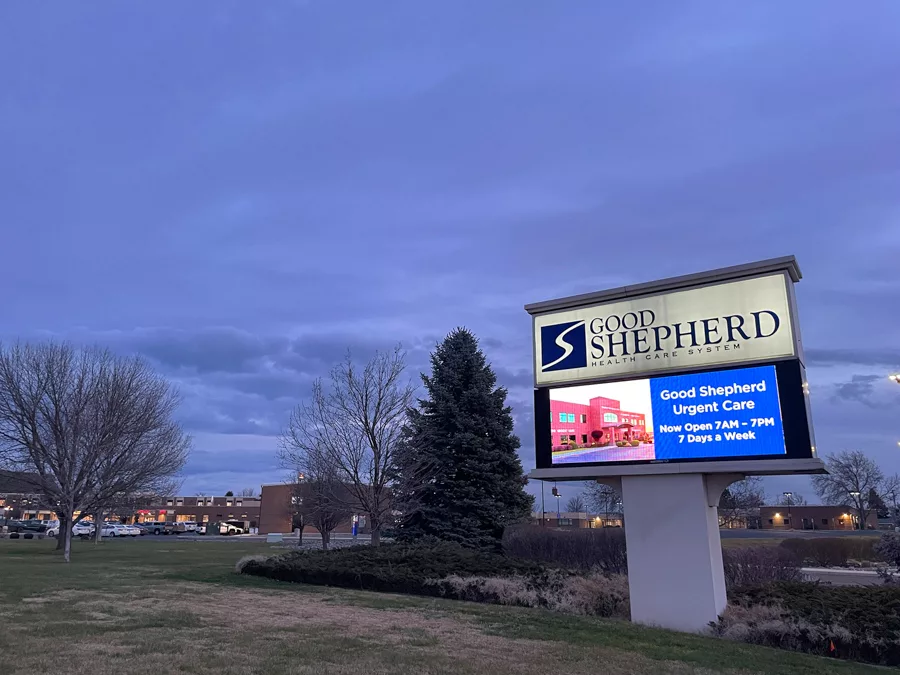
Smaller regional hospitals, such as Good Shepherd Health Care System in Hermiston, are increasingly growing their services and adding to their staffs, drawing some patients from the Tri-Cities.
Photo by Kristina Lord.Julie Nelson of Richland has received a lot of care from Tri-City hospitals over the years.
But when given the opportunity to have a procedure performed by an orthopedic surgeon who cared for her years ago in Portland, she leapt at the opportunity, even though that meant driving outside the Tri-Cities to Hermiston’s Good Shepherd Health Care System.
And while it was the doctor who drew her to the smaller hospital about 35 miles south of Tri-Cities, her experience there is what keeps her gushing about the facility to family and friends.
“The people are happy there, everyone there is smiling, they all like their jobs,” Nelson said. “It’s just an entirely refreshing and lost form of care that we are experiencing.”
She isn’t the only one bypassing the hospital closer to home that’s more expansive for one smaller and a little further away.
Some Tri-Citians seeking elective care are turning to smaller hospitals rather than large health systems, citing shorter wait times, lower costs and the perception of more personalized attention. At the same time, providers facing growing burnout are also drawn to these facilities for better work-life balance. The shift is shaping the region’s health care landscape, affecting staffing, patient access and the way local hospitals operate.
Smaller hospitals are capitalizing on the trend, including in the Mid-Columbia, and using ad campaigns to attract patients via Tri-City media and at entertainment venues such as the Toyota Center in Kennewick.
One recent ad touted Good Shepherd’s “immediate MRI appointments and same-day reads from highly trained radiologists,” promising “the answers you need without the long wait time or the high cost.”
The messaging hasn’t gone unnoticed by the region’s largest care provider.
Kadlec officials in Richland said the intensifying marketing efforts by nearby smaller hospitals, which don’t face the same operations requirements and revenue challenges, threaten to upend its ability to serve not just Tri-City patients but also support those hospitals when needed.
“Our one saving grace is if they’re contained (to their communities),” said Dr. Rich Meadows, chief medical officer for Providence Clinical Network Southeast Washington Service Area. “But if they spread outside that, it breaks the system.”
Hospital landscape
Most health care providers in the United States are part of larger corporations or not-for-profits in an ongoing trend toward mergers and consolidation.
Providence Health & Services, which operates more than 50 hospitals across the western United States, acquired Kadlec Regional Medical Center in 2014.
Lifepoint Health, a Tennessee-based and private equity-owned health care provider with nearly 90 hospitals across the U.S., acquired Trios Health and Lourdes Health in 2018 shortly after they were acquired by RCCH Healthcare, which Lifepoint absorbed.
Those three hospitals in 2023 had gross revenues of $2.6 billion, $605 million and $305 million, respectively, according to financial data filed with the state Department of Health, the most recent available.
In contrast, Good Shepherd is operated by a nonprofit overseen by a volunteer board of directors and had 2023 total revenue of $189 million.
Prosser Memorial generated $324 million in revenue in 2023 and is overseen by the Prosser Public Hospital District.

Since opening Feb. 1, Prosser Memorial Health’s new hospital has seen more births on average each month as expectant mothers take advantage of its large and comfortable birthing suites. Its emergency room is on track to record nearly 27,000 admittances this year, thousands more than in 2024.
| Photo by Ty BeaverAstria Health is a nonprofit with three hospitals spread across the Yakima Valley, with Sunnyside, its closest hospital to the Tri-Cities, having 2023 gross revenue of $313 million.
In 2022, nearly half of the nation’s metropolitan areas had hospitals fully controlled by one or two health systems, according to data from KFF, a health policy research and analysis firm.
That included the Tri-Cities. Providence was listed as serving 70% of the hospital market in the metro area, with Lifepoint at a distant second with 24%. Providence is the sole provider in the Walla Walla market via St. Mary Medical Center.
Kadlec becoming part of Providence several years ago was a necessity to secure the resources to grow the suite of services and specialties available in the region, said Reza Kaleel, CEO of Kadlec and Providence Southeast Washington. Consolidation also can lead to efficiencies and savings through economy of scale.
But those benefits can come with drawbacks, with health care experts warning about the unintended consequences of increasingly large health care systems.
“While consolidation of hospitals into larger health systems present opportunities to leverage unique financial and clinical advantages of scale, we could be approaching a point where big health systems may simply be too big,” according to an August 2025 article in the Annals of Surgery medical journal. “Although increasing market share is likely financially beneficial for the health system, key stakeholders including patients, providers … may begin to experience (or may already be experiencing) unintended consequences.”
A competitive market
Kadlec officials said they understand the current landscape of the health care industry is challenging. From jockeying for an increasingly small pool of physicians to managing the growing costs of everything from pharmaceuticals to printer paper, they look for any way to improve their bottom line.
“Health care is a competitive market,” said Dr. John Matheson, chief medical officer for Kadlec’s hospital. “There are dollars out there that people want.”
When it comes to federally-subsidized care, Kadlec and Trios are not considered critical access hospitals because they serve an area with multiple hospitals in close proximity. That means they receive lower reimbursements for care for patients covered by Medicare and Medicaid, in some cases only a little more than half the actual cost.
However, Good Shepherd, Prosser Memorial, Astria Sunnyside and Lourdes are all designated as critical access hospitals. That means they receive slightly more than the cost of care when being reimbursed by the federal government.
And while the critical access designation does require the smaller hospitals to maintain minimal services, such as a 24/7 emergency department, it doesn’t mean they have to be set up to handle the worst or most complex cases.
“Other hospitals can send us their cases when it’s not convenient for them to treat,” Meadows said.
As a result, Kadlec has looked to elective, outpatient and specialist care, which is often covered by private health insurance with higher reimbursements, to offset its deficit from federal reimbursements.
Orthopedic, neurological and cardiovascular surgeries, along with imaging services such as MRIs and specialty laboratory tests, are among such care.
Smaller hospitals also seek to offer these services for themselves and “try to take the cream off the top,” Matheson said.
Smaller hospital offerings
The smaller hospitals in the Mid-Columbia aren’t shying away from expanding their services and capacity.
Astria opened a new behavioral health unit at its hospital in Toppenish in the latter half of 2025. Good Shepherd began offering neurological care around that same time after bringing a neurologist from the Tri-Cities on board. Prosser Memorial Health opened its new hospital in 2025, augmenting nearly every service it had provided at its crowded downtown Prosser campus.
“We’re not trying to put anyone out of business, we’re just trying to be patient-focused,” Tim Reed, Prosser Memorial’s chief financial officer, told the Journal right after the new hospital opened.
At the same time, those hospitals also aren’t afraid to highlight to prospective Tri-City patients what they have to offer. Astria Health is promoting its orthopedic surgeons and Prosser Memorial celebrated its 2025 5-star rating from the Centers for Medicare and Medicaid Services.
Word of mouth referrals also have been equally powerful.
Nelson’s sister, Toby Bouchey of Richland, also has a long history of being treated at Kadlec. She was born there, as were her now-adult children, and she’s had knee replacements performed there. But after hearing about her sister’s experience at the Hermiston hospital, she drove to Good Shepherd for her own hip replacement.
“I’ve never been in a hospital like that before,” Bouchey said. “The culture, the environment is much more positive down in Good Shepherd.”
Both women said they’ve heard about friends and family losing doctors one after another at the larger Tri-City care providers as they burn out and leave the area and the health care systems struggle to replace them.
Good Shepherd declined requests from the Journal to provide comment for this story.
Kadlec officials, while noting that their overall physician turnover is low compared to national levels, acknowledged that for some medical specialties, there’s just enough patients in the region to pay for a provider but often with them being the only one in their field.
“It can be challenging to have work-life balance when you come to Kadlec,” Meadows said.
It’s a phenomenon health care experts are raising alarms about, as one out of three physicians who responded to a survey from health care news outlet MedCentral indicated they were planning to leave the profession due to burnout.
Nelson and Bouchey said they increasingly feel like just a number at the big hospitals. That’s partly why Nelson said she sees a Prosser Memorial-affiliated primary care provider at a clinic in Benton City.
“There’s just such a different thing having that touch,” Nelson said. “We’re losing it so quickly, with AI, texting and (being told) don’t call. I think we’re all getting hungry for human touch and having someone across the table who cares about you.”
A delicate balance
Just as Matheson and Meadows acknowledge that health care is a business, Kaleel said he thinks competition within the market is a good thing, as it can make operations stronger and better.
Kadlec can do more to improve provider accessibility, make it easier for patients to schedule appointments and demonstrate that it cares about the health of everyone in the community, he said.
“The better we do those, the less people will need to go outside (the Tri-Cities) for them,” Kaleel said.
However, the reality of trying to provide a broader suite of services with differing levels of financial compensation creates a delicate balance. Upsetting it runs the risk of making it more difficult for all health care providers to support their communities and each other.
Regardless, Kaleel said Kadlec will continue to look for ways to provide the services the community and smaller hospitals in the region have come to rely on.
“When things get bad and are in the middle of the night, we’re going to be here,” he said.


Stay Informed. It’s Free.
Subscribe to our newsletters and get the latest news and insights delivered to your inbox.
We respect your privacy.
Unsubscribe anytime.
Thank you!
You’re subscribed. Keep an eye on your inbox for the latest updates.