
U.S. Supreme Court gives go-ahead for Trump to cancel $783M in NIH research grants
The Trump administration, through the efforts of the so-called Department of Government Efficiency, or DOGE, has sought to claw back as much as $4 billion in NIH funding it had awarded to researchers. That caused crises at research universities such as Washington State University and University of Washington, which receive millions of dollars in research funding from NIH and other federal agencies.
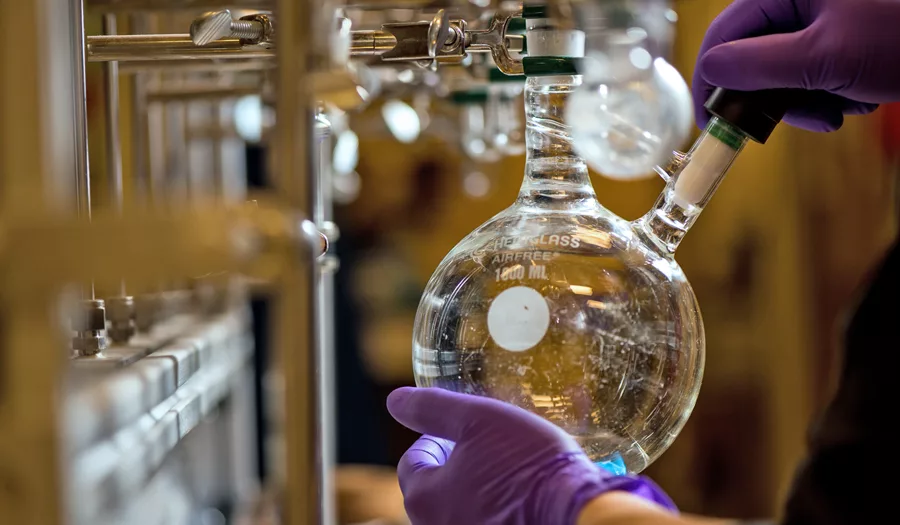
Courtesy Pacific Northwest National LaboratoryThe Supreme Court on Aug. 21 set aside a lower court’s ruling, allowing the Trump administration to cancel hundreds of millions of dollars in National Institutes of Health grants that addressed diversity, equity and inclusion, or DEI, issues.
The 5-4 ruling narrowly divided the court, with Chief Justice John Roberts, Justice Sonia Sotomayor, Justice Elena Kagan and Justice Ketanji Brown Jackson dissenting from their colleagues.
The Trump administration originally requested the Supreme Court to intervene in the case in July, when Solicitor General D. John Sauer filed an application arguing “the district court lacked jurisdiction to order the government to pay out some $783 million in terminated grants.”
Sauer wrote the case was similar to one the Supreme Court had ruled on earlier this year, determining that a district court erred when it blocked “the Department of Education from terminating DEI-related grants.”
In that case, the Supreme Court ruled that “such claims likely belonged in the Court of Federal Claims, that the district court accordingly lacked jurisdiction.”
Sauer wrote in his application to the Supreme Court that the lower courts in the NIH grants case chose to ignore the justices’ prior ruling.
“The district court’s order directs the NIH to continue paying $783 million in federal grants that are undisputedly counter to the Administration’s priorities,” Sauer wrote. “This Court has already intervened to stay a materially identical order … and the same course is even more warranted here given the district court’s brazen refusal to follow controlling Supreme Court precedent.”
NIH cuts
The Trump administration, through the efforts of the so-called Department of Government Efficiency, or DOGE, has sought to claw back as much as $4 billion in NIH funding it had awarded to researchers. That caused crises at research universities such as Washington State University and University of Washington, which receive millions of dollars in research funding from NIH and other federal agencies.
Some of the proposed cuts, such as reducing reimbursement rates for indirect costs, were later thrown out by courts following lawsuits. However, WSU and UW had numerous grants that could be rejected due to a connection to DEI, which the Trump administration has labeled as discriminatory.
Of approximately 90 NIH-funded projects being tracked for guidance updates by WSU, only one focused on maximizing access to research careers, is still listed as potentially being open though under review. Among those closed or canceled are the Comprehensive Partnerships to Advance Cancer Health Equity, an exploratory grant promoting workforce diversity in basic cancer research and efforts supporting science education.
Pacific Northwest National Laboratory, a U.S. Department of Energy facility, has also received NIH funding and partnered with NIH-funded researchers at other institutions. PNNL is already facing layoffs as its leaders brace for anticipated cuts from Energy but lab and federal officials verified to the Journal that PNNL was not affected by the NIH grant cuts.
Democratic AGs, public health advocates weigh in
Democratic attorneys general for Arizona, California, Colorado, Delaware, Hawaii, Maryland, Massachusetts, Minnesota, Nevada, New Jersey, New Mexico, New York, Oregon, Rhode Island, Washington and Wisconsin opposed the Trump administration’s request to cancel the grants worth up to $783 million in a 49-page filing.
“The federal government’s application spins a tale of lower courts disregarding established legal guardrails to block routine agency decisions,” they wrote. “That narrative bears little resemblance to reality; indeed, it gets things exactly backward.”
The Trump administration’s decision to cancel the NIH grants, they wrote, came “without providing any meaningful explanation of their decisions.
“Defendants then executed the directives by, among other things, canceling hundreds of research grants to the plaintiff states’ public universities for projects investigating heart disease, HIV/AIDS, Alzheimer’s disease, alcohol and substance abuse, mental-health issues, and countless other health conditions.”
The American Public Health Association also opposed the Trump administration’s efforts to get the Supreme Court to throw out the lower court’s rulings.
The APHA wrote in its own filing that the Trump administration “failed to consider the reliance interests at stake—namely, the impact to researchers’ career progression, the risk to human life, and the damage to the overall scientific endeavor and the body of public health.”
Siding with Trump administration
Justices Clarence Thomas, Samuel Alito, Neil Gorsuch and Brett Kavanaugh disagreed, siding with the Trump administration and setting aside the lower court’s rulings in the case. Justice Amy Coney Barrett wrote a concurring opinion.
Gorsuch sharply rebuked the district and appeals courts in his opinion, in which Kavanaugh joined in part and dissented in part.
“Lower court judges may sometimes disagree with this Court’s decisions, but they are never free to defy them,” Gorsuch wrote. “In Department of Ed. v. California … this Court granted a stay because it found the government likely to prevail in showing that the district court lacked jurisdiction to order the government to pay grant obligations.”
Barrett appeared to agree, writing in her concurring opinion that “the District Court likely lacked jurisdiction to hear challenges to the grant terminations, which belong in the Court of Federal Claims.”
In a dissenting opinion, Jackson wrote that the justices did not take enough time to seriously consider the ramifications of their decision in the Education Department case when they spent “a mere nine days” deciding whether a federal district court or the Court of Federal Claims holds jurisdiction when the government terminates “federal grants en masse.”
“I viewed the Court’s intervention then—in an emergency stay posture, while racing against a fast-expiring temporary restraining order—as ‘equal parts unprincipled and unfortunate,’” Jackson wrote. “As it turns out, the Court’s decision was an even bigger mistake than I realized.”
9/3/2025: This story was updated to include comments from PNNL and Energy regarding NIH grants at PNNL.
The Tri-Cities Area Journal of Business contributed to this report.
Ariana Figueroa contributed to this report.
This story is republished from the Washington State Standard, a nonprofit, nonpartisan news outlet that provides original reporting, analysis and commentary on Washington state government and politics.