As SMRs gain momentum, tribes express concern for their next generation

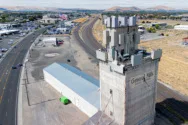
X-energy is preparing to place its high-temperature gas-cooled advanced reactor technology at the Energy Northwest campus north of Richland.
Courtesy X-EnergyIn the race to find a reliable and carbon-free energy source, the next generation of nuclear reactors appears to be a frontrunner.
The federal government, through the U.S. Department of Energy, has committed hundreds of millions of dollars to supporting development and resources for small modular reactors, or SMRs.
Energy Northwest has partnered with Amazon and X-energy to deploy SMRs near the Columbia Generating Station. The Richland facility of France-based Framatome has plans to double the size of its current nuclear fuel production facility to accommodate production of high-assay low-enriched uranium (HALEU) fuel for such reactors.
Proponents of the nuclear technology promote not only its smaller footprint, improved safety, potential to reduce reliance on fossil fuels and provide ample power, but also its ability to provide a living for many people.
But for the Confederated Tribes of the Umatilla Indian Reservation (CTUIR), their concerns for the next generation of their people currently outweigh any benefits the emerging nuclear technology offers.
“(SMRs) have outstanding engineering design needs to be considered safe and productive. Presently, there are only two deployed (SMRs) in the world,” the tribes said in a statement to the Tri-Cities Area Journal of Business. “It is unclear why it is necessary to immediately authorize the development of (SMRs) before a careful examination of the potential costs, benefits, risks and feasibility.”
Nuclear proponents acknowledge that not all tribes are necessarily on board with SMR development in the region. But they added that the ability for the tribes to achieve other environmental goals, such as removal of the power-generating Snake River dams, could be facilitated by SMRs coming online.
“We’re very optimistic about the support – actually thinking we’ll get to the point of support from some of the key tribes in this area,” said Greg Cullen, vice president of Energy Services and Development at Energy Northwest, during a recent panel discussion on SMRs at Washington State University Tri-Cities.
Need for power
SMRs are much smaller and quicker to build than conventional reactors. The HALEU fuel they require has higher uranium content and help facilitate less frequent refueling.
While neither of the two SMRs currently operating in the world are in the U.S., U.S.-based researchers and companies have worked on SMR projects for years, including different designs.
“Most of these designs have been proven. They’ve been operated and you know we don’t worry that we’re going to build it and push a button and nothing happens,” Cullen said. “We well understand how they work.”
The deal between Energy Northwest, Amazon and X-energy was announced in November 2024. It calls for four SMRs to be built, enough to generate 320 megawatts of power. Energy Northwest has the option to add up to eight more reactors at the site, bringing power generation up to 960 megawatts.

Greg Cullen, left, vice president for energy services and development for Energy Northwest, recently spoke about Amazon’s investment in small modular nuclear reactors at the organization’s Public Power Forum. Clay Sell, center, CEO of X-energy, also spoke at the forum, along with Nate Hill, right, head of energy policy at Amazon.
| Photo by Rachel VisickNo specific timeline for construction has been announced but Amazon has previously said “these projects will help meet the forecasted energy needs of the Pacific Northwest beginning in the early 2030s.”
Amazon and other tech companies have a strong interest in expanding power generation as they build massive power-hungry data centers to support emerging artificial intelligence, or AI, technology. One such project is proposed for a business park near Wallula Gap and the city of West Richland recently updated its zoning to allow such facilities to be built in specific areas.
“We are seeing, not only in Washington but nationwide, growing demand for electricity for a number of reasons,” said Mark Nutt, manager of the nuclear energy market sector at Pacific Northwest National Laboratory, during the WSU Tri-Cities panel discussion. “And the variety of the different sizes that are out there provide flexibility for communities that may be able to handle one of the big thousand-megawatt stations to smaller communities that could want an off-grid micro reactor to power them for a variety of reasons. So there’s a lot of flexibility out there.”
SMRs also are expected to be a boon to economic development. The four initial SMRs near the Columbia Generating Station are expected to support up to 1,000 construction jobs and create 100-plus permanent jobs once the facilities are operational.
“What we have is an opportunity in the Tri-Cities to not only to have these located here and have the benefits and the jobs and the opportunity for economic development but there’s a huge community effort here to bring supply chain along with it,” Nutt said. “So the opportunity for us as a community in particular, the opportunity for us as a region, is really incredible here with this.”
Oregon concerns
Across the state line, Oregon lawmakers, including state Rep. Bobby Levy, R-Echo, who represents the area including the CTUIR reservation, sought during the 2025 legislative session to carve out an exception for Umatilla County to the state’s moratorium on nuclear facilities. The moratorium can only be lifted by establishing a federally-licensed waste depository.
Levy said during a meeting of the Oregon House Committee on Climate, Energy and Environment this past spring that the CTUIR supported her legislation, HB 2410, that would have allowed a pilot SMR project in Umatilla County. The tribes actually opposed the bill and Levy notified her committee members of the tribes’ true position in an email, according to a release.
“We understand that mistakes happen, and we are confident Rep. Levy did not intend to misrepresent the CTUIR’s position on (SMRs),” said Gary I. Burke, chairman of the CTUIR Board of Trustees, in a statement at the time. “However, we want to assure our tribal members that the CTUIR opposes (SMRs) in Umatilla County even as a demonstration project.”
Ultimately, HB 2410 failed to pass into law before the Legislature ended its session in June. Levy has said she intends to reintroduce the legislation in future sessions, according to media reports.
Environmental concerns
The CTUIR has long been vocal in its opposition to nuclear technology, starting with the tribes’ legacy as an “affected tribe” of nuclear waste from the Hanford site. Tribal members in Umatilla County are also contending with environmental issues from the Umatilla Chemical Weapons Depot, which was decommissioned in 2018, as well as groundwater contamination from nitrates.
All of that threatens tribal members’ ability to collect and consume their traditional foods as guaranteed by treaty, tribal leaders said.
Like the state of Oregon, the CTUIR wants a long-term repository for radioactive waste to be established before any new nuclear facility is constructed. The tribes also acknowledged that while SMRs are smaller than current commercial nuclear reactors, they “are likely to be sited together and installed in multiple unit configurations to provide economies of scale and make production costs more affordable.”
“The result is many ‘small’ reactors producing multiple streams and potentially higher volumes of hazardous radioactive waste,” CTUIR leaders said.
Opposing other projects
CTUIR’s opposition to nuclear power facilities on its ancestral lands doesn’t mean such projects can’t move forward. The U.S. Nuclear Regulatory Commission and Washington state’s Energy Facility Siting Evaluation Council (EFSEC) require and consider tribal comments on proposed nuclear projects.
Opposition from the Yakama Nation to the Horse Heaven Hills Energy Complex, a proposed wind farm in Benton County, did not prevent EFSEC and then-Gov. Jay Inslee from approving that project in November 2024.
The Yakama Nation is challenging that decision, along with a Tri-Cities nonprofit and Benton County commissioners. They claim EFSEC and Inslee allegedly violated everything from tribal treaty rights and state environmental protection laws to local land use planning regulations and public access to proceedings.
It is not clear whether the Yakama Nation, which also has treaty rights on the Hanford site, has concerns similar to the CTUIR regarding SMRs. The Yakama Nation did not respond to requests for comment.
Support for nuclear
Analytics and polling company Gallup said this spring that its latest survey on nuclear energy indicated that 61% of Americans support generating electricity via nuclear power. That was just one percentage point below the record high set in 2010.
SMR proponents say some former opponents of nuclear, including environmental groups, have begun to embrace the technology because it could further other goals, namely decarbonization of the power grid to reduce or eliminate fossil fuel use.
The Yakama Nation and CTUIR are among the tribes seeking removal of the four lower Snake River dams to restore access and habitat for struggling salmon. Cullen said the tribes are looking at how to replace the energy those hydroelectric facilities generate to offset the impact of removal. And they’re finding that other green power technology, such as wind and solar, aren’t enough.
“When you try to do that with just solar panels, you’re going to cover thousands and thousands and thousands of acres of their precious land with solar panels in order to try to get close to replacing what the hydropower provides,” Cullen said.
 The Horn Rapids Solar, Storage & Training Project in Richland is a 4MW direct current solar array combined with a 1MW battery energy storage system. Power from the project is provided to the city of Richland. (Courtesy Energy Northwest)
He added “and so I think what we’re seeing is even the tribes are making that same recognition that (SMRs) provide a really attractive option for them. We have one tribal group that’s been very, very supportive – wants to maybe help us even financially.”
In eastern Canada, the North Shore Mi’kmaq Tribal Council (NSMTC), a nonprofit made up of seven First Nation indigenous communities with about 3,400 total members, has thrown its support behind deployment of SMRs in the province of New Brunswick as a means to “protect Mother Earth.”
In January, the council signed a memorandum of understanding with Westinghouse Electric Company to work together in building new nuclear power projects in New Brunswick, including SMRs.
“The North Shore Mi’kmaq Tribal Council knows SMR technologies are an essential part of the future of clean energy,” said Jim Ward, the council’s general manager, in a statement. “This (memorandum of understanding) marks an important step toward sustainability for our First Nations youth and communities. By exploring the technologies that Westinghouse brings to the table, we are advancing New Brunswick’s clean energy strategy and creating economic opportunities for our NSMTC Member Nations, and for the province and region as a whole.”
CTUIR leaders have said they could support studies addressing nuclear energy and waste disposal issues “but only so long as those studies include tribal consultation and allow for robust input from tribal governments, so we can identify potential impacts to our homelands, resources and rights, and so long as the studies require explicit consideration for long-term disposal of wastes generated.”
“We recognize that the waste at Hanford, which was created by the need for arms and munitions, and the waste generated by (SMRs), is different,” the CTUIR said in a statement. “However, the challenge of waste storage remains the same.”