WSU Tri-Cities grad builds career at crossroads of medicine, public trust
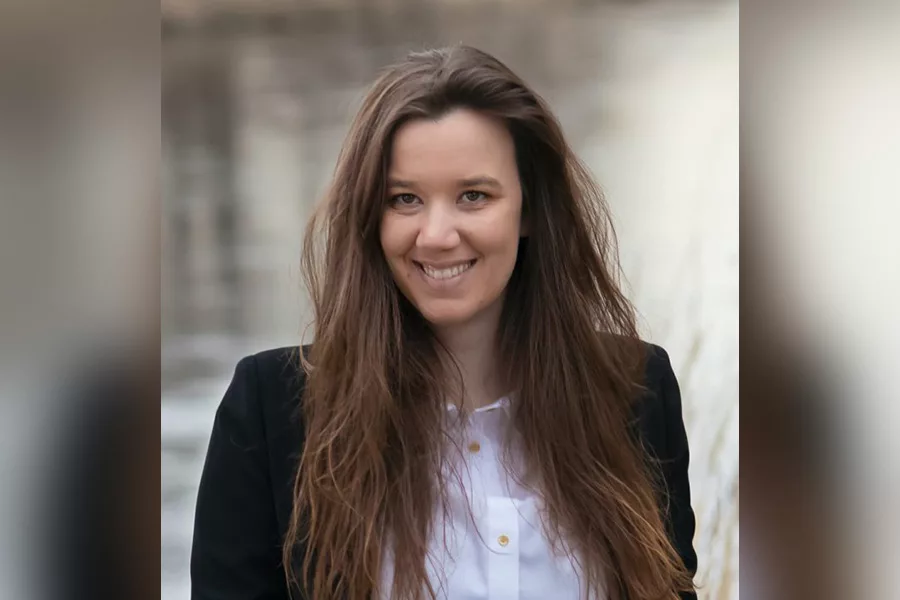
Kristen Panthagani
Courtesy Washington State University Tri-CitiesA Washington State University Tri-Cities alumna is not only helping people through her emergency medical residency, but also shedding light on complex health issues on her popular website.
When she was in college more than a decade ago, Kristen Meyer Panthagani wasn’t sure what she wanted to do – and she didn’t envision that science and health communication might be part of her career path.
Dual interests
Growing up in West Richland with lots of animals around, Panthagani had wanted to be a veterinarian. But when she was 12, she was diagnosed with a tumor and spent time at the Seattle Children’s Hospital. The experience pushed her toward taking care of people rather than animals.
The 2007 Hanford High School graduate majored in chemistry in college. She interned at Pacific Northwest National Laboratory throughout her undergraduate studies, as well as an additional year and a half after graduating from WSU Tri-Cities in 2010.
As much as she was interested in the medical field, the research she did was also enjoyable.
“I knew that if I went into medicine and saw problems that needed to be solved but didn’t have the research skill to solve them, I thought that would be really frustrating,” she said.
It was Kate McAteer, vice chancellor for Academic and Student Affairs at WSU Tri-Cities and one of Panthagani’s mentors, who suggested she enter a dual-degree program to get both an MD and a Ph.D.
“It was very evident that Kristen had a passion for science. Even as an undergraduate, she had a gift for asking challenging questions and investigating them with rigor and determination,” McAteer said in a WSU Tri-Cities article. “I also knew she had her heart set on medical school, which is why I suggested she look into becoming a physician scientist, because it seemed like that type of dual training might be a great fit for her.”
That launched Panthagani on a long road full of years of education, “but I’m really glad I did it,” she said.
From 2012 through 2021, she went through an MD/Ph.D. program at the Baylor College of Medicine in Houston, Texas, with her doctorate focused on genetics and the human microbiome.
Health communication
Though she had written plenty of science papers, science and health communication wasn’t exactly on her radar. But when the Covid-19 pandemic hit in 2020, Panthagani found herself in a position to help address some of the rumors that were spreading.
“The first month or two, I started answering questions on Facebook and just saw that my friends and family were getting confused about what was going on,” she said. “So I started writing, and eventually I started my own website.”
Her site, You Can Know Things, launched in May of 2020. Panthagani began by explaining the science behind rumors surrounding the Covid-19 pandemic.
She focused on that for around two years, then branched out to begin writing more about how people communicate about health and science.
“I think probably most people agree that the communication from public health during Covid was confusing at times at least, and maybe suboptimal,” she said. “So the question now is, how do we do better?”
One challenge Panthagani sees currently is conflicting answers from government leaders and established health organizations. People often don’t know which voices to trust, and they might not have the capability to dig into the questions on their own.
“Having all of that training is really, really valuable for this type of communication … the Ph.D. side gives me the skill to dig into scientific studies and really understand them and explain them, and then the MD side give me the firsthand experience with patients. And being able to have both of those skillsets is really valuable,” she said.
She sometimes explores questions she sees trending on social media, and she’ll also get asked questions.
But information is only one piece of the equation, Panthagani said. Accurate information coming from an “empty suit” doesn’t feel as trustworthy as when it comes from an engaged individual who can demonstrate empathy and connect with an audience.
“It’s a whole skill set that we are not trained at,” Panthagani said. “As doctors and scientists, we get very little … public communications training.”
Opportunities to help
Though Panthagani is now close to completing an emergency medicine residency at Yale New Haven Hospital and plans to stay another year for a fellowship, she continues to fit her writing in when she’s able to.
She’s amassed quite a following: 10,000 subscribe to her newsletter, while her Instagram page boasts more than 16,000 followers. “I think it resonates well with people,” she said.
In both her writing and her practice, she gets unique and rewarding opportunities to help people.
In her emergency medicine residency, she gets the chance to treat life-or-death problems. “We can’t solve everything and we can’t save everybody, but when you’re able to step in and help someone in that moment, it’s just extremely satisfying,” she said.
On the communication side, Panthagani has seen lots of fear about health, and through her research and writing, she addresses rumors and helps people make decisions based on understanding rather than fear. That, too, is satisfying.
While it can be tricky to balance research, writing and medical practice all at once, Panthagani has enjoyed all three. “I think I’ll have components of all of them going forward,” she said.
“Looking back to when I was at WSU, I really didn’t know what I wanted to do except for that I wanted to do more of school,” Panthagani said. “I think it’s cool how this all turned out and that I’ve come to discover my interest in communications.”

Stay Informed. It’s Free.
Subscribe to our newsletters and get the latest news and insights delivered to your inbox.
We respect your privacy.
Unsubscribe anytime.
Thank you!
You’re subscribed. Keep an eye on your inbox for the latest updates.