
A gambler’s crop: Cherry orchards at mercy of Mother Nature
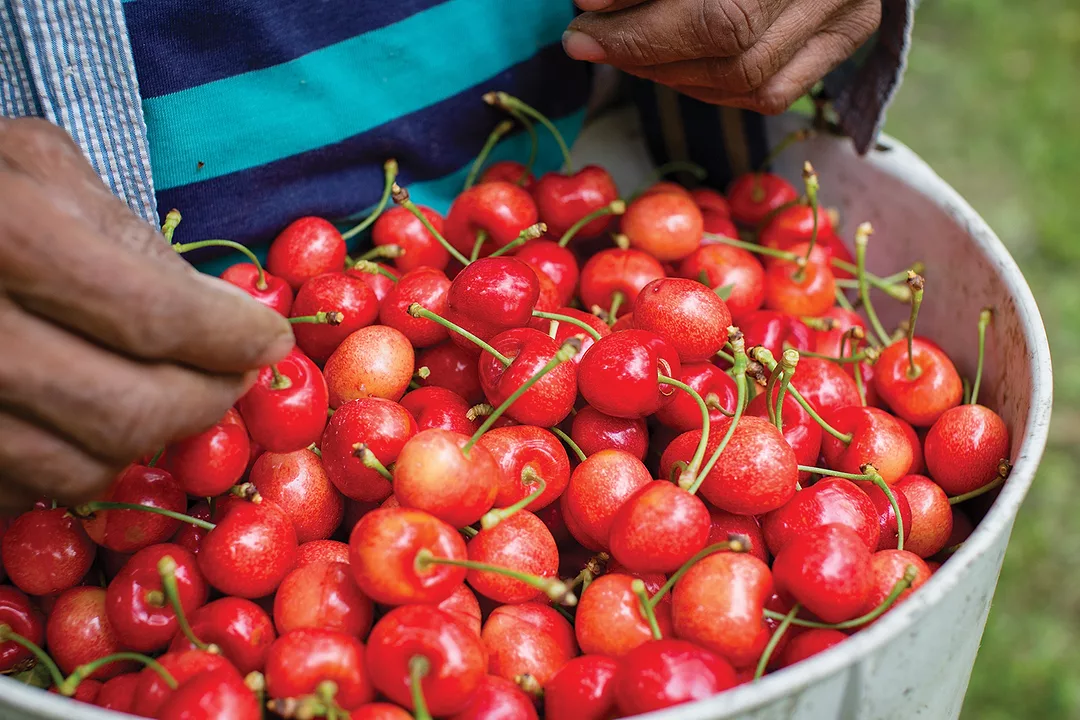
The Northwest saw one of the most perfect cherry crops last year, setting new production and export records. In 86 days, the nation’s leading cherry region shipped 26.4 million, 20-pound boxes of cherries to eager markets around the world.
“We had fantastic weather last year,” said Denny Hayden, owner of Hayden Farms in Pasco, which grows cherries and apples and operates a packing house in Yakima. “Lots of warm, humid temperatures. … The flowers lasted a long time, and bees were able to work every day. … (There wasn’t) a lot of wind and rain that inhibited pollination.”
He reported most of the Northwest’s cherry orchards had a full crop last year, but this spring’s weather is forecast to adhere to typical regional weather patterns.
Despite advances in technology, cherry orchards still are very much at the mercy of Mother Nature, Hayden said.
Helicopters to dry cherries on rainy days; wind machines to generate warmer surface temperatures when there’s frost; electronic soil monitoring; real-time weather reports; the application of edible films to protect fruit; fungicides to prevent powdery mildew; and natural compounds to help cherries avoid absorbing excess moisture are some of the defenses orchardists deploy to protect their fruit.
“It’s a gambler’s crop,” said James Michael, who, as vice president of marketing at the Washington State Fruit Commission, is devoted to working with his team to find new ways of promoting Northwest cherries domestically and abroad.
“It’s an exciting fruit that’s full of risk and occasional reward,” Hayden said.
So, what made 2017 a bumper year?
The Northwest in general is well-suited to growing cherries, with an estimated 61,000-plus acres under cultivation—42,198 acres of which are in Washington.
“What we have going for us is a more temperate climate and water,” Hayden said. “We have reliable (water) systems … a more stable supply.”
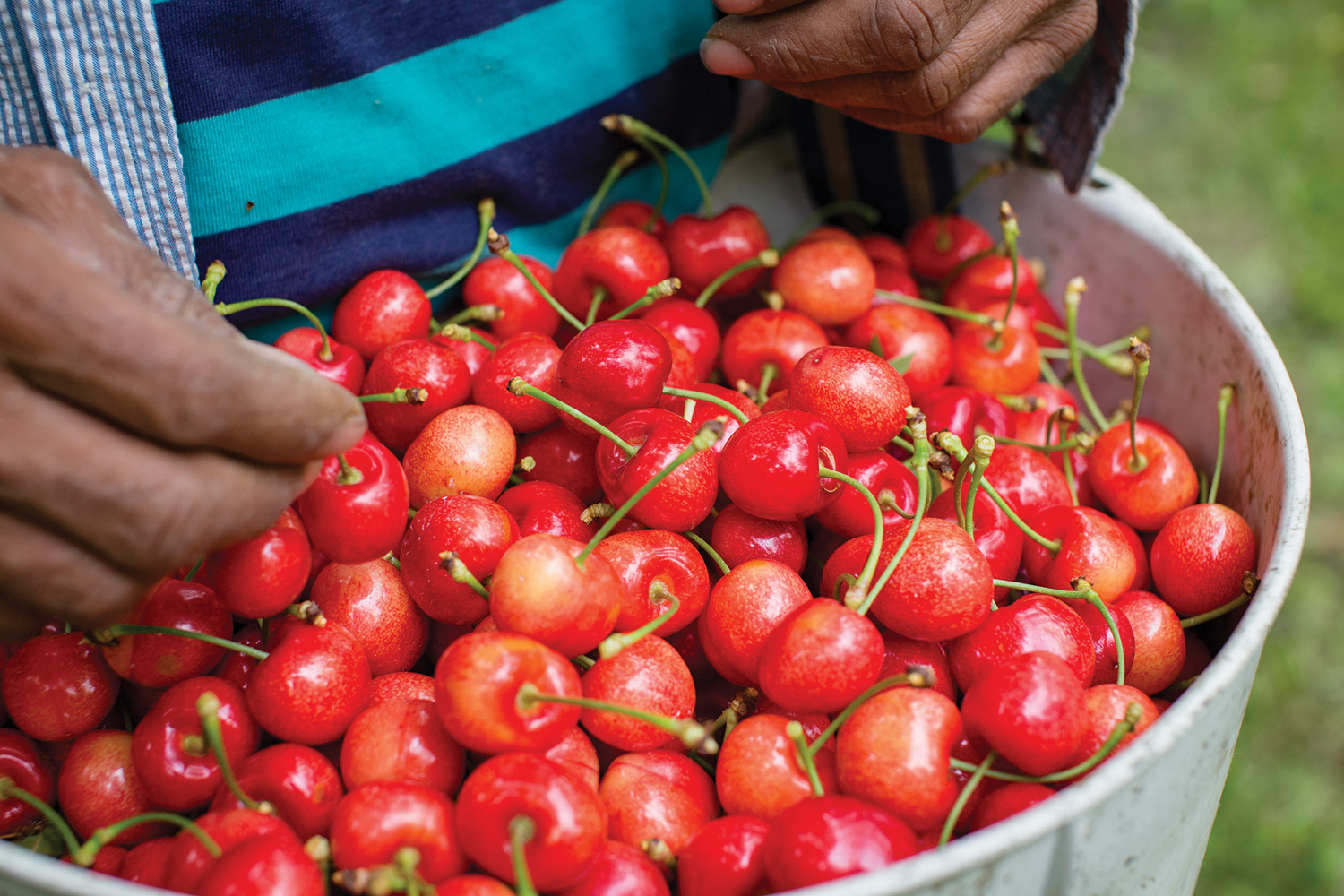
Additionally, microclimates throughout the region enable cherries throughout Eastern Washington to ripen at different times, lengthening the season.
“The 2017 Northwest cherry harvest was one of extremes – record crop volume, record shipping volume and record dry weather that came with extreme heat from mid-June through July,” said B.J. Thurlby, president of Northwest Cherry Growers and the state fruit commission.
Last year was the driest ever in Washington and the greater Northwest region in more than 100 years, said Cliff Mass, a professor of atmospheric science at the University of Washington.
Thurlby said “a wet spring gave way to a rapid switch to summer and pushed the late crop ahead dramatically,” resulting in the fastest acceleration to ripeness observed in almost a decade.
“For the first time in four years, the industry saw a significant increase in volume in August,” Thurlby said. “Most industry crop experts expect that the Northwest production region will see significant volume in August in the years ahead.”
This is partly due to changing seasonal weather patterns, but primarily a result of decades of experimentation and innovation leading to the development of early- and late-ripening cherry varieties more resistant to mildew and other pests.
Michael said a gradual, steady increase in acreage and tonnage has occurred in the past 10 to 15 years. Industry studies show cherry acreage in the Northwest increases by 2 percent per year, on average. He noted that 20 million-box seasons are becoming the norm.
In 2017, this culminated in breaking monthly shipping records and daily shipping averages. The industry averaged 286,280 boxes per day, for 42 days straight, shipping out 500,000 boxes per day.
Over the next five years, the market is projected to continue to produce 200,000 to 250,000 tons of fresh cherries per year.
Based on U.S. Department of Agriculture data, 300,000 to 350,000 tons might be realized under ideal production conditions.
But the industry still has its challenges.
Hayden said increasing the efficiency of labor while maintaining the high standard of quality the Northwest is known for is the goal.
He said scarcity of labor puts cherry growers in a tough spot, especially small operations that often don’t have the capital to cover additional costs during the short, four- to six-week picking period when orchard employment can easily increase tenfold.
To streamline the process, many orchardists are doing away with ladders and instead maintain smaller, more compact trees accessible from picking platforms.
“They’re much more efficient, at least 30 percent more, sometimes even more,” Hayden said.
Hayden said the federal government’s H-2A guest worker program, which legally sources workers from around the world, has been helpful in supplying laborers, where domestically, demand far exceeds the available work force.
He added that though Washington’s high minimum wage attracts workers to the area, it’s made it hard on smaller orchards to spread out their costs.
Northwest cherries ripen following California’s long season, so many laborers follow the work north to the Columbia Basin and Yakima Valley regions, which peak earlier in the Northwest season.
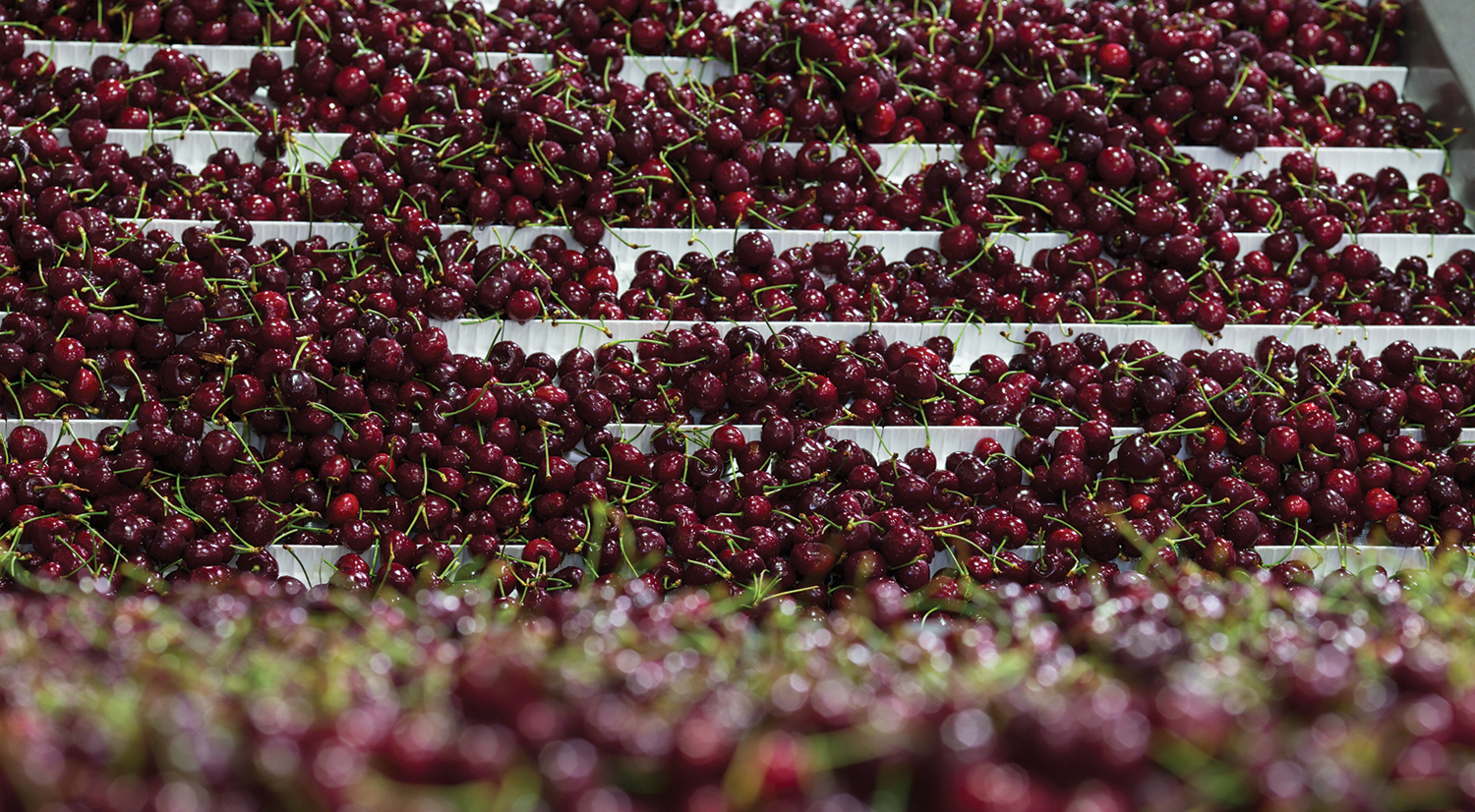
The introduction of optical-sorting systems at packing houses within the past five years is phasing out hand-sorting. As Michael explained, a dozen pictures are taken of each individual cherry, looking for defects or blemishes. The machines can even detect internal bruising using infrared.
“The technology has enabled us to put out an even more reliable product,” he said.
The industry’s biggest focuses right now are capitalizing on new markets, especially in Southeast Asia, and continually improving advertising strategies.
“The healthy snack trend is driving business to the produce department, and products from all around the world are competing for the same shelf space,” Michael said.
He explained that grocery store circulars still reflect what shows up on the American plate—whether viewed online, in the newspaper or via smartphone app.
“It’s still how food decisions get made in America,” he said.
Michael said communicating with retailers as cherry season approaches and before it ends is key.
“The first half of the season is extremely important for Tri-Cities growers. Studies have also shown that for the second half of the crop … it’s every bit as important to tell (consumers) it’s the last chance to get Northwest cherries,” he said.
“If we could get people to buy two bags instead of just one before (the season’s) over, it could change the industry. … Growers can only do so much; the industry and retailers have to be ready,” he said.