
Mounting pressure
Wheat growers struggle with negative margins, market volatility
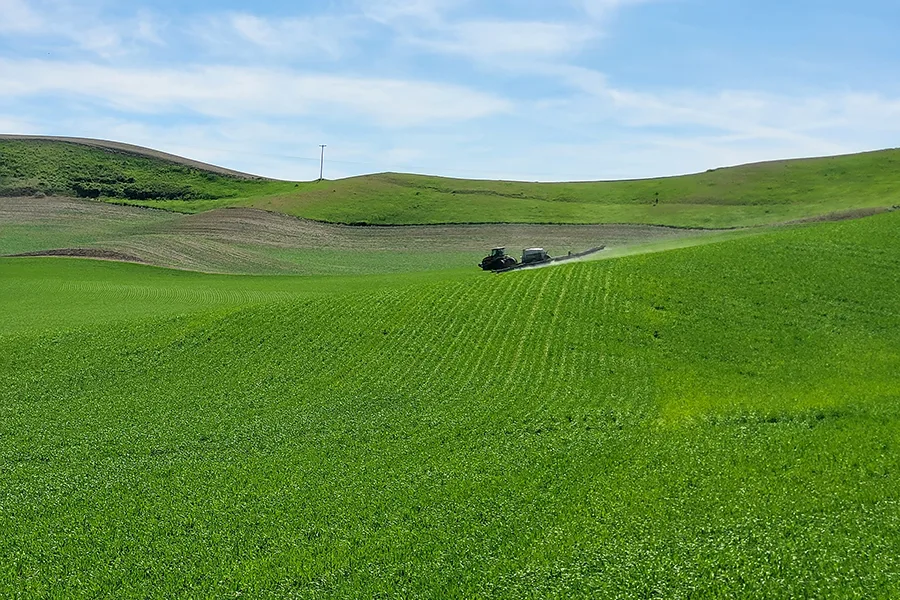
Washington wheat exports reached $685 million in 2025, a 5% increase over the previous year. The crop ranked among the state’s top five agricultural exports, with the Philippines, Japan and South Korea serving as its largest export markets.
Courtesy Art Shultheis at Diamond-S FarmsWashington wheat growers are harvesting into another year of thin margins, as global conflict and rising input costs add new pressure to already cash-strapped farms.
While growing conditions in 2026 have so far been favorable, wheat prices remain below break-even levels for many producers.
New cost pressures tied to geopolitical tensions in the Middle East – particularly around energy markets and fertilizer supply chains – are adding another layer of uncertainty heading into the next year.
Washington ranked fourth in the nation for wheat production in 2025, harvesting about 141.5 million bushels, or 3.8 million metric tons, valued at roughly $747 million.
Wheat remains one of the state’s top agricultural exports, ranking No. 5 and contributing an estimated $1.7 billion to the state economy, according to a 2024 Washington State Department of Agriculture report, the most recent data available.
Much of that value depends on international trade. In 2025, Washington exported $648.75 million in wheat, a 5% increase over the previous year.
The state’s high-quality soft white wheat is primarily shipped to markets in the Philippines, Japan, South Korea and other parts of Asia.
But producers say strong export demand has not been enough to offset rising production costs.
For years, wheat farmers in Washington have increasingly operated below the break-even point. Currently, growers are getting $2.70 per bushel below break-even.
“Washington is 50th in the U.S. for farm profitability across all agricultural sectors. It’s actually negative,” said Michelle Hennings, executive director at the Washington Association of Wheat Growers.
Hennings said growers have faced a series of economic pressures over the last several years that were largely outside of their control.
“Right after (the Covid-19 pandemic), we had inflation set in. Then, there was a point in time about three years ago when the state Legislature passed the Climate Commitment Act and (revised) overtime rules,” Hennings said.
The climate act introduced an additional 52 cents-per-gallon cost on fuel on top of existing state and federal fuel taxes.
“Fertilizer and fuel have been up and now we have the Iran conflict, which has caused our fuel and fertilizer costs to climb even higher and the supply is threatened. All these things hit the farmer’s bottom line.
“Depending on if the Strait of Hormuz opens up, we might see that (price below breakeven) go even further into the negative,” Hennings said.
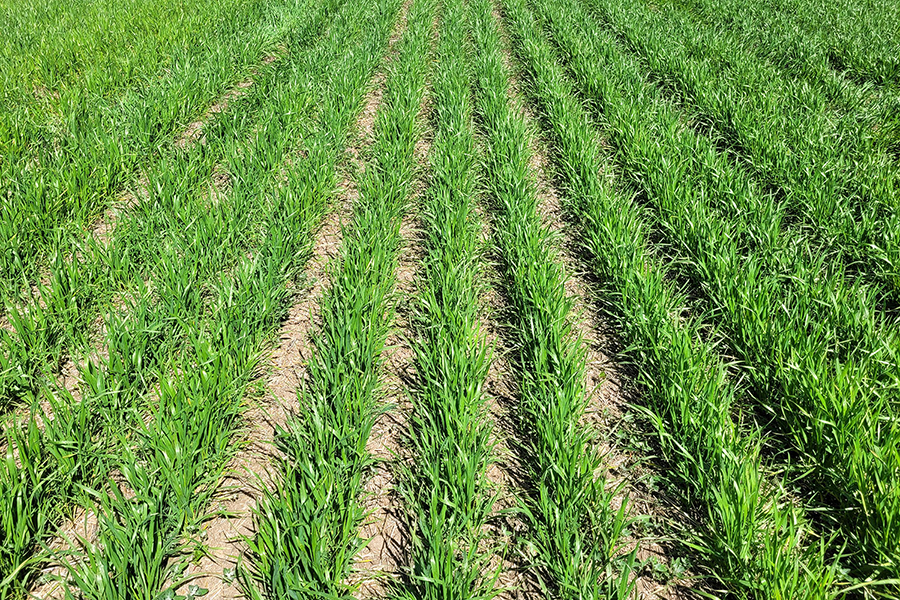
141.5 million bushels of wheat were harvested in 2025, a 1.5% decrease over 2024.
| Courtesy Art Schultheis at Diamond-S FarmsDrawing on farm equity
As margins tighten, many growers are increasingly relying on equity in their farms to continue operating.
Hennings said some farmers have qualified for bridge payments and government assistance, but many others are drawing on farm equity as a stop-gap measure.
“We are seeing a lot of equity being used up to pay for these losses, so it makes it more difficult down the road to get a loan from the bank for the next thing and so farms go out of business,” Hennings said.
Casey Chumrau, CEO of the Washington Grain Commission, said those financial pressures disproportionately affect younger farmers who often have less equity and
fewer resources to fall back on.
In turn, that undermines an industry already struggling with aging farmers and low participation from younger generations.
“We have been doing advocacy in Olympia and D.C. to educate legislators about what’s going on in farm country to try to bring some of these input costs down. It’s a bleak outlook right now,” Hennings said.
According to the Washington Policy Center, Washington state lost 14 farms per week – roughly two per day – between 2017 and 2022, for a total of 3,717 farms lost during that period. That closure rate nearly doubled the pace seen during the preceding decade.
Favorable crop conditions
Even as financial pressures mount, crop conditions have so far remained favorable.
“We had a really mild winter, but the winter crop came through pretty well and really is in quite good condition – 82% of the crop is rated good or excellent, and the spring crop is good or better than that,” Chumrau said.
“We will need to continue seeing additional rain … and there is some added disease and potential pest pressure because the mild winter didn’t kill that stuff off,” she said.
Meanwhile, evidence is mounting that a strong El Nino weather system could take shape this fall off the West Coast, bringing warmer ocean temperatures and potentially more intense weather patterns that could affect agricultural production.
Federal policy changes
Federal policy changes could provide some relief.
Hennings said that starting in October 2026, farmers will see some relief payments coming from President Donald Trump’s One Big Beautiful Bill Act after portions of the Farm Bill were incorporated into the legislation.
The bill also would increase the wheat reference price from $5.50 per bushel to $6.35 per bushel, with additional annual increases beginning after 2031.
Expanded crop insurance benefits are also included among the legislation’s provisions.
Portions of the Farm Bill not included in the package remain under consideration in Congress at press time.
Labor challenges
At the state level, growers are continuing to push for changes to agricultural overtime rules that would allow seasonal exemptions during planting and harvest periods.
The proposal would create periods when farmworkers would be exempt from overtime pay requirements during critical seasonal windows. Supporters argue the change would help farmers avoid cutting hours or bringing in replacement workers rather than paying overtime wages.
Colorado was the most recent state to adopt a similar provision.
Hennings said growers also are concerned about proposals to unionize agricultural labor without protections against strikes during harvest.
“At the state level, we’ve been working to try to get legislators to understand that if they want to pass something, they need to realize how that’s going to affect a farmer. That’s something we’ve been working closely on with all agriculture in Washington state. We are one voice, one story,” Hennings said.
Export stability
One area where wheat growers continue to see stability is exports.
Despite retaliatory tariffs, Chumrau said the wheat market is “not seeing direct impacts” because Washington maintains a “diversified list of (international) customers.”
She added that a slightly weaker U.S. dollar has also supported trade with countries operating under weaker currencies.
This year, Chumrau visited Taiwan to celebrate the 70th anniversary of U.S. wheat trade partnerships with the nation.
“Some of the customers got up and talked about their experiences and one of those stories I still get chilled about. They said, ‘I remember being little and my mom sewing clothing for me and my siblings out of U.S.-stamped flour sacks.’ They weren’t just fed by U.S. wheat, they were clothed,” Chumrau said.
“It reiterates the importance of our longstanding relationships with these countries.”