Changing tastes
Wine industry adjusts to declining production, softer demand
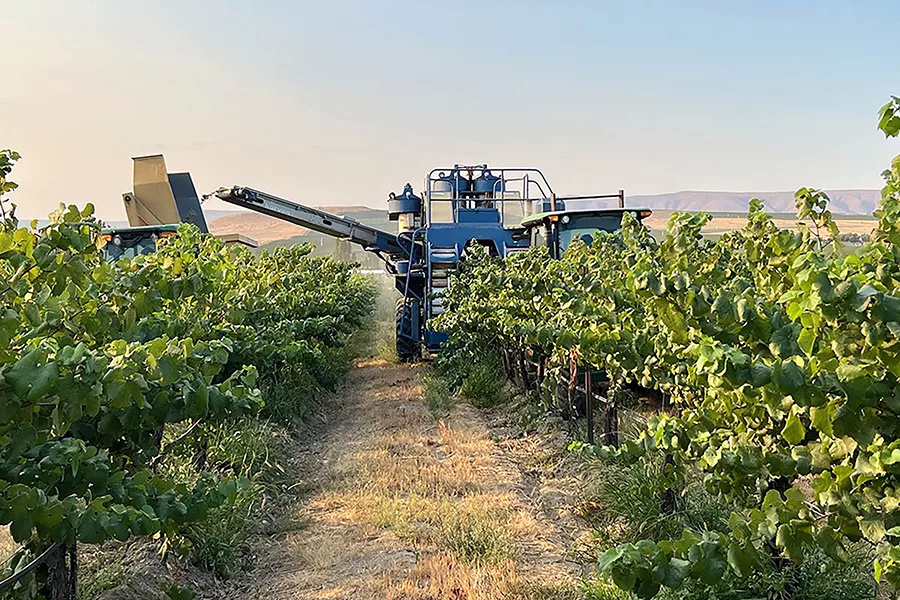
Washington’s 2025 wine harvest was, by official accounts, one of the most favorable in recent memory. Weather across the state was stable, yields were largely average, and vineyards avoided the extreme heat events that have defined difficult vintages in recent years.
But the numbers tell a different story.
The season saw the lowest tonnage of grapes harvested since at least 2011 by tens of thousands of tons, or 43%.
The paradox reveals an industry where quality is holding, but demand and volume are no longer aligned.
The Washington State Wine Commission said 2025 “was one of the best harvest seasons in recent memory.” Yet it was also a year that underscored a deeper shift: Good farming conditions are no longer enough to guarantee industry stability.
The number of wineries in the state sank to 985 by the end of the year, the fewest since 2019, when there were 1,000. The industry peaked around 2022 with 1,70 wineries. More have closed in 2026 such as Pacific Rim Winery in West Richland, which filed for Chapter 11 bankruptcy. Its leaders cited a sharp decline in wine consumption alongside inflation, tariffs and oversupply, with some of those issues plaguing the industry for years.
Across the sector, sentiment reflects the same strain.
In Silicon Valley Bank’s annual wine industry report, winemakers and vineyard operators described a market still searching for a bottom.
“Net sentiment slipped further into negative territory, reflecting a year that many describe as ‘challenging,’ ‘difficult’ or ‘disappointing,’” wrote Rob McMillan, the report’s author and the bank’s executive vice president.
And yet, there is still a conviction among wine industry veterans in the Mid-Columbia that viticulture has a future, if you can adapt and are committed to crafting good wine and experiences.
“I can’t sit here and pretend everything is going great,” said Megan Hughes, winemaker at Barnard Griffin in Richland, which has been producing wine since 1983. “But there is still space for brands and wineries who are passionate.”
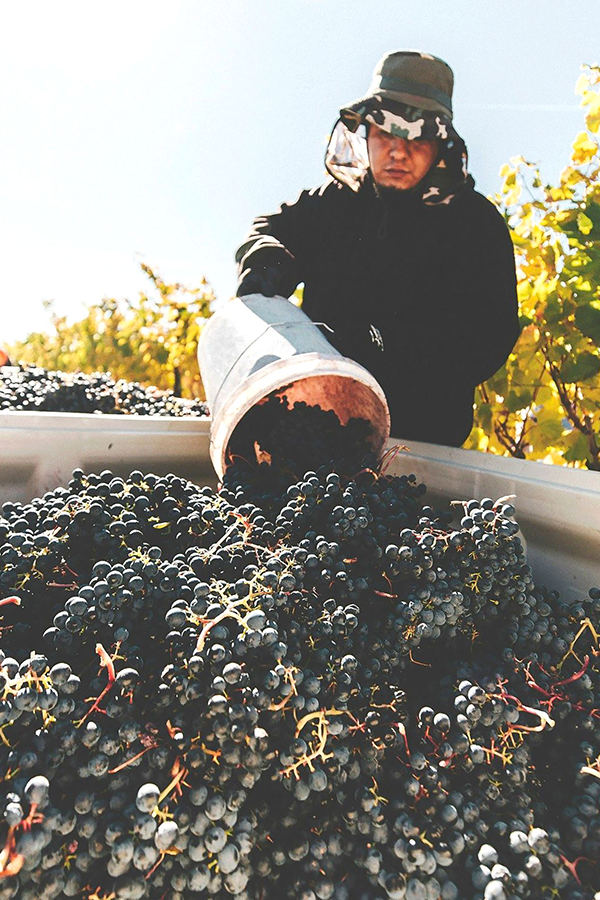
Cabernet Sauvignon remained the state's top variety in 2025 at more than 24,000 tons, or 22% of the harvest, followed by Chardonnay with just under 18,000 tons, or 17% with Riesling, Syrah, Merlot, Sauvignon Blanc and Pinot Gris rounding out the top varieties.
| Courtesy Washington State Wine CommissionGrowing season
The 2025 growing season was mostly textbook, according to the state wine commission, though warmer than average.
Beginning with bud break, the season progressed slightly quicker than historical averages. The lack of long stretches of triple-digit heat in Eastern Washington limited stress to vines.
Berry and cluster size was described as average as were most yields. Heat in September led to elevated brix and slightly below average acids in the fruit. Pest and other environmental pressures were low to moderate.
“Overall, what was most remarkable about the growing season was how unremarkable it was,” according to the state wine commission’s overview of the vintage. “The ease of the year was welcome.”
Cabernet Sauvignon remained the state’s top variety at more than 24,000 tons, or 22% of the harvest, followed by Chardonnay with just under 18,000 tons, or 17%, with Riesling, Syrah, Merlot, Sauvignon Blanc and Pinot Gris rounding out the top varieties.
Red and white grape varieties were nearly an even split, with reds accounting for 54,558 tons and whites 53,631 tons.
Nothing about the 2025 growing season explains the decline in overall total production. Total 2025 production was 108,000 tons, a 28% decrease over the previous year. Red grape varieties were down 35% while white grape varieties were down 20%.
Even though Cabernet Sauvignon production dropped 41% compared to the previous year, it still commanded the highest average price at $3,169 per ton.
That indicates wineries still strongly valued premium red grapes despite the smaller harvest.
Average grower returns in 2025 rose to $2,154 per ton, up $533 from the previous year.
An evolving market
The harvest was smaller, but the deeper issue may be that the market for wine itself is weakening.
Hughes said Barnard Griffin processed 700 tons of fruit in 2025, down slightly from what it crushed the prior year. She has seen how the last few years have strained those growing fruit and how the market has changed.
“The burden has always been on the grower to know what the trend is,” she said.
Barnard Griffin has weathered a lot in the 40-plus years since it was founded by Hughes’ parents, Deborah Barnard and Rob Griffin, including a freeze in its first years that wiped out much of the state’s harvest. The founders’ nimbleness allowed the winery to survive, and Hughes sees that as the strategy to follow today.
“It’s no longer this opportunistic industry, you have to work for it,” she said.
That’s the message McMillan had for the industry in his predictions and insights for the 2026 growing season. Even with the industry as a whole still in a downturn, data shows that those producing higher quality wine – typically selling for more than $12 a bottle – are surviving, if not growing modestly.
“The next phase of this correction will reward wineries that plan with clarity, engage with purpose and adapt with discipline,” McMillan said in the report. “Said succinctly, the next phase will reward those who recognize the reasons behind the changing demand and then fundamentally change their businesses to accommodate it.”
That is the environment Ste. Michelle Wine Estates enters in 2026. The Wyckoff family of Grandview bought the state’s largest winery at the end of 2025, returning it to Washington state-based ownership for the first time in 50 years.
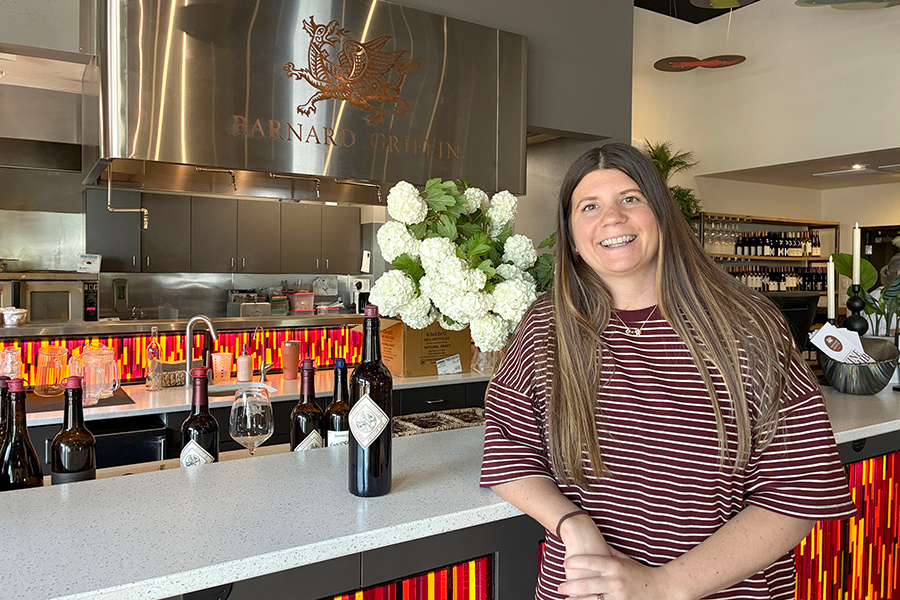
Megan Hughes, winemaker at Barnard Griffin, said nimbleness is what has allowed the Richland winery founded by her parents to survive and thrive for the past four decades and that will continue to be its strategy.
| Photo by Ty BeaverAt the same time, Washington wine leaders are also experimenting with new forms of industry cooperation. The newly formed One Voice Council brings together executives from wineries and groups across the state to collectively promote Washington wine within national restaurant, hotel and travel accounts. The effort is designed to strengthen the state’s position in an increasingly competitive market.
Court Wyckoff, Ste. Michelle’s CEO, said there are headwinds but also opportunities at the storied winery, which has struggled in recent years, cutting its grape contracts and closing tasting rooms.
“Over time, the business had become complex, and we see a clear path to sharpen the portfolio, focus on quality over quantity, and align more closely around our Pacific Northwest roots,” Wyckoff said. “We view that combination as an opportunity to build a more focused, higher-quality business for the long term.”
He added that the winery is in a much healthier position since his family acquired it, and that being family-owned means Ste. Michelle can chart a more deliberate, patient and long-term approach to the business.
“Over the longer term, our ambition is to build on our foundation as the leading Pacific Northwest wine company, one that’s known for exceptional quality, strong partnerships with growers, and a more modern, consumer-focused approach to wine,” Wyckoff said. “We have an incredible foundation here, and we’re focused on unlocking that potential in a way that creates sustainable growth for the next generation.”
Interest in wines evolves
That growth will depend on making sure younger generations can develop a relationship with wine. Industry analysts have reported for years that millennials and Gen Z aren’t consuming near the volume as their parents and grandparents have.
But that doesn’t mean they aren’t interested in wine, Mid-Columbia winemakers said.
“Some of the data reflects real shifts like economic pressures on younger adult consumers, changing social habits, wellness priorities and far more beverage choices,” Wyckoff said. “But interest in wine isn’t disappearing; it’s evolving. Younger consumers engage more selectively and care about authenticity, values and experience. The opportunity for wine is to meet them where they are by lowering barriers to entry, expanding occasions, and telling more relevant, purpose-driven stories, rather than trying to make them drink wine the way previous generations did.”
Barnard Griffin’s line of canned wine is an example of how the Richland winery has adapted. Hughes said they began producing it during the Covid-19 pandemic due to the shortage of glass bottles. Demand has remained consistent and appears to be introducing the winery to new consumers.
Hughes said she also is encouraged after attending this year’s Taste Washington event and seeing so many young people engaging with wine. It was a reminder that the work she and her parents have dedicated their lives to still has a role to play.
“As a winemaker, I get to enter people’s life experiences and that’s a very humbling thing that I don’t take for granted,” she said.