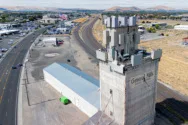
Hydropower will anchor Washington’s energy future
Although New Zealand and Washington are located a half a world apart, they have lots in common – beautiful seashores, majestic mountains, clear streams and lakes, and vibrant salmon and trout fisheries.
Both are struggling to rid their air sheds of carbon dioxide and other greenhouse gases coming from the burning of carbon fuels (coal, natural gas, gasoline and diesel) in vehicles, home heating and electric power generation. New Zealand and Washington share the goal of becoming carbon-neutral by 2050.
The good news is both are endowed with lots of hydropower. Renewable, greenhouse gas-free power facilities account for over 80% of their electricity with the vast majority generated by falling water.
While each produce wind and solar energy, New Zealand receives 17% from geothermal wells, and Washington’s nuclear energy plant at Hanford provides 7% of our state’s electricity.
As both struggle to rid themselves of natural gas and coal power plants and gas- and diesel-propelled vehicles, the demand for electricity keeps accelerating.
While Washington and New Zealand are pushing hard to expand wind and solar farms, those sources are intermittent and depend upon daylight and wind. Battery storage technology is rapidly advancing, but the bottom line is wind and solar need to be augmented with hydro, nuclear, natural gas and coal.
The greatest demand for additional electricity comes from electric vehicles (EV). Plug-in hybrid and electric vehicles accounted for more than 1 in 10 vehicle registrations in 2020, up from
1 in 30 in 2019. The International Energy Agency predicts that by 2030, there will be 125 million electric vehicles worldwide and many governments want every car and van to be zero emission by 2050.
The switch from gas-powered to electric also puts a strain on the environment.
For every car on our roads to be zero emission by 2050, it will require nearly double the current total of annual world cobalt production, a 75% increase of the lithium output, and at least a 50% spike in the world’s copper mining and smelting.
Currently, electric cars rely on lithium and cobalt batteries to run, which will undoubtedly be better for the environment than carbon. However, they aren’t entirely clean to produce and cobalt, in particular, is in short supply and brings challenges.
“(T)he mining of cobalt is fraught with political issues. Sixty percent of cobalt comes from the Democratic Republic of Congo where children as young as 7 years old are mining it. The mining process also causes terrible pollution in local rivers,” Renewable Energy World (REW) reported this spring.
“Lithium deposits are also located near some of the most sensitive ecosystems in the world – The Amur River, on the border of Russia and China, the Andes Mountains (Chile) and the Salt Flats in Bolivia. Deforestation, water shortages and toxic leaks are unfortunately a devastating consequence of lithium mining,” REW added.
As Washington and New Zealand push to significantly reduce carbon dioxide emissions and achieve carbon-neutrality, they must do three things.
First, they need to continue to modernize and improve hydro and nuclear power to make both more efficient and productive, safer and more environmentally friendly.
Second, they must not eliminate carbon-based fuels such as natural gas, coal and biomass without suitable reliable and proven replacements. Rather, they need to continue improve the efficiency of those plants and invest in research and development to further reduce pollutants.
Finally, the strategy must be diversified energy sources to ensure that if one system goes down, there are replacements available.
We need to remember that if it weren’t for coal and nuclear during last winter’s deep freeze in Texas, the entire electrical grid would have collapsed. That would have been catastrophic.
Don C. Brunell is a business analyst, writer and columnist. He retired as president of the Association of Washington Business, the state’s oldest and largest business organization, and now lives in Vancouver. He can be contacted at [email protected].