
Growers report good volumes despite chilly spring
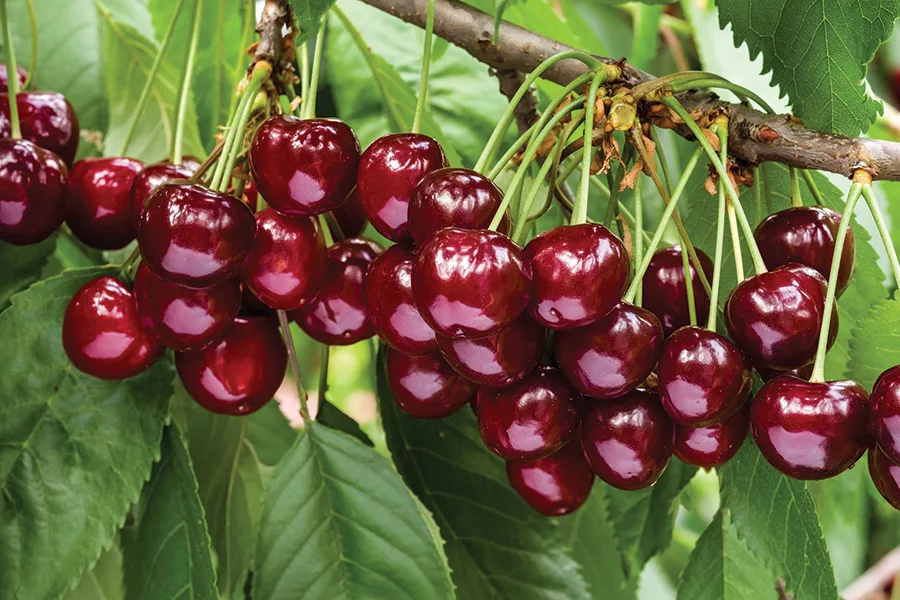
It’s hard to say how 2022 will play out for Washington’s cherry growers.
“It’s always a weather-vulnerable crop, and there are many ways the cherry crop can be sabotaged by weather,” said Jon DeVaney, president of the Washington State Tree Fruit Association. “The joke is that cherry growers don’t have to travel to Las Vegas to gamble.”
Cold weather in late April damaged buds and put a damper on pollinator activity.
The U.S. Department of Agriculture's National Agricultural Statistics Service predicted a sharp drop in cherry production in Washington in its June 10 forecast. Cold weather in winter and spring reduced pollination and fruit set it said. It anticipates U.S. production will be down 27%.
“It can take weeks to see if flowers were successfully pollinated or not; we’re still waiting to see if fruit will develop,” he said.
Every year it’s watch-and-wait as growers (and the public) anticipate the seasonal crop that’s only available from the end of April through late August, if California’s growing season is included.
Locally, cherries usually start to appear in early June, sometimes as soon as Memorial Day weekend, with volume peaking around July 4.
This year, DeVaney said, “it may be later before the market sees its first cherries. Many of our growers are reporting we should have good volumes for Fourth of July and beyond.”
So, it may be a potential reduction, but not a wipeout, barring any other unusual weather events that might stress the delicate fruit.
In 2021, the equivalent of over 18.6 million 20-pound boxes of cherries were harvested in the Northwest, mostly in Washington and Oregon, DeVaney said.
In 2020, nearly 18.3 million boxes were picked.
“Last year’s crop would have been larger if it had not been for the unseasonably warm temperatures seen during the El Nina event, especially in Yakima Valley. Tri-Cities’ cherries had already been harvested, primarily – the heat dome caused very definite damage, particularly shriveling of the fruit,” he said.
Washington grows more sweet cherries than any other U.S. region, according to the tree fruit commission.
Inflation takes a bite
DeVaney said the industry is hoping reduced volume this year will translate to a stronger price for cherries amid rising production costs.
The Russia-Ukraine war, economic fallout from the Covid-19 pandemic, ongoing supply chain disruptions and mounting effects of China’s current Covid-related lockdowns loom over the orchards.
“The overall global trade environment remains unsettled,” DeVaney said. “Inflation in costs every consumer is seeing – not the least of which is fuel – so any product that needs to be delivered by truck or airplane means we’re seeing higher costs of transportation, whether it’s moving cherries from orchard to packing facility … or to stores themselves, it drives up the price to deliver the product.”
He said fertilizer and chemical costs also are on the rise.
Fortunately, most cherry markets are focused on North America and east Asia, and due to cherries’ delicate shelf life, they are largely air freighted, meaning less risk of shipments being held up and fruit going bad.
However, demand for air freight services is also on the rise due to shipping backups and delays, contributing to the higher price customers will see this season.
Cherry pickers
The pandemic presented its own unique set of challenges to the agricultural sector, especially when it came to social distancing measures that affected temporary worker housing situations and transportation of those workers.
Most restrictions have gone away, but in 2021, what was key to the industry’s resilience and ability to adapt was the labor force’s willingness to be vaccinated.
“It reduced the risk substantially,” DeVaney said, referring to the catastrophic domino effect of disruption that outbreaks among an unvaccinated labor force could have had on all aspects of getting fruit to market.
“Though vaccination rates among packing facility workers, for example, who work full-time year-round tend to reflect more of that of the surrounding community,” he said.
To enter the U.S., however, foreign workers were required to be vaccinated. The federal H-2A visa program allows farmers to recruit and hire from other countries to do ag work on a seasonal basis.
“The H-2A workers were very pleased to have the opportunity – not ‘Do I have to do this?’ but more, ‘Can I have it?’ It may be a reflection of the fact that, in Mexico, they were slower to get vaccine opportunities made fully available.”
Rolling into the 2022 season, many returning workers were in position to be approved for work visas since they are fully vaccinated.
Despite the ongoing struggle to recruit domestic workers, DeVaney said the overall labor market is very competitive.
“Anyone driving through eastern and central Washington will see signs saying, ‘Workers wanted’ advertising higher pay rates and even sign-on bonuses,” he said.
“While we are still seeking domestic labor, there are many H-2A applications being prepared because there’s certainly the expectation in this market that it’s not going to get easier to find domestic workers for seasonal jobs,” he said.
DeVaney said the industry continues to struggle with little cherry disease, a pathogen-caused infection carried by mealybugs that results in infected trees producing cherries of smaller size, featuring poor color and flavor.
The disease remains incurable and currently the only solution is to remove the tree.
A healthy pick
Even with so many challenges facing cherry growers this year, DeVaney remains optimistic.
“The industry is still able to grow outstanding quality fruit in our region and make available this healthy, delicious product for consumers,” he said.
The pandemic prompted many people to adopt healthier lifestyles and cherries are positioned to sell well as a superfood powerhouse.
“The focus on health is something that our cherry industry has been focusing on for a while. We think it will continue to be a motivating factor,” DeVaney said.
“Cherries are good for heart health and for anyone under stress – they are an important means of counteracting that bodily inflammation that occurs. Cherries are also just naturally delicious.”
And though cherry season is short, they do freeze well so they can be enjoyed year-round.
Editor's note: This story, which first appeared in the Tri-Cities Area Journal of Business 2022 Focus Agriculture + Viticulture magazine in June, has been updated to include a forecast from the USDA's National Agricultural Statistics Service, which was released after the magazine printed.