
Scout Clean Energy pares back wind farm project – again
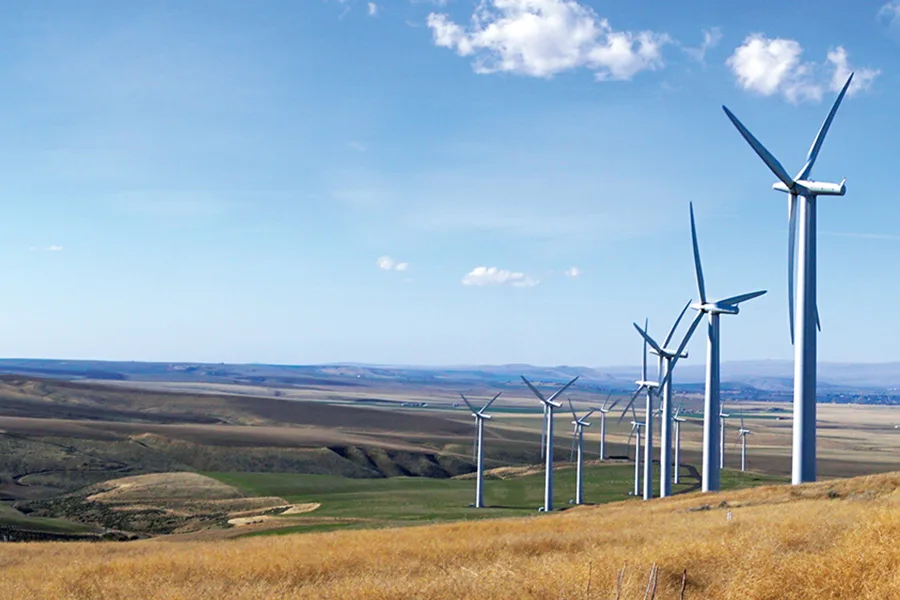
The Washington Supreme Court has yet to rule on the lawsuit challenging a large wind farm project outside the Tri-Cities but that hasn’t stopped the project’s developer from filing another change to its plans.
Scout Clean Energy’s latest plan would place 116 turbines across the Horse Heaven Hills, according to documents filed with the state’s Energy Facility Site Evaluation Council, or EFSEC. That’s 30 fewer wind turbines than last planned and almost half what it first pitched in 2024.
The turbines, at the tip of their blades, would still be taller than Seattle’s Space Needle. Scout also plans to relocate supporting infrastructure, such as the main transmission line, to allow it to connect with Bonneville Power Administration’s transmission grid.
Those changes aren’t changing the stance of those opposed to the project, who are instead calling on EFSEC to halt any further consideration of the project until the state Supreme Court makes its ruling.
“Beyond this, EFSEC must engage with and acknowledge the procedural errors that have riddled its processing of the (Horse Heaven Wind Farm),” wrote attorney Kenneth Harper on behalf of the Benton County Board of Commissioners.
Project background
EFSEC approved the wind farm in November 2024, after former Gov. Jay Inslee rejected an initial approval which required the project to be scaled back.
At the beginning, company officials have said the wind farm will create an expected 1,000 jobs during construction, generate 1,150 megawatts of power and contribute more than $250 million in local tax revenues throughout its 35-year operating lifespan. Opponents of the project have questioned Scout’s job creation and power generation figures.
The Confederated Tribes & Bands of the Yakama Nation and Benton County commissioners, along with grassroots group Tri-Cities C.A.R.E.S., have sued over EFSEC’s decision. They allege Inslee, state agencies and the courts violated everything from state environmental protection laws to local land use planning regulations while limiting access to proceedings related to the decision. The lawsuit went before the state Supreme Court in mid-June and a ruling is imminent.

This graphic shows the height difference of the proposed taller turbines compared to the existing Nine Canyon turbines southeast of Kennewick.
| Courtesy Tri-Cities C.A.R.E.S.Necessary changes
Scout said the latest revised plan is necessary to meet the requirements of EFSEC’s prior-awarded site certification, coordinate with BPA’s transmission infrastructure and work with available wind turbine equipment.
Along with reducing the number of turbines and identifying where the main transmission line will connect with BPA’s power lines, the project would now require a high-voltage transmission line to cross above Interstate 82 at one point. Outside of this transmission line, “the design approach depicted in this memorandum represents a reduction to impacts that were depicted in the (final environmental impact study).”
“The number of wind turbine locations has been reduced, the total length of high-voltage transmission line has been reduced, the number and size of project substations and switchyards is the same, and the number and size of battery storage facilities and O&M facilities are the same,” Scout said in the plan.
But those changes don’t undo the problems the project already faced, opponents said in comments to EFSEC. All the issues that have been raised remain unresolved and it would not be appropriate for EFSEC to move forward until the Supreme Court has issued its opinion on them.
“Yakama Nation understands that this new council likely does not grasp the gravity of the harm proposed by the Revised Plan, and it would not be appropriate to address these harms in more detail in this public comment letter,” wrote Gerald Lewis, chairman of the Yakama Nation Tribal Council, to EFSEC regarding its recently appointed members. “The council and EFSEC staff should decline to allow any version of the project to move forward until the project is modified to meaningfully avoid, minimize, and mitigate harm to Yakama Nation's cultural resources.”