Manufacturing tour celebrates industry, highlights challenges
Tri-City stops include Darigold, Tri-Tech
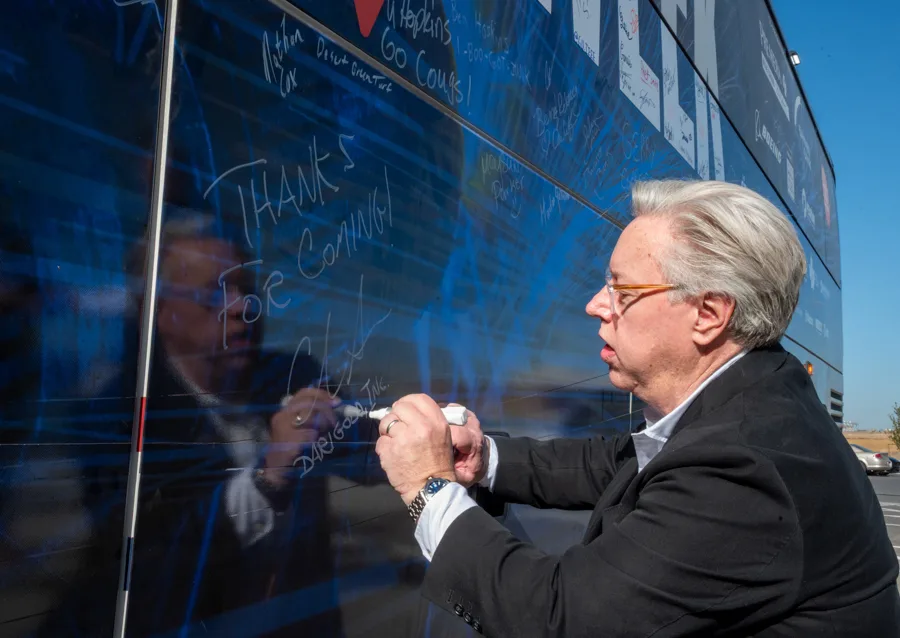
Chris Arnold, vice president and head of communications at Darigold, signs the Association of Washington Business’ Manufacturing Week bus.
Courtesy Association of Washington BusinessA bus carrying lawmakers, students and business leaders rolled through the Tri-Cities as part of a statewide tour highlighting Washington manufacturers and their role in the economy.
This year marks the 10th anniversary of the Association of Washington Business’ Manufacturing Week tour, which takes participants inside manufacturing facilities across the state to see firsthand what they make and the people behind the work.
“Manufacturing is the foundation to Washington’s identity. It gives us a unique, competitive edge, and I’m excited to be back on the road celebrating the makers of Washington’s economy,” said AWB President Kris Johnson during the Oct. 1 State of Manufacturing address.
The tour kicked off Sept. 28 and traveled from Seattle to Vancouver and Moses Lake to Spokane before swinging through the Tri-Cities on Oct. 6-7.
The Tri-City leg of the tour started by visiting with students at Tri-Tech Skills Center in Kennewick, a vocational school for area high schoolers. The bus then traveled to Pasco’s new Darigold plant, a 29,000-square-foot dairy processing facility that manufactures butter and powered milk. The plant opened in the summer of 2025 and was a $1 billion investment for the company.
The AWB bus tour highlighted other parts of the Tri-Cities’ agricultural industry, with a stop at Prosser’s Chukar Cherries, a food manufacturer which focuses on dried cherries, chocolates and nuts, and a visit to Washington State University Irrigated Agriculture Research & Extension Center.
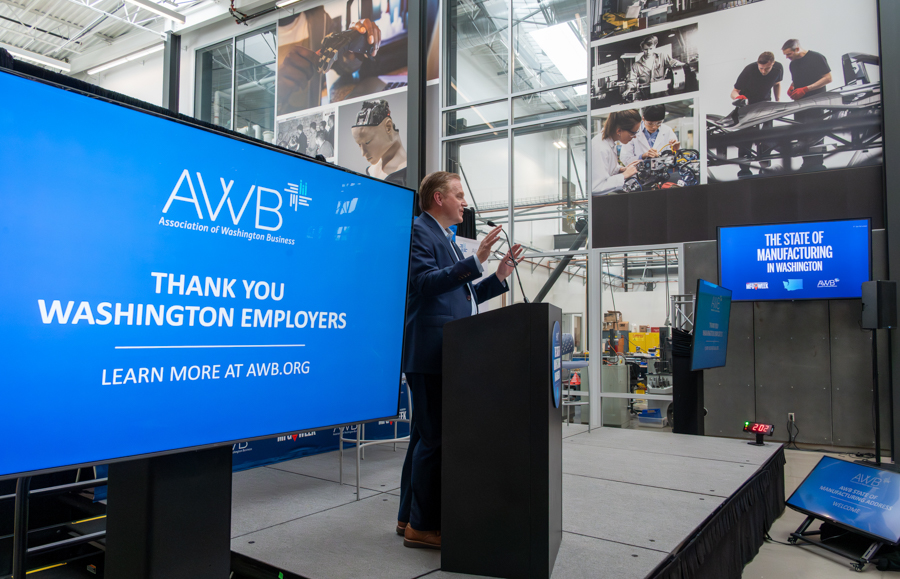
Association of Washington Business President Kris Johnson delivered the organization’s annual State of Manufacturing address at Clover Park Technical College in Tacoma on Oct. 1.
| Courtesy Association of Washington BusinessJohnson said that across the state, 270,000 men and women work for a total of 7,800 manufacturers, and they have an average annual wage of $103,000. But even though those numbers represent the strength of manufacturing in the state, “there are growing signs that that competitive position is slipping,” he said.
Businesses express concerns about burdensome state regulations and taxes, according to AWB’s quarterly surveys, and a study released by AWB in May showed that Washington is the eighth most regulated state in the country.
Although companies are still growing, they may not be growing in the state: “Employers are increasingly questioning whether this is the best place to call home,” Johnson said.
In late September, AWB and Washington Roundtable released a report outlining steps to grow Washington’s economy, including realistic budgeting, restraint and thorough review of new taxes, and the reduction of regulation and permitting and licensing timelines.
“Let’s make sure Washington state is the state of choice,” Johnson said at the State of Manufacturing address.
“We greatly value what you build right here in Washington state, the jobs you create, the communities you support, the pathways that you create for young people. We want you here, and we want you to grow here,” he said.