New plan charts course for unified Tri-City growth
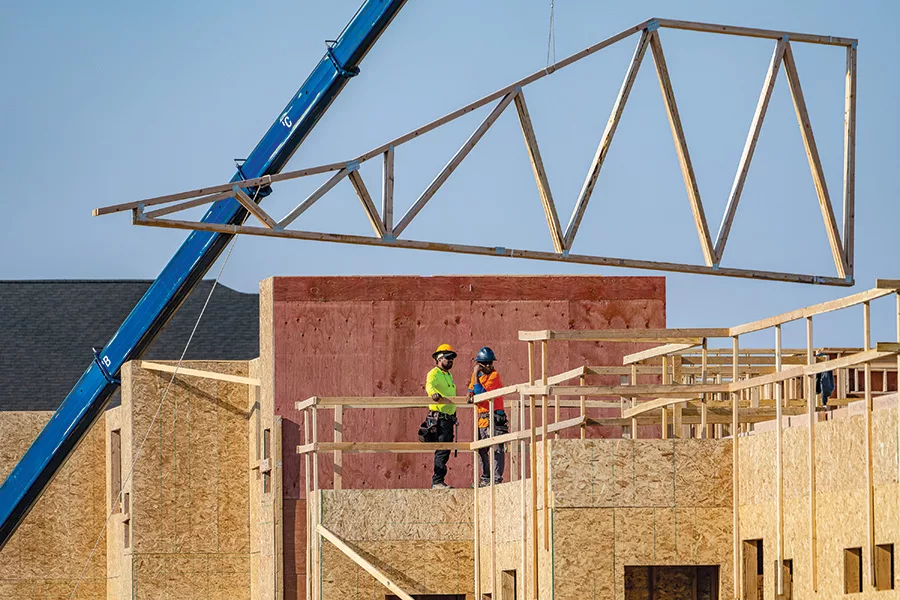
New homes are coming on the market to house a growing regional population.
Infrastructure such as roads and transportation facilities such as the Tri-Cities Airport are undergoing improvements to handle increased traffic.
Commercial and industrial areas are being developed or growing as business leaders seek to capitalize on everything from nuclear energy to tourism.
And one local government agency is hoping its latest effort will help ensure that growth – and growth yet to come – can be steered to benefit not just individual cities but the entire region.
“There’s a perception in the community that our local governments operate in silos and don’t coordinate on things,” Michelle Holt, executive director of the Benton-Franklin Council of Governments, told the Tri-Cities Area Journal of Business. “So if we can let the community know that we have tools and forums where they come together to think regionally it will help address that perception.”
The council, in its role as a federal and state economic development authority, recently released its latest Comprehensive Economic Development Strategy, or CEDS, document.
The mandated five-year plan is intended to clarify a region’s economic strengths and weaknesses as well as where development to support its goals can take place.
It’s not developed in a vacuum; officials representing most of the region’s municipal and county governments, as well ports, tribes and individual industries, were part of the committee that helped craft the CEDS.
And while the document is required by state and federal agencies, Holt and Daisy Funke, the council’s senior planner, said there was a deliberate effort to make the CEDS a process that government planners as well as the public could easily engage with.
“One of the things I heard and that I wanted to implement was an increase in collaboration and communication to build capacity for bigger strategies,” Funke said of discussions around drafting the document.
In past versions of the CEDS, individual development projects either recently completed, underway or planned were highlighted.
Now, the focus is on specific areas, such as Kennewick’s Southridge area, Richland’s Horn Rapids industrial area and Pasco’s Broadmoor development, currently under construction. Providing all those details helps every player know what’s happening in their neighboring communities, and how they can potentially partner with them.
“I think that the Tri-Cities would greatly benefit from a larger emphasis on regionalization,” said Adam Lincoln, executive director of the Port of Pasco, regarding the CEDS. “One voice will be taken much more seriously in Olympia and D.C. if we are behaving as a 320,000-plus population area rather than several organizations going it alone.”
Having the document isn’t a guarantee that everything will go to plan.
CEDS is a supporting planning document and can’t be enforced by the council on its own. And changes in federal and state priorities, as has occurred at the federal level in the past year, can affect what resources are available to advance regional priorities.
But Holt said the document has the potential to be a building block toward a more unified approach to shepherding the region to its future.
“Part of our focus at the council, we have really focused on improving our relationships with our member jurisdictions, and I think the level of information in this CEDS is reflective of that,” Holt said.