Colville casino plans are ambitious – and neighboring tribes aren’t happy
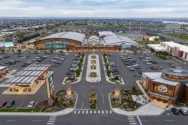
A casino-hotel proposed by the Confederated Tribes of the Colville Reservation on 177 acres in Pasco’s King City area would have approximately 2,000 slot machines as well as 30 game tables, while the hotel would be eight stories tall.
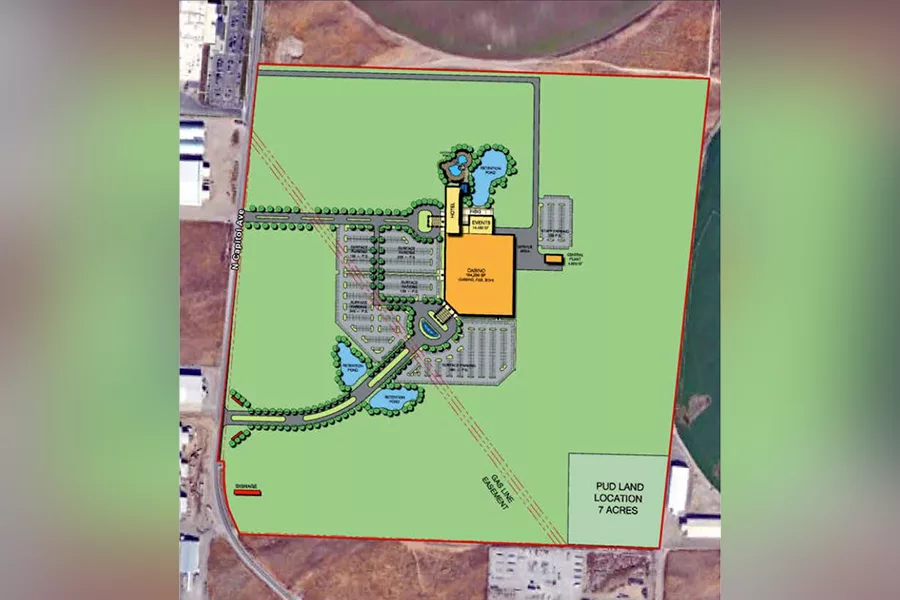
Courtesy U.S. Bureau of Indian AffairsThe beginning of a formal review of the Confederated Tribes of the Colville Reservation proposed casino-hotel north of Pasco has revealed plans for a large facility that would include a 70,500-square foot casino gaming floor, 200 guestrooms and numerous other amenities.
It’s also laid bare the acrimony between the Colville and the Confederated Tribes & Bands of the Yakama Nation and Confederated Tribes of the Umatilla Indian Reservation, the latter two contending their treaty rights and own gaming operations will be trampled if the project moves forward.
The U.S. Bureau of Indian Affairs, or BIA, is leading the formal review and development of an environmental impact statement for the project. The recently released scoping report for the development included dozens of comments highlighting concerns from the public about everything from air and water quality to noise levels and impacts on transportation infrastructure.
But most were focused on the clash between the three tribes over the project, which could shatter precedents for tribal casinos in Washington. And that has state and local elected officials worried.
“This is not about supporting Colville or the Yakama Nation,” wrote state Rep. Chris Corry, R-Yakima, in a letter to BIA. “Rather, this is about the precedent that would be set if Colville is permitted to establish and operate a casino over 100 miles away from their headquarters and in the Yakama Nation’s Treaty Territory without their consent.”
Complex process
The Colville tribes bought the 177-acre parcel for the proposed casino-hotel project in Pasco’s King City area in 2019 for $10.8 million. Tribal officials signaled early on that they were looking at the possibility of building and operating a casino on the property in addition to three they already operate on their reservation north of Grand Coulee.
Tribal leaders say they need the additional revenue from the proposed casino to support tribal services, as the isolated locations of their current gaming operations aren’t able to meet their needs.
“We want any tribal economic development project to benefit the entire area, creating good-paying new jobs, increasing tourism and providing a catalyst for a number of new businesses,” said Rodney Cawston, then-chairman of the tribe’s business council, at the time of the land purchase.
As proposed, the casino would have approximately 2,000 slot machines, as well as 30 game tables, while the hotel would be eight stories tall. There would also be restaurants, an event center and enough parking for 1,500 vehicles. It would have two access points on North Capitol Avenue, between the Highway 395 intersection with Foster Wells Road and the interchange with Kartchner Street.
The Colville tribes face a long and complex process to move the project forward. The current review will consider whether the BIA should take on the Pasco parcel in trust for the tribe. That includes a two-part determination by the U.S. Secretary of the Interior on the eligibility of the property to host a casino under federal law as well as environmental impacts.
BIA is considering more than just whether the Colville tribes can eventually host a casino on their Pasco property. The environmental impact statement will also consider whether a smaller casino without a hotel is a better alternative or a non-gaming use such as warehouses.
Ultimately, though, the state has final say on whether the project can move forward, as both it and the tribe must agree to a gaming compact for a casino to open and operate.
Tribal tension
The Colville tribes claim the land near the confluence of the Columbia and Snake rivers as part of its ancestral territory through the Palus or Palouse, one of its 12 bands. However, the Yakama Nation includes the Palus among the bands that were signatory to its 1855 treaty with the federal government, which established its reservation as well as tribal member rights within its ceded territory, which included the whole of the area in and around the Tri-Cities.
Those conflicting historical associations form a large part of the tension between the Colville tribes and the Yakama Nation.
“The fact is the Palouse were signatory to the Yakama Treaty of 1855 and are represented by the Confederated Tribes and Bands of the Yakama Nation,” said Casey Barney, program manager for the Yakama Nation Cultural Resource Program, in a letter to BIA. “There are many enrolled Yakama members with Palouse ancestry. The oral histories of these places are recalled through Yakama enrolled tribal members.”
“The Palus and many other engendered people were forced onto agency rolls, but the confluence was their home. The confluence of the Snake and Columbia rivers are enjoined by many tribes, including the tribes of the (Colville), CTUIR and Yakama Nation,” said Jackie McArthur, an enrolled member of the Okanogan and Lakes bands of the Colville, in comments submitted to the BIA. “I cannot expect the other tribes to understand this as it comes down to revenue, but each Tribe has their members to serve and assist and that assistance threshold is spelled out in their gaming compacts.”
The financial implications of the project have drawn in the Umatilla tribes as they, like the Yakamas, operate a casino-hotel within an hour of the Tri-Cities on their respective reservation. Umatilla and Yakama representatives said the Colville tribes establishing a casino in Pasco not only would upend the precedent of tribal casinos only operating on reservation lands but would negatively impact their own tribal members by drawing away their guests and clientele.
“The BIA owes a trust responsibility to the CTUIR,” said Gary Burke of the Umatilla Board of Trustees, in a letter to the BIA. “The BIA cannot honor its trust obligations to the CTUIR by approving an off-reservation casino for the Colville tribe that will have a devastating impact to the CTUIR economy, government and the services we offer our tribal community.”
Elected leaders weigh in
Local and state elected leaders similarly cite BIA’s obligations to each tribe’s interests in their input on the proposed development
Two Yakima County commissioners along with Republican state Sens. Matt Boehnke and Curtis King and state Reps. April Connors, Mark Klicker, Skyler Rude and Gina Mosbrucker largely echoed Corry’s concerns.
“The process for establishing a new tribal gaming facility is intended to consider the economic benefit to the impacted community and to the governance of the individual tribe. This is recognized in our state’s laws as well as under the Indian Gaming Regulatory Act,” wrote Boehnke and King. “To allow for the Colville Tribe to expand gaming beyond its own territory into another Tribe’s territory heralds the coming of the day and the potential for any tribe to do so.”
A timeline has not been published indicating when draft and final versions of BIA’s environmental impact on the project will be released.