Hooked on books
Richland author reels in stories of fishing, friendship and aging
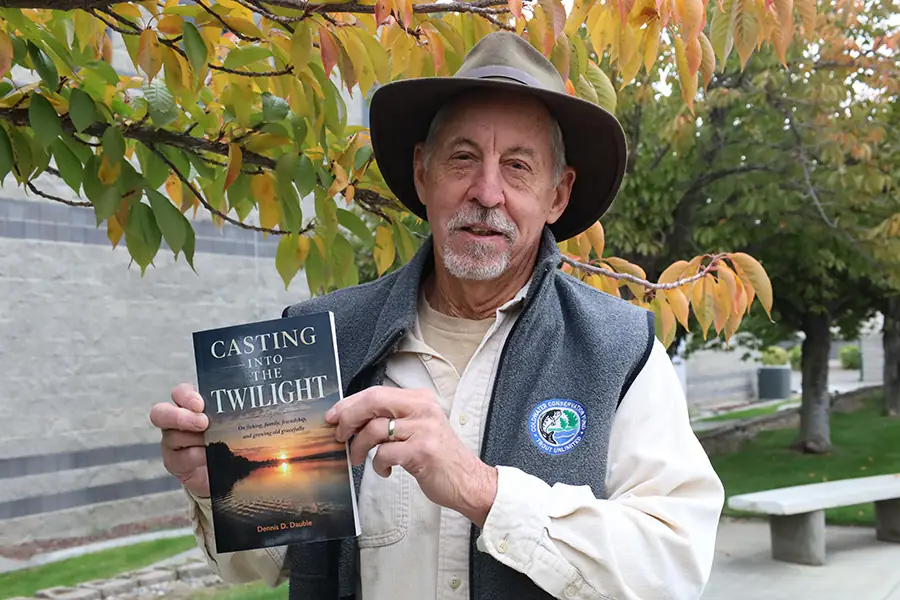
Dennis Dauble, 76, of Richland draws on his years of fishing and work at the Pacific Northwest National Laboratory to write tales of fishing, family and friends.
Dennis Dauble has spent a lifetime chasing fish. Along the way, he’s collected something even better: stories.
They’re tales about family, fishing buddies, adventures and misadventures. And, increasingly, stories about growing older and saying goodbye.
The 76-year-old Richland author and retired fisheries scientist explores these themes in his latest book, “Casting into the Twilight: On Fishing, Family, Friendship, and Growing Old Gracefully.”
It’s his sixth book, and like the others, fishing provides the backdrop.
But the stories are less about what he caught and more about the people and memories he reeled in along the way.
Dauble said he hopes they’re relatable, and he hopes younger readers discover what their parents and grandparents experience as they age.
Becoming a writer
Dauble started out writing scientific journal articles through his work with Pacific Northwest National Laboratory. By the 1990s, he’d begun writing occasional outdoors columns for the Tri-City Herald, but it wasn’t until he retired from PNNL in 2009 that he wrote his first book.
He was teaching part time at Washington State University Tri-Cities, where he worked for a few years before retiring for a second time. While Dauble was teaching, he noticed that students had to buy a $65 textbook for a fishery class and saw a need for a cheaper textbook.
So he wrote one.
The result was the guidebook “Fishes of the Columbia Basin,” published by Keokee Books of Sandpoint, Idaho.
The book provided Dauble with the opportunity to travel with Humanities Washington for several years, giving presentations on the history of fish and fishing in the Columbia Basin as well as dam removal.
Once, he was asked what book he’d write next – which Dauble hadn’t even thought about until then.
As it turns out, there was a next book – and four more after that. The books are full of stories from Dauble’s fishing trips throughout his life, though each has its own specific angle.
“Chasing Ghost Trout” is more of a memoir and tells stories of coping with cancer and deaths in the family, while “A Rustic Cabin” is part natural history, part practical advice and part memoir.
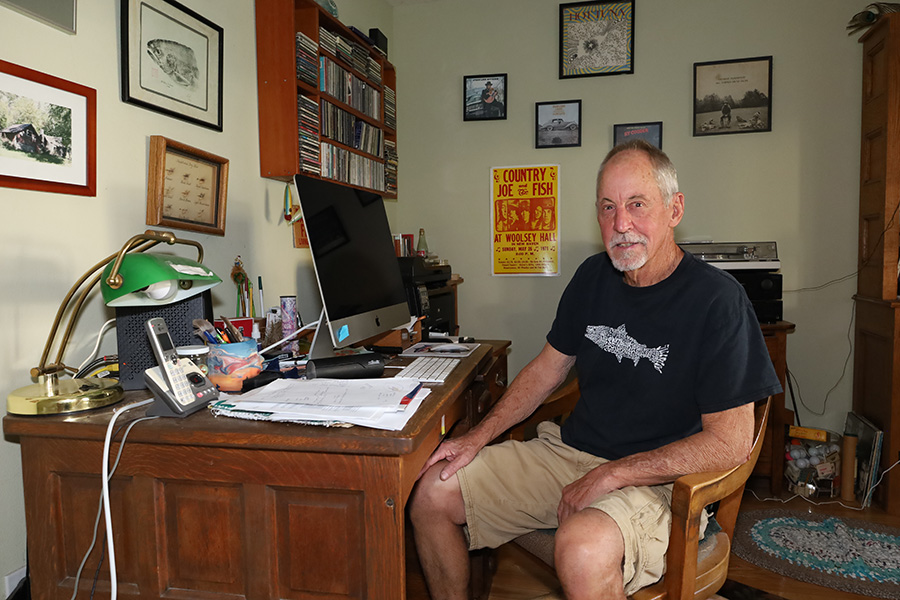
Dennis Dauble jots down details of his fishing trips while he’s out and about, then he sorts through what he’s written and weaves stories together at the computer.
Writing to entertain
His stories are “really meant to entertain,” he said, as much about human behavior as about fishing. Dauble said he’s already written plenty of “how to’s” and “where to’s” articles, and he doesn’t enjoy them as much.
Dauble has learned a lot along the way, like the fact that some friends will eagerly search his books for their names, while he must change the names of others. There are some stories his wife won’t let him include, he said, and he’s learned that illustrations greatly enhance the books.
He spends maybe 50 days out of the year at his cabin in the Umatilla River canyon. When he’s out and about, at the cabin or on fishing trips, he takes journals with him and jots ideas down.
“Every adventure leads to a story,” Dauble said – or sometimes three together make for a story.
At home, he works to sort out the things he’s written and piece things together on the computer.
He said he appreciated the chance to write for the Herald, not just about fishing, but whatever he likes that is related to the outdoors, from mushroom hunting to squirrels at the bird feeder and walking the dog.
While he no longer writes for the Herald, he still writes for the Walla Walla Union-Bulletin.
His work has won awards, too.
“Chasing Ghost Trout” received the Outdoor Writers Association of America’s Excellence in Craft third place award in 2022.
And a column he wrote for the Herald, “What’s memory got to do with fishing?,” took first place in OWAA’s Excellence in Craft awards in the newspaper category, under the humor division in 2024.
An expanded version of that story features in “Casting into the Twilight.”
Fishing dreams
Dauble was raised in Weston, Oregon, where he spent a lot of time playing in a creek. When his grandfather, the fisherman of the family, returned home with lots of fish, “everyone would look at him like he was a rockstar,” he said.
Dauble kept fishing, moving on to bigger waters and farther afield, he said.
In 1973, he moved to the Tri-Cities for his dream job, which was collecting and studying fish on the Hanford Reach. He started out as a technician and worked his way up, earning his master’s degree at what would become WSU Tri-Cities and then taking a pause from work to get his doctorate.
That degree allowed him to become a division director, and Dauble worked on risk assessments before going back to fishery work and the impacts of hydroelectric dams, something he focused on for the last 10 to 15 years of his 35-year career at PNNL.
Being able to work on the Columbia River for so long “is just special,” he said.
When he retired from PNNL, he continued to stay active consulting in matters related to the impacts of hydroelectric dams.
The fishing landscape has greatly changed over the years, Dauble said, with streams flooding, flattening and straightening out, while fishing limits have dropped in recent years. Fishing buddies have moved away and some have died.
But the love of fishing persists in his family. His theory is that it skips a generation: he carried it on from his grandfather, and while his son is somewhat interested, one of his grandchildren has gone all in on the sport.
Dauble’s new book, along with his others, is available on Amazon and costs $16.
Go to: dennisdaublebooks.com.


Stay Informed. It’s Free.
Subscribe to our newsletters and get the latest news and insights delivered to your inbox.
We respect your privacy.
Unsubscribe anytime.
Thank you!
You’re subscribed. Keep an eye on your inbox for the latest updates.